What Makes a Celeron Industrial PC Reliable in Rugged Environments?
An Intel® Celeron® processor is a solid choice for industrial computing because it pairs modest power draw with dependable, predictable performance. In rugged deployments, reliability comes less from raw clock speed and more from thermal headroom, stable power delivery, wide operating temperature tolerance, and storage that survives vibration. Celeron-based industrial PCs typically run fanless, drawing around 10–15 W, which means fewer moving parts, less dust ingress, and longer service life in factories, kiosks, and outdoor cabinets.
Key Specifications to Look For
When selecting a Celeron industrial PC for harsh conditions, focus on these technical attributes:
| Specification | Why It Matters in Rugged Use |
|---|---|
| Fanless, ventless chassis | No fan to clog with dust or fail; sealed against particulates |
| Wide input voltage (e.g., 12V DC) | Tolerates supply fluctuations on factory floors and in vehicles |
| Wide operating temperature | Keeps running in unheated cabinets or hot plant rooms |
| DDR4 memory (4–16 GB) | Stable, low-power operation for control and monitoring workloads |
| SSD storage (128 GB–2 TB) | No spinning platters; resists shock and vibration |
| Dual Gigabit Ethernet | Redundant or segmented networks for industrial protocols |
| Watchdog timer & RTC | Automatic recovery from software hangs; accurate timekeeping |
| DIN-rail or VESA mounting | Secure installation in panels and enclosures |
Modern Celeron parts such as the Intel® Celeron® N5095A (4 cores, up to 2.9 GHz, 4 MB cache) offer a good balance of efficiency and responsiveness, handling 24/7 duty cycles without throttling when the thermal design is adequate.
Typical Use Cases
Celeron industrial PCs are widely deployed where a full workstation is unnecessary but consumer hardware would not survive. Common applications include:
-
Factory automation and HMI: machine control panels, SCADA terminals, and operator stations.
-
Digital signage and kiosks: unattended displays in retail, transit, and hospitality.
-
Edge data collection: gateway nodes aggregating sensor and PLC data before sending to the cloud.
-
Surveillance and access control: local video or badge processing in dusty or humid sites.
-
Logistics and warehousing: vehicle-mounted or rack-mounted terminals exposed to vibration.
In each case, the priority is continuous uptime rather than peak throughput, which is exactly where a well-designed Celeron platform excels.
Choosing the Right Configuration
Reliability also depends on matching the configuration to the workload. A control panel running a single HMI application may be comfortable with 4 GB RAM and a 128 GB SSD, while an edge gateway handling multiple data streams benefits from 8–16 GB and a larger SSD. Operating system choice matters too: Windows 11 Pro suits commercial software and remote management, while Ubuntu Linux 24.04 LTS or a no-OS configuration gives integrators full control over the software stack. Dual-band WiFi is useful for retrofit sites where cabling is impractical, but wired Gigabit Ethernet remains the most dependable option for mission-critical links.
Thinvent Industrial PCs Featuring Celeron Processors
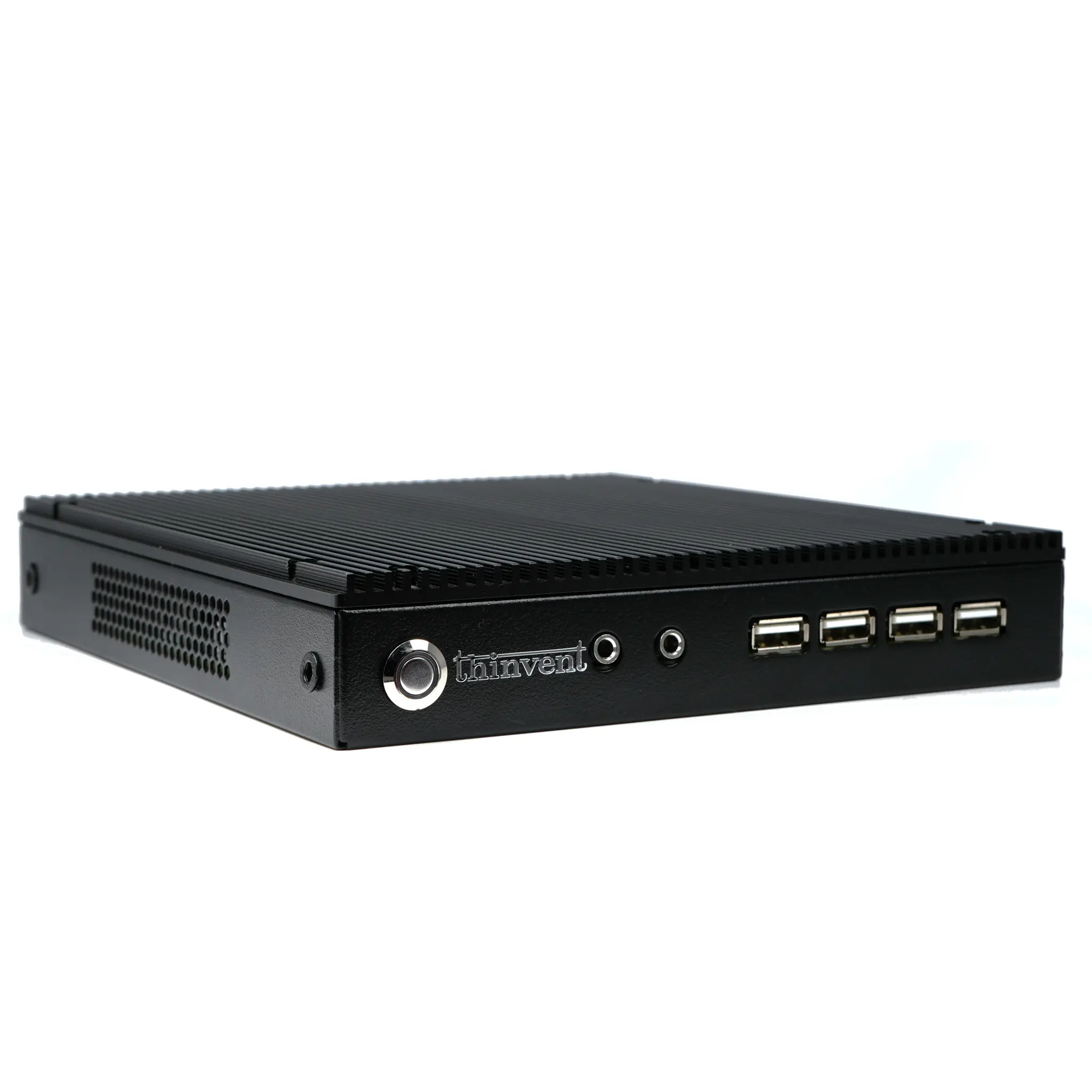
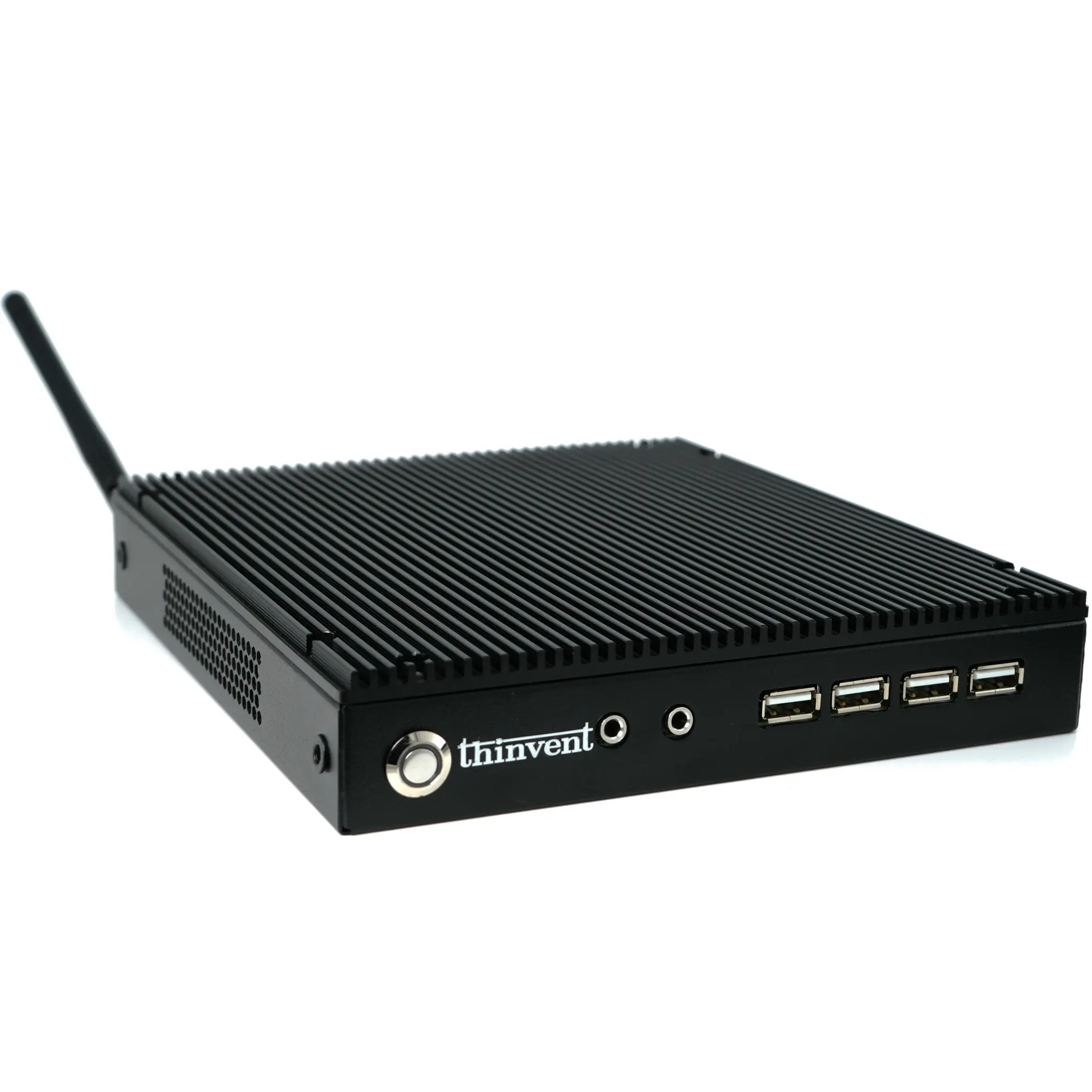
Thinvent builds rugged industrial PCs around Intel® Celeron® processors, including the IPC1 series powered by the N5095A (4 cores, up to 2.9 GHz, 4 MB cache). These systems are available with 4–16 GB DDR4 memory, 128 GB to 2 TB SSD storage, and a choice of Windows 11 Pro, Ubuntu Linux, FreeDOS, or no operating system. Options include dual-band WiFi or a wired-only configuration, making it straightforward to specify a fanless, dust-tolerant machine that matches the exact demands of your deployment. For integrators and OEMs worldwide, Thinvent's Celeron industrial PCs offer a dependable foundation for automation, signage, and edge computing in demanding environments.