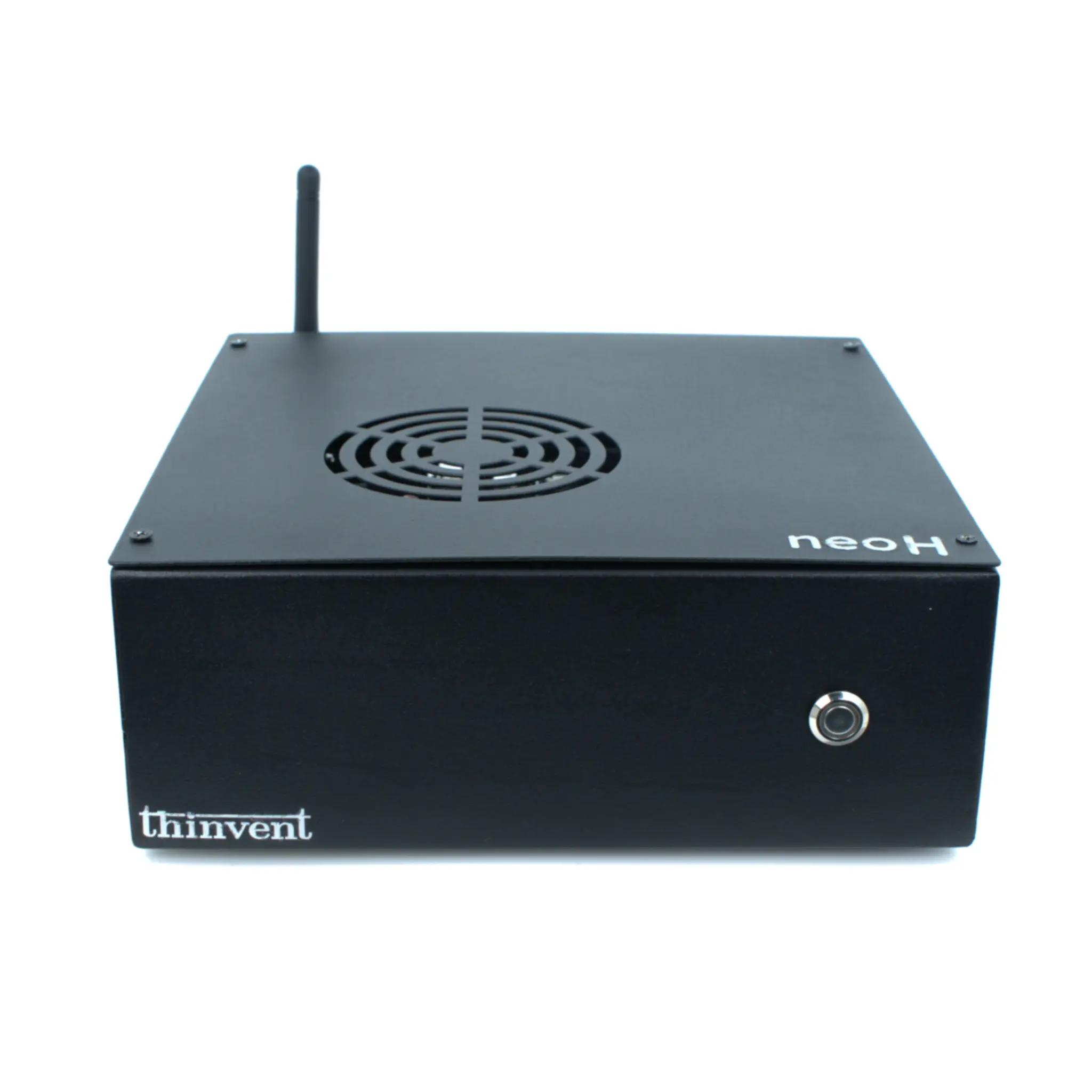
What Are AMD Processor Industrial Computers?
Industrial computers with AMD processors are specialized computing systems designed for demanding environments, utilizing processors from Advanced Micro Devices (AMD). These systems are engineered for reliability, performance, and efficiency in applications where standard commercial PCs would fail. AMD's Ryzen Embedded and EPYC processor families offer a compelling alternative to Intel-based solutions, often providing superior multi-core performance and integrated Radeon graphics at competitive power envelopes. This makes them ideal for compute-intensive and graphics-heavy industrial automation tasks.
Key Specifications and Technical Advantages
AMD-powered industrial PCs are characterized by their high core and thread counts, advanced integrated graphics, and support for modern I/O standards. Key technical features often include:
-
Processor Families: Ryzen Embedded V-Series, Ryzen Embedded R-Series, and EPYC Embedded series.
-
Core Architecture: Zen, Zen+, Zen 2, Zen 3, and Zen 4 cores, offering high instructions-per-clock (IPC) performance.
-
Integrated Graphics: Powerful AMD Radeon Vega or RDNA 2 graphics cores are integrated into many Ryzen Embedded processors, eliminating the need for a discrete GPU in many visualization applications.
-
Platform Features: Support for high-speed DDR4/DDR5 memory, multiple PCIe 4.0/5.0 lanes, USB 4.0, and robust security features like AMD Memory Guard and Secure Boot.
-
Thermal Design: Available in fanless configurations with robust heatsinks for operation in dusty, vibrating, or wide-temperature industrial settings (-40°C to 85°C).
Applications and Use Cases
The blend of CPU and GPU performance in AMD processors opens up a wide range of industrial applications:
-
Machine Vision & AI Inference: Powerful integrated graphics accelerate image processing and edge AI workloads.
-
Digital Signage & Kiosks: Drive multiple high-resolution displays smoothly for immersive customer experiences.
-
Industrial Automation & Control: Reliable, deterministic performance for PLCs, HMIs, and SCADA systems.
-
Telecommunications & Networking: EPYC embedded processors provide high core density for network appliances and uCPE.
-
Medical Imaging & Diagnostics: Process complex graphical data from ultrasound, MRI, or CT scan equipment.
AMD vs. Intel for Industrial Computing
| Feature | AMD Processors (Typical) | Intel Processors (Typical) |
|---|---|---|
| Integrated Graphics | Stronger (Radeon Vega/RDNA) | Moderate (Intel UHD/Iris Xe) |
| Multi-Core Performance | Generally Higher | Competitive, especially in mobile |
| Power Efficiency | Competitive | Often leads in ultra-low power |
| Platform Longevity | Long-term availability guarantee | Long-term availability guarantee |
| Common Industrial Use | Graphics-heavy apps, multi-threaded compute | General automation, fanless edge gateways |
Thinvent's Range of Industrial Computing Solutions
While Thinvent's current showcased portfolio emphasizes robust Intel-based systems, our engineering expertise spans multiple architectures to meet diverse global industrial demands. We design systems for reliability, with features like wide-temperature operation, shock and vibration resistance, and fanless cooling. For specific project requirements involving high-performance graphics or multi-threaded computing, we recommend consulting with our technical sales team to explore the optimal processor architecture—whether Intel, AMD, or ARM—for your application. Our solutions are built to provide stable, long-lifecycle support in harsh industrial environments worldwide.