What to Look for in an Intel Core i3 Desktop
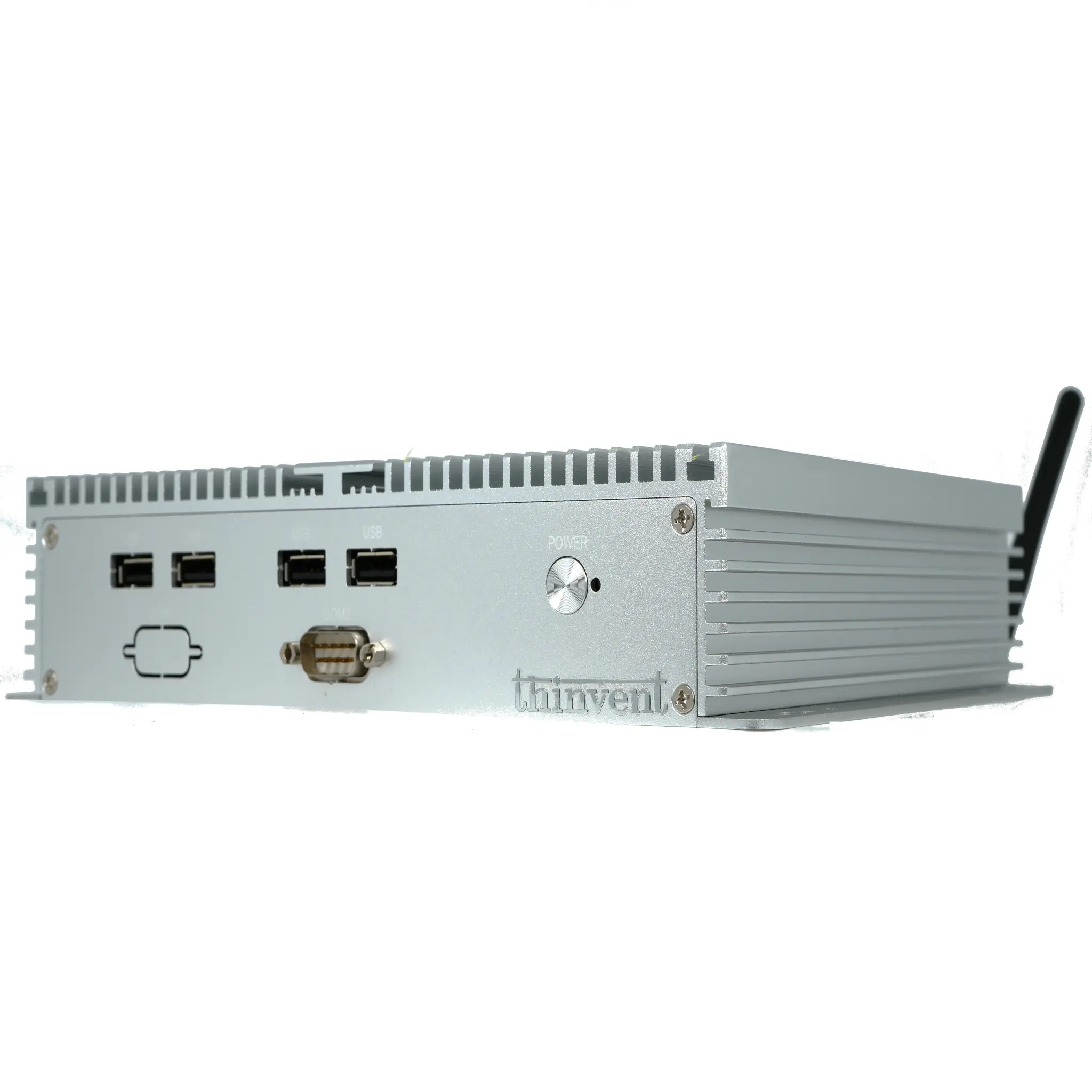
An Intel Core i3 desktop is a mainstream, general-purpose computer built around Intel's entry-to-mid tier processor family. For buyers comparing options, the practical question is usually not "which brand" but "which form factor and generation fits my workload". An i3 desktop can mean a traditional tower, a compact mini PC, or a fanless industrial computer, and the differences in durability, mounting, connectivity and power draw matter far more than the badge on the case.
Key Specifications and Technical Details
Modern Core i3 processors are hybrid designs that mix Performance-cores and Efficient-cores, so core counts are higher than the "dual-core i3" of a decade ago. The 12th Gen Intel Core i3-1215U, for example, is a 6-core part with a max turbo frequency of 4.4 GHz and 10 MB of cache. It pairs well with 8 GB to 16 GB of DDR4 memory and a SATA or NVMe SSD of 256 GB to 1 TB. Typical desktop i3 platforms include integrated Intel UHD or Iris Xe graphics, Gigabit Ethernet, HDMI output and multiple USB 3.2 ports, which is ample for office productivity, billing, POS, digital signage and light industrial control.
| Consideration | Traditional Tower i3 | Fanless Mini / Industrial i3 |
|---|---|---|
| Cooling | Fan + vents | Passive, sealed chassis |
| Dust & heat tolerance | Moderate | High |
| Mounting | Desk or floor | VESA, DIN rail, panel |
| Power draw | Higher | Low, often 12V DC |
| Serial / legacy I/O | Rare | Common (DB9, GPIO) |
| Typical use | Home, office | Factory floor, kiosk, edge |
Use Cases and Applications
Because a Core i3 balances cost against real-world responsiveness, it suits workloads that need a genuine x86 desktop experience rather than a stripped-down terminal. Common deployments include point-of-sale and billing counters, clinic and lab workstations, warehouse terminals, machine-side HMIs, CCTV monitoring stations, kiosks, and thin-client or virtual desktop endpoints. In factory and outdoor settings, the deciding factor is usually the enclosure: a sealed, fanless i3 machine keeps running where a vented tower would pull in dust and conductive particles. Where a deployment needs to drive legacy equipment, look for models offering RS-232 serial ports, dual Ethernet, or wide-input DC power.
Choosing Between Generations
Newer generations bring better performance-per-watt and updated integrated graphics, but a well-specified 12th Gen i3 remains a strong, cost-effective choice for most line-of-business software. Prioritise these in order: enough RAM (16 GB is a comfortable baseline for Windows 11 with several applications open), a genuine SSD rather than eMMC, the I/O you actually need on the chassis, and an operating system licence that matches your software. If your environment is dusty, hot, or vibration-prone, choose the industrial form factor first and the processor second.
Thinvent Industrial Computers with Intel Core i3
Thinvent builds fanless industrial PCs, mini PCs, thin clients and all-in-one computers around Intel Core i3 processors. The Thinvent IPC3 family is available with the 12th Gen Intel Core i3-1215U (6 cores, up to 4.4 GHz, 10 MB cache), 16 GB DDR4 RAM and 1 TB SSD, powered from a 12V 7A adapter and offered without WiFi for environments where wireless is restricted. Options include quad DB9 serial ports for legacy device connectivity, and a choice of Windows 11 Pro, Windows 11 IoT Value, DOS, or Thinux Embedded Linux. These systems are designed for continuous operation in industrial, commercial and embedded deployments worldwide.
Thinvent Alternatives to Dell
| Specification | Dell Pro Tower Desktop (Next Gen OptiPlex) | Thinvent Industrial PC IPC3 |
|---|---|---|
| Processor | Intel Core i3 14100 (14th Gen) | Intel Core i3-1215U (12th Gen) |
| Cores/Threads | 4C / 8T | 6C / 8T |
| RAM (max) | 8GB DDR5 | 16GB |
| Storage | 512GB PCIe SSD | 1024GB |
| Form Factor | Tower | Industrial PC |
View these products:
The Thinvent Industrial PC IPC3 is the closest match here, offering the same Intel Core i3 processor class as the Dell Pro Tower, with double the RAM (16GB vs 8GB) and double the storage (1TB vs 512GB). The key trade-off is form factor and generation: the Dell is a 14th-gen tower built for standard office desks, while the Thinvent IPC3 is a 12th-gen industrial-grade unit designed for embedded, kiosk, or rugged deployments — so choose the Thinvent if you need higher memory/storage capacity and industrial durability rather than a conventional tower chassis.