What Are Embedded Linux ARM Processors?
Embedded Linux ARM processors combine the power efficiency and scalability of ARM architecture with the flexibility and robustness of the Linux operating system, tailored for embedded applications. These systems are designed for long-term, reliable operation in environments where traditional PCs are unsuitable. They typically feature low power consumption, fanless cooling for silent and dust-resistant operation, and support for a wide range of industrial I/O and connectivity options. This makes them ideal for dedicated computing tasks that require stability, real-time performance, and minimal maintenance.
Key Specifications and Technical Details
Industrial computers with Embedded Linux and ARM processors are characterized by specific technical attributes. The ARM architecture itself is known for its RISC (Reduced Instruction Set Computer) design, which often translates to excellent performance-per-watt. Key specifications to consider include the processor core count (often ranging from 2 to 8+ cores in industrial contexts), clock speed, integrated graphics capabilities, and thermal design power (TDP). System memory (RAM) typically starts at 4GB for basic applications and can scale to 16GB or more for complex tasks. Storage is usually provided via reliable, solid-state drives (SSD) or industrial-grade eMMC. Critical features include wide operating temperature ranges, support for 24/7 operation, and multiple connectivity ports like Gigabit Ethernet, USB, and serial interfaces (RS-232/485).
Applications and Use Cases
The combination of Embedded Linux and ARM hardware is prevalent across numerous industries due to its stability and customization potential. Common applications include:
-
Digital Signage & Kiosks: Powering interactive displays in retail, hospitality, and public spaces.
-
Industrial Automation: Serving as a controller for PLCs, HMIs (Human-Machine Interfaces), and machine vision systems on the factory floor.
-
IoT Gateways: Aggregating and processing data from sensors and edge devices in smart city, agricultural, and energy management systems.
-
Transportation & Logistics: Used in fleet management, in-vehicle infotainment, and automated guided vehicles (AGVs).
-
Medical Devices: Providing the computing platform for diagnostic equipment, patient monitoring systems, and imaging devices where reliability is paramount.
Thinvent Products with Embedded Linux & ARM Technology
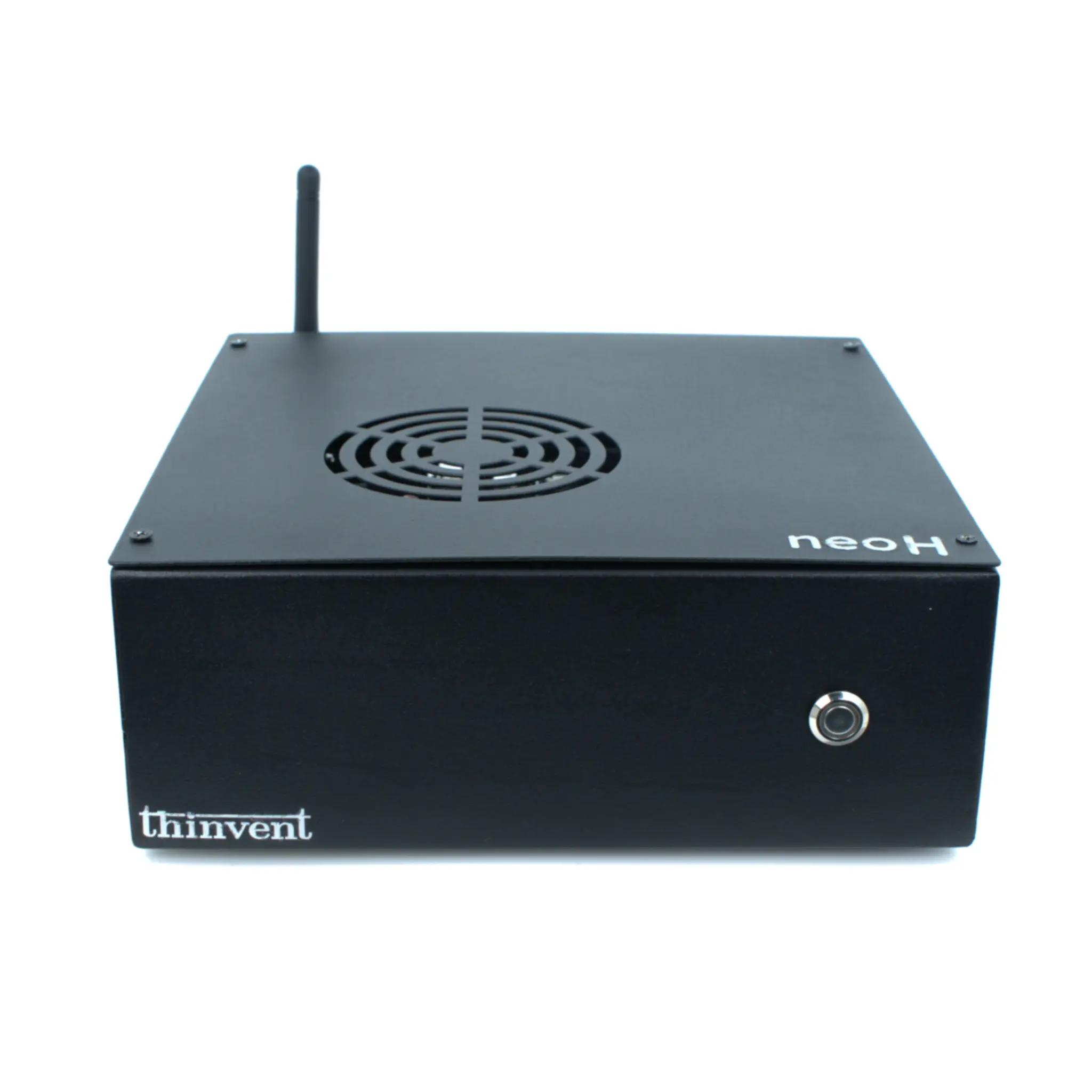
Thinvent offers a range of robust industrial computing solutions that support Embedded Linux environments. While our portfolio includes powerful Intel-based systems, we provide the flexibility to deploy various Linux distributions, including our custom Thinux™ Embedded Linux or Ubuntu Linux, on compatible hardware platforms. Our products are engineered for challenging environments, featuring fanless designs, wide voltage input ranges, and extended temperature tolerance. Whether you need a compact Mini PC for space-constrained installations or a versatile Industrial PC for heavy-duty automation, Thinvent's systems can be configured to meet the demands of your embedded application with a focus on durability and long-term performance.