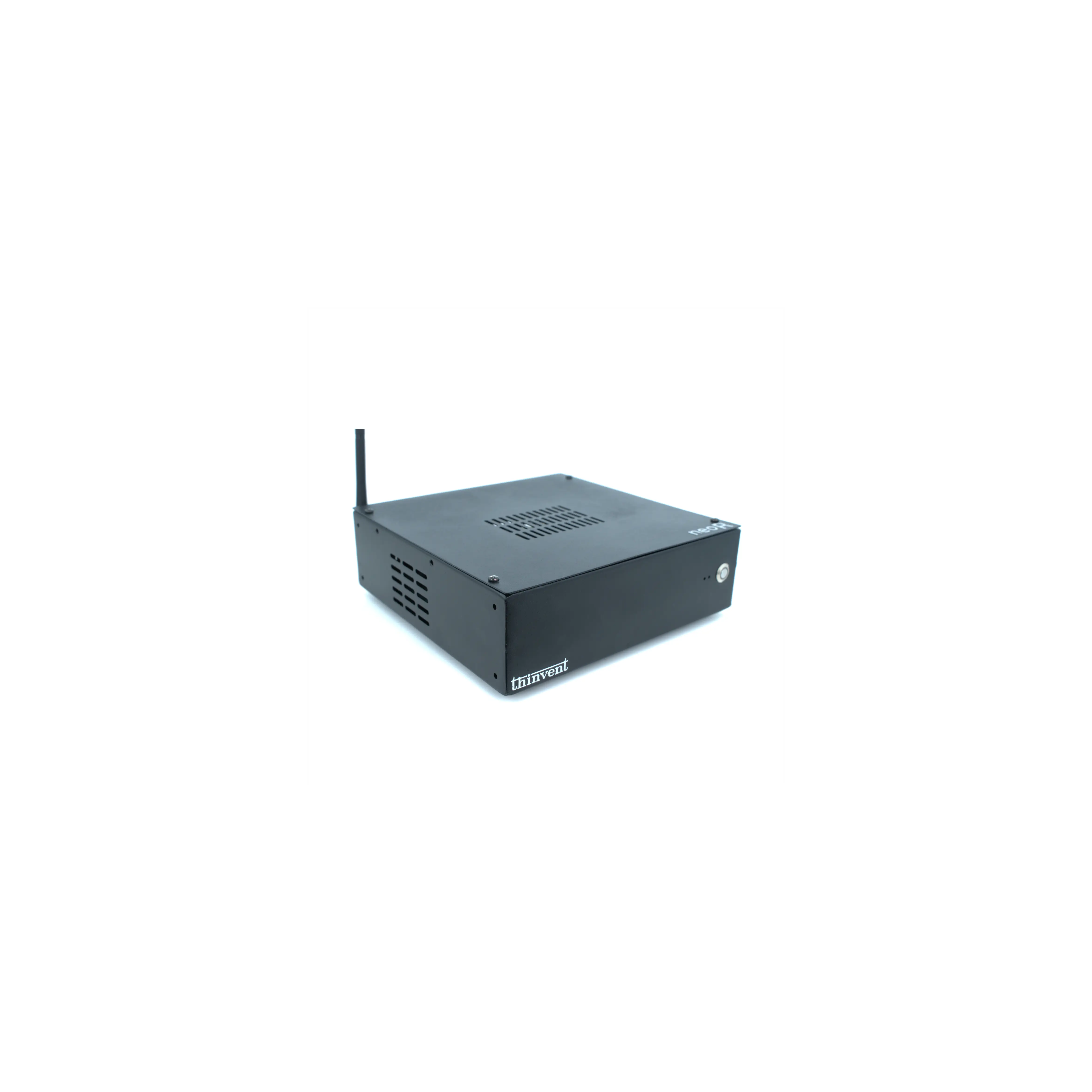
What is an i7 Workstation?
An i7 workstation is a professional-grade computing system built around Intel's Core i7 processor series. These processors are designed for demanding workloads, offering a balance of high core counts, elevated clock speeds, and advanced features like Intel Hyper-Threading and Turbo Boost technology. Unlike standard desktop CPUs, i7 processors in industrial workstations are often paired with robust cooling solutions, high-capacity memory, and fast storage to ensure sustained performance in challenging environments.
Key Specifications and Technical Details
Intel Core i7 processors for workstations typically feature higher core and thread counts than their consumer counterparts, with many modern models offering 10 to 14 cores (20 to 28 threads). They support large amounts of high-speed DDR4 or DDR5 RAM, often exceeding 64GB, and include multiple high-bandwidth PCIe lanes for professional-grade graphics cards (GPUs) and NVMe storage. Key technical aspects include:
-
Processor Generations: Modern i7 workstations utilize 12th, 13th, and 14th generation Intel Core processors for optimal performance and efficiency.
-
Memory & Storage: Configurations commonly start at 16GB RAM and 256GB SSD, scaling to 64GB+ RAM and 1TB+ NVMe storage for intensive tasks.
-
Connectivity: Feature-rich I/O including multiple USB 3.2/Thunderbolt ports, dual Gigabit Ethernet, and multiple display outputs (HDMI, DisplayPort) are standard.
-
Reliability: Often built with fanless or advanced thermal designs for 24/7 operation in industrial settings, ensuring dust resistance and long-term stability.
Use Cases and Applications
i7 workstations are engineered for professional applications where computational power, reliability, and multi-tasking are critical.
-
Engineering & Design: Running CAD/CAM software (AutoCAD, SolidWorks), 3D modeling, and simulation.
-
Content Creation: Video editing, 3D animation, graphic design, and audio production.
-
Scientific Computing: Data analysis, financial modeling, and research simulations.
-
Software Development: Compiling large codebases, running virtual machines, and testing environments.
-
Industrial Automation: Serving as a control unit for manufacturing processes, machine vision, and digital signage in factory settings.
Comparison of Common i7 Processor Models for Workstations
| Processor Model | Cores/Threads | Max Turbo Frequency | Typical Use Case |
|---|---|---|---|
| Intel Core i7-13700 | 16 (8P+8E) / 24 | Up to 5.2 GHz | High-end engineering workstations, complex simulations |
| Intel Core i7-13620H | 10 (6P+4E) / 16 | Up to 4.9 GHz | Mobile/compact workstations for field engineering |
| Intel Core i7-1265U | 10 (2P+8E) / 12 | Up to 4.8 GHz | Ultra-compact fanless workstations for edge computing |
| Intel Core i7-1255U | 10 (2P+8E) / 12 | Up to 4.7 GHz | General-purpose industrial workstations, digital signage |
Thinvent i7 Workstation Solutions
Thinvent offers a range of industrial-grade workstations powered by Intel Core i7 processors, designed for reliability in demanding global deployments. Our solutions include compact, fanless Mini PCs and robust Industrial PCs that deliver desktop-level performance without compromising on durability. These systems are built to operate 24/7 in varied temperatures and environments, making them ideal for automation, design labs, and control rooms. Explore our configurable options with various memory, storage, and operating system choices to build the perfect i7 workstation for your professional needs.