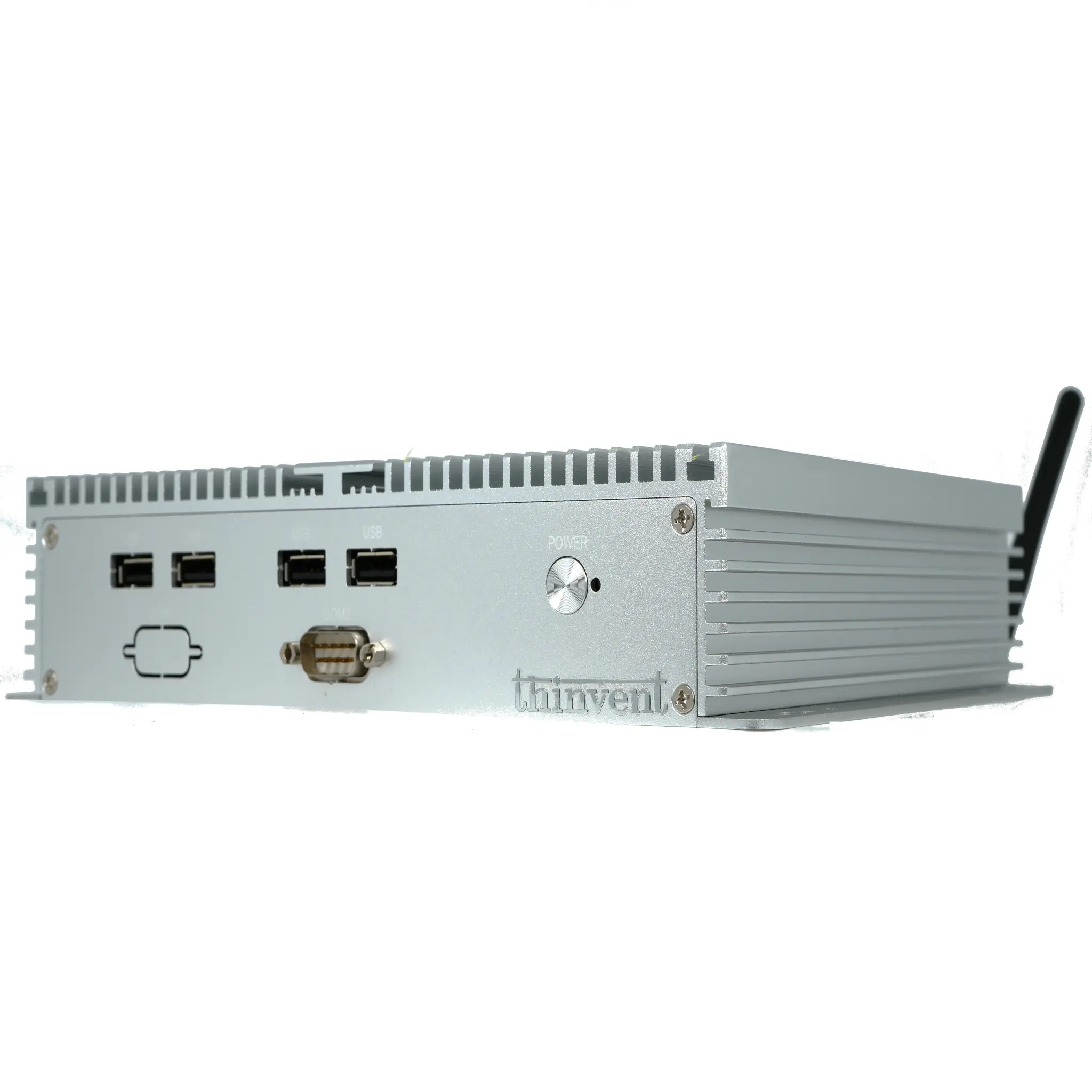
What Are Industrial Computers?
Industrial computers are specialized computing systems engineered for reliable operation in demanding, non-office environments. Unlike standard commercial PCs, they are built with robust components, fanless cooling, and extended temperature ranges to withstand dust, moisture, vibration, and continuous 24/7 operation. They are the backbone of automation, providing the processing power and connectivity needed for industrial control and data acquisition.
Key Specifications and Technical Details
These systems prioritize durability and longevity over raw consumer-grade performance. Common features include:
-
Rugged Construction: Metal chassis, wide operating temperature ranges (often -20°C to 60°C), and resistance to shock and vibration.
-
Fanless Design: Passive cooling eliminates moving parts, preventing dust ingress and reducing points of failure for silent and maintenance-free operation.
-
Industrial-Grade Components: Use of long-lifecycle motherboards, industrial SSDs, and conformal-coated PCBs to ensure stability.
-
Rich I/O Connectivity: Multiple serial ports (RS-232/485), LAN ports, GPIO, and expansion slots (PCI/PCIe) for connecting to machinery, sensors, and legacy equipment.
-
Wide Power Input: Support for a broad range of DC voltage inputs (e.g., 9-36V DC) to handle power fluctuations common in industrial settings.
Primary Use Cases and Applications
Industrial computers are deployed across numerous sectors where reliability is non-negotiable:
-
Factory Automation: Machine control, PLC supervision, and Human-Machine Interface (HMI) stations on the factory floor.
-
Digital Signage & Kiosks: Driving displays in retail, transportation hubs, and public spaces, often in portrait or landscape orientations.
-
Edge Computing & IoT Gateways: Collecting, processing, and transmitting data from sensors at the network edge.
-
Transportation & Logistics: Vehicle-mounted systems for fleet management, in-vehicle infotainment, and automated guided vehicles (AGVs).
-
Medical & Laboratory Equipment: Embedded within diagnostic devices and laboratory analyzers requiring precise control.
Comparison: Industrial vs. Commercial Computers
| Feature | Industrial Computer | Commercial Desktop PC |
|---|---|---|
| Operating Temperature | Wide range (e.g., -20°C to 60°C) | Narrow range (e.g., 5°C to 35°C) |
| Cooling Method | Fanless (passive) or forced air with filters | Active cooling with fans |
| Build Quality | Metal chassis, ruggedized components | Plastic/metal chassis, consumer parts |
| Mean Time Between Failures (MTBF) | Very high (often 50,000+ hours) | Standard |
| I/O Ports | Industrial (Serial, GPIO, multiple LAN) | Consumer (USB, HDMI, Audio) |
| Power Supply | Wide-range DC input | Standard AC input |
| Lifecycle Support | Long-term (5-10+ years) | Short-term (1-3 years) |
Thinvent's Range of Industrial Computing Solutions
Thinvent designs and manufactures a comprehensive portfolio of industrial-grade computing hardware to meet diverse global application needs. Our product lines include compact Fanless Mini PCs like the Aero series, ideal for space-constrained and harsh environments; versatile Industrial Panel PCs and All-in-Ones for interactive HMIs; and powerful Rackmount Industrial PCs for control cabinets. Each system is built with the core principles of reliability, performance, and extended lifecycle support, ensuring your operations run smoothly year after year.