What Is OCuLink?
OCuLink, short for Optical Copper Link, is an externalized connection technology that lets you connect PCIe devices using an external cable instead of an internal slot. The interface was developed by the PCI-SIG (Peripheral Component Interconnect Special Interest Group). OCuLink is part of the PCI Express interface, offered in a Small Form Factor design that supports both internal and external expansion.
Key Specifications
OCuLink 2.0 has a bandwidth of up to 64 GB/s. The interface gives a compact system a direct route to the processor's PCIe lanes, which makes it a cost-effective way to add PCIe devices beyond a standard motherboard slot. Choosing between OCuLink and internal PCIe depends on the need: OCuLink suits mobile and compact setups, while internal PCIe suits stationary, high-performance configurations.
Use Cases in Business
Businesses use OCuLink-capable mini PCs where space is limited and external expansion is needed, such as adding a discrete graphics card or other PCIe accelerator to a small desktop footprint. Thinvent's mini PCs are built for business deployments that need compact hardware, Windows 11 Pro or Linux options, and reliable processing.
Thinvent Mini PC Range
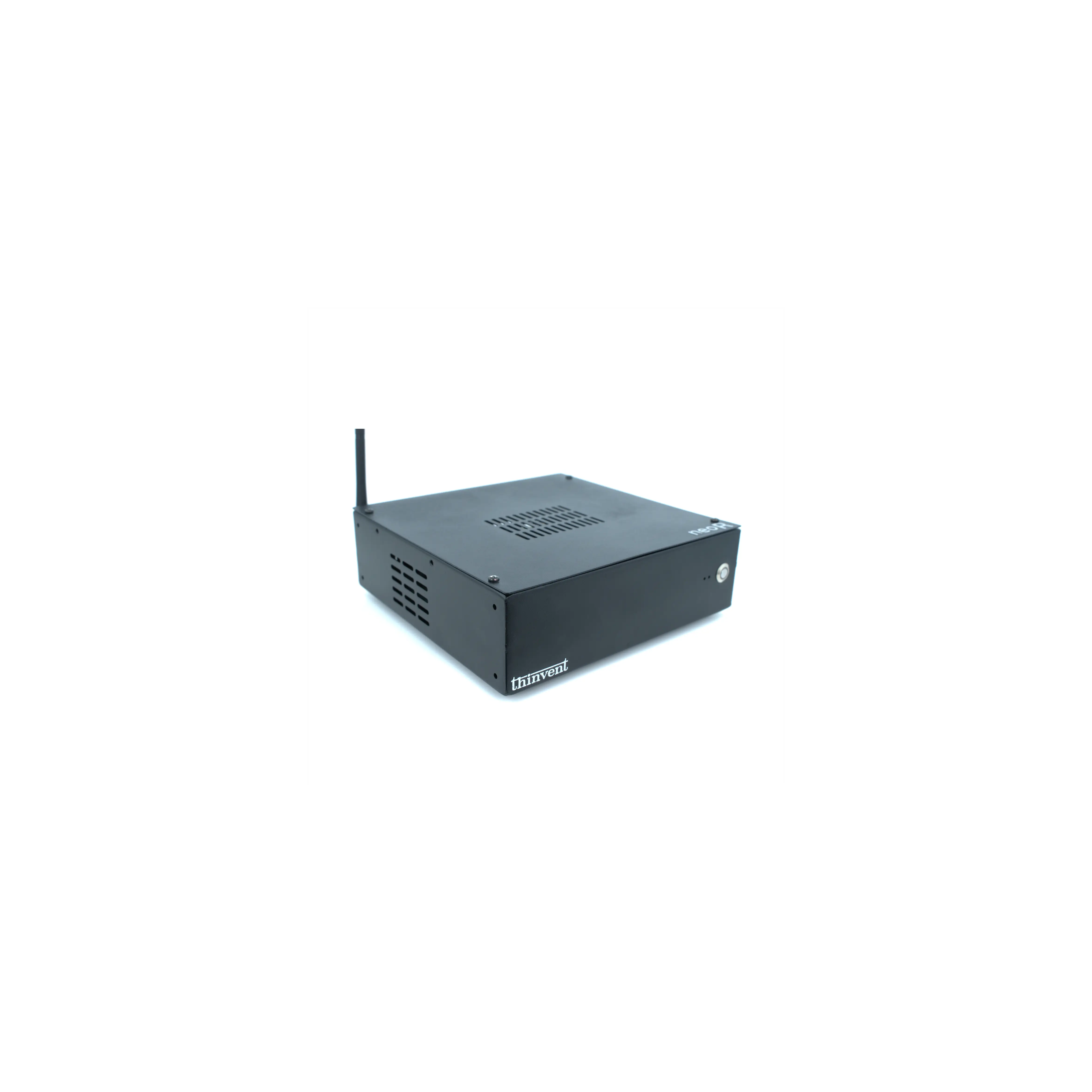
The Thinvent range does not include an OCuLink port. Thinvent's mini PCs use the following processors: Intel Core i3-1215U, Intel Core 5 120U, Intel Core i5-1335U, Intel Core i7-1255U, Intel Celeron N5095A, AMD Ryzen 5 7430U and ARM Cortex A55. Options include Windows 11 Pro, Ubuntu Linux, Thinux Embedded Linux and no operating system. Memory ranges from 4 GB to 16 GB, and storage ranges from 32 GB eMMC to 512 GB SSD. For businesses that need PCIe expansion, choose the Thinvent Aero or Treo mini PC with the processor and memory that match the workload.