Intel N100 vs J6412: A Technical Comparison
Choosing the right processor for an industrial or compact computing solution is critical for balancing performance, power efficiency, and cost. Two popular options in the low-power, embedded space are the Intel Processor N100 (Alder Lake-N architecture) and the Intel Celeron J6412 (Elkhart Lake architecture). This guide provides a direct comparison to help you make an informed decision.
Key Specifications and Performance
The primary difference lies in their architecture and resulting performance. The Intel N100 is built on a newer, more efficient 10nm process (Intel 7), while the J6412 uses an older 10nm process. Both are quad-core processors without Hyper-Threading. However, the N100 achieves significantly higher clock speeds, with a max turbo frequency of 3.4 GHz compared to the J6412's 2.6 GHz. Benchmarks consistently show the N100 delivering approximately 38% higher single-core performance, which translates to snappier responsiveness in everyday tasks and applications. The N100 also features a more modern Intel UHD Graphics execution unit with 24 EUs, offering better graphical performance than the J6412's Intel UHD Graphics with 16 EUs.
Power Efficiency and Use Cases
A major advantage of the N100 is its superior power efficiency. It operates at a base Thermal Design Power (TDP) of just 6W, compared to the J6412's 10W. This makes the N100 ideal for fanless designs, silent operation, and applications where heat dissipation or power consumption is a primary concern. The J6412, while still efficient, is better suited for legacy designs or projects where its specific I/O configuration or cost profile is a perfect fit.
| Feature | Intel Processor N100 | Intel Celeron J6412 |
|---|---|---|
| Architecture | Alder Lake-N (Intel 7) | Elkhart Lake (10nm) |
| Cores / Threads | 4 / 4 | 4 / 4 |
| Max Turbo Frequency | 3.4 GHz | 2.6 GHz |
| Base TDP | 6W | 10W |
| GPU (Execution Units) | Intel UHD Graphics (24 EUs) | Intel UHD Graphics (16 EUs) |
| Memory Support | DDR4/DDR5, up to 4800 MT/s | DDR4/LPDDR4x, up to 3200 MT/s |
| PCIe Support | Gen 3 | Gen 3 |
| Key Advantage | Higher Performance per Watt, Newer Arch | Established Platform, Cost-Effective |
Ideal Applications
-
Intel N100: Modern digital signage, kiosks, thin clients, edge computing nodes, light-duty industrial PCs, and compact home/office mini PCs where silent, fanless operation and strong single-thread performance are valued.
-
Intel J6412: Legacy system upgrades, basic IoT gateways, networked appliances, and cost-sensitive embedded projects where absolute peak performance is less critical than platform stability or specific cost targets.
Thinvent Products Featuring Intel N100 Technology
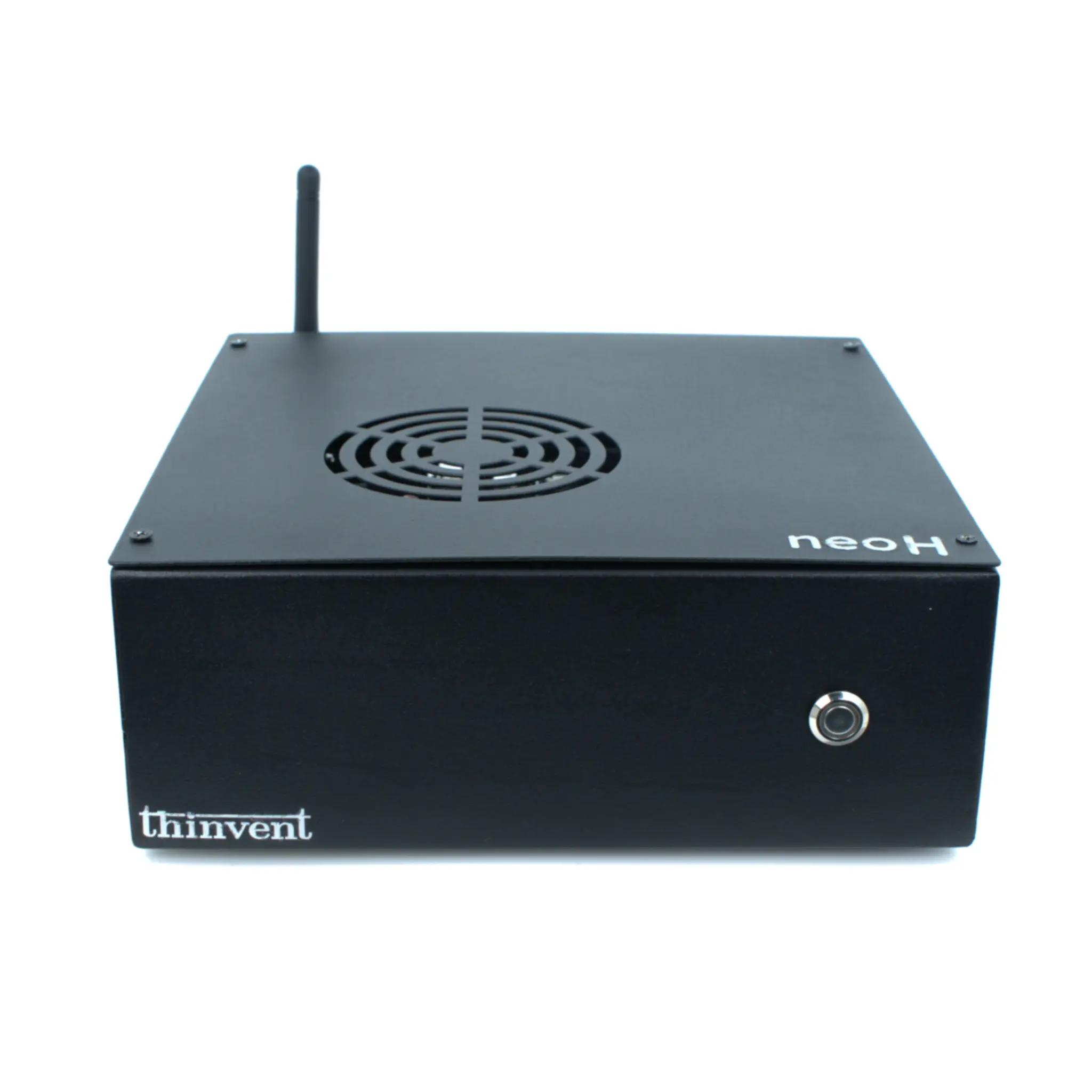
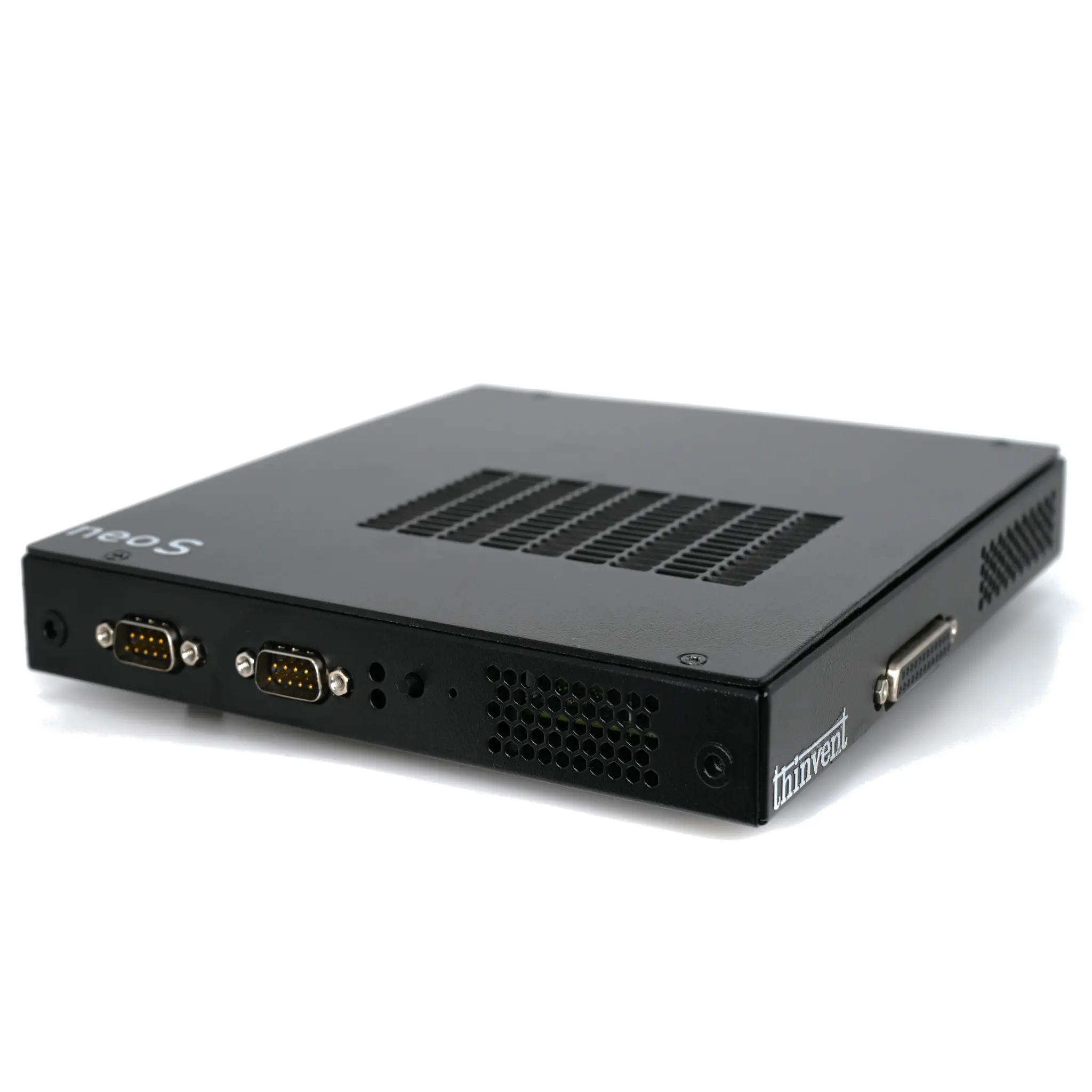
Thinvent leverages the efficiency and performance of the Intel N100 processor across its product lines to deliver reliable, fanless computing solutions. Our Treo Mini PC and Industrial PC IPC1 are prime examples, offering this modern quad-core processor in compact, robust form factors. These systems are pre-configured with memory and storage, running on efficient operating systems like Ubuntu Linux or our proprietary Thinux™, making them ready-to-deploy for digital signage, industrial automation, and space-constrained office environments. Explore our range to find the perfect N100-powered solution for your application.