Intel N100 vs J6412: A Home Server Processor Showdown
Choosing the right processor is critical for building an efficient, reliable, and cost-effective home server. Two popular low-power Intel options are the older Celeron J6412 and the newer Processor N100. While both are designed for energy-efficient computing, the N100 represents a significant generational leap in performance and efficiency, making it the superior choice for most modern home server applications.
Key Specifications and Technical Details
The Intel Celeron J6412 is a quad-core processor based on the older Gemini Lake Refresh architecture, with a base frequency of 2.0 GHz and a TDP of 10W. In contrast, the Intel Processor N100 is also a quad-core chip but is built on the modern Alder Lake-N architecture. It features a higher maximum turbo frequency of up to 3.4 GHz while operating at a lower base power of just 6W. This newer architecture brings substantial improvements in instructions per cycle (IPC), resulting in much better single-threaded and multi-threaded performance. Benchmarks indicate the N100 is approximately 39% faster in multi-threaded tasks and 38% faster in single-threaded performance compared to the J6412, while consuming less power.
| Feature | Intel Celeron J6412 | Intel Processor N100 |
|---|---|---|
| Architecture | Gemini Lake Refresh (2019) | Alder Lake-N (2023) |
| Cores / Threads | 4 / 4 | 4 / 4 |
| Max Turbo Frequency | 2.6 GHz | 3.4 GHz |
| Base TDP | 10W | 6W |
| GPU | Intel UHD Graphics (Jasper Lake) | Intel UHD Graphics (24 EU) |
| Memory Support | DDR4/LPDDR4 | DDR5/LPDDR5 |
| Performance Gain | Baseline | ~39% Multi-core, ~38% Single-core |
Use Cases and Applications for Home Servers
For a home server, the choice impacts several key functions:
-
Media Servers (Plex/Jellyfin): The N100's superior CPU performance and more capable integrated GPU (with improved media encoding/decoding engines) provide smoother transcoding for multiple streams, making it ideal for serving media to various devices.
-
Network-Attached Storage (NAS): Both CPUs can handle basic file serving. However, the N100's extra headroom is beneficial for running additional services alongside your NAS (like Docker containers, VPN servers, or home automation software) without slowdowns.
-
Lightweight Virtualization & Containers: The performance uplift of the N100 allows for more responsive virtual machines or a greater number of stable Docker containers, supporting a more complex self-hosted ecosystem.
-
Energy Efficiency: The N100's lower power draw at higher performance levels translates directly to lower electricity costs for a 24/7 home server, a crucial long-term consideration.
Thinvent Products Featuring Intel N100 Technology
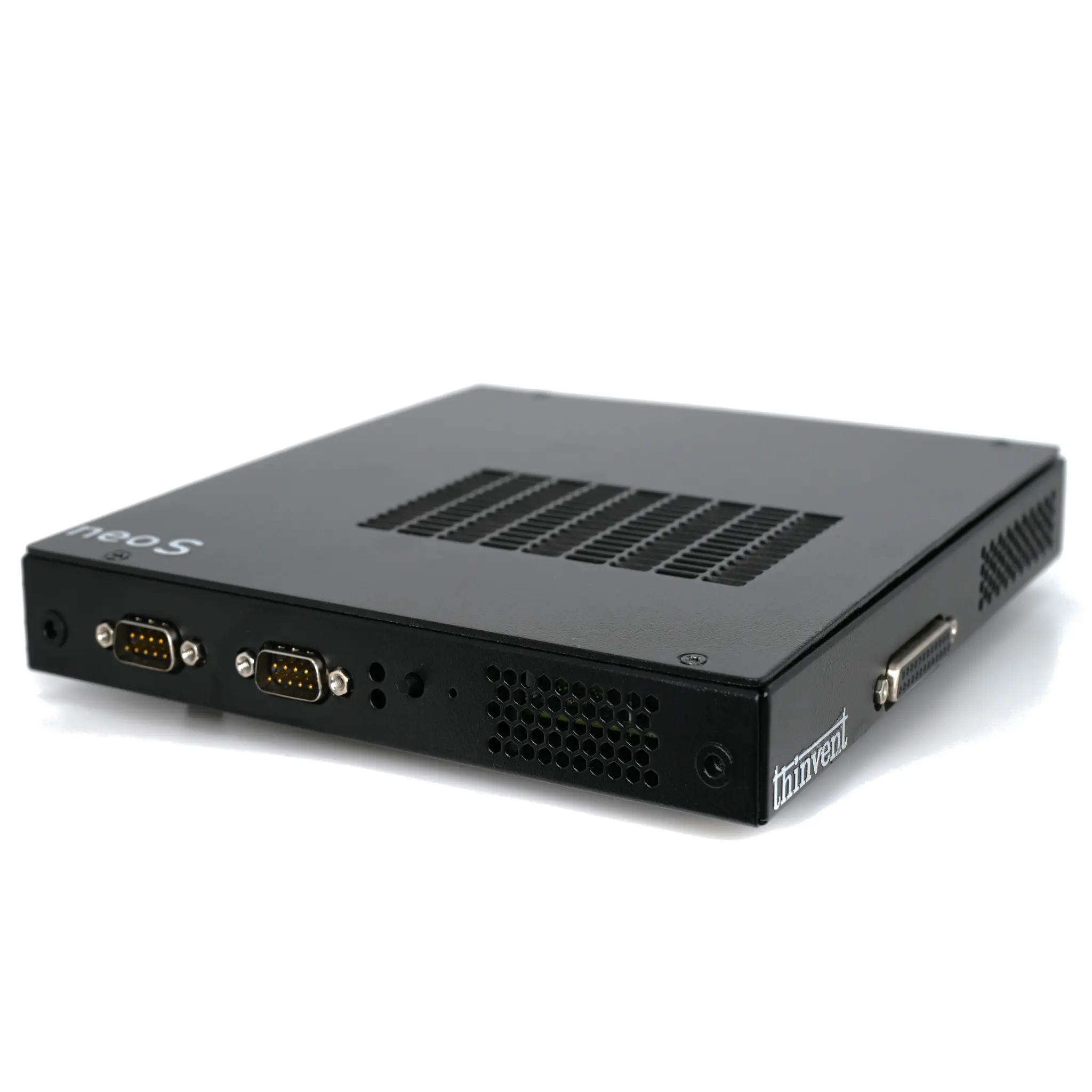
Thinvent leverages the efficiency and performance of the Intel Processor N100 in several of its compact and robust computing solutions, perfect for building a capable home server. Our fanless designs ensure silent, reliable 24/7 operation, while the low thermal footprint of the N100 aligns perfectly with this approach.
For instance, the Thinvent Treo Mini PC and the Thinvent Industrial PC IPC1 are built around the Intel N100 processor. These systems offer a balance of modern performance, low power consumption, and a small physical footprint. They provide essential connectivity and can be configured with adequate RAM and storage to act as a dedicated, always-on home server for file sharing, media management, and lightweight hosting duties. By choosing a pre-built Thinvent solution with an N100, you get a tested, stable, and power-optimized platform ready for your server software.