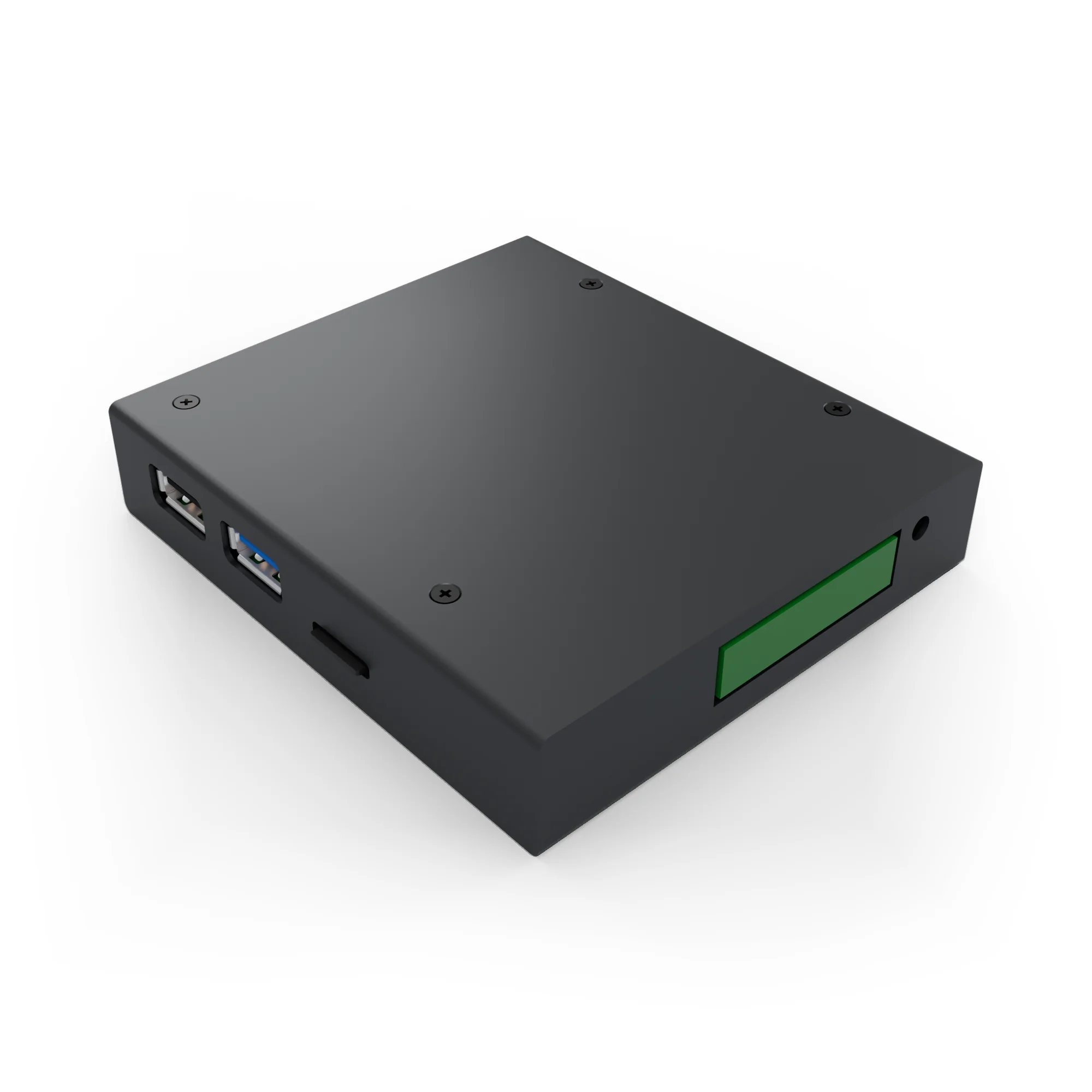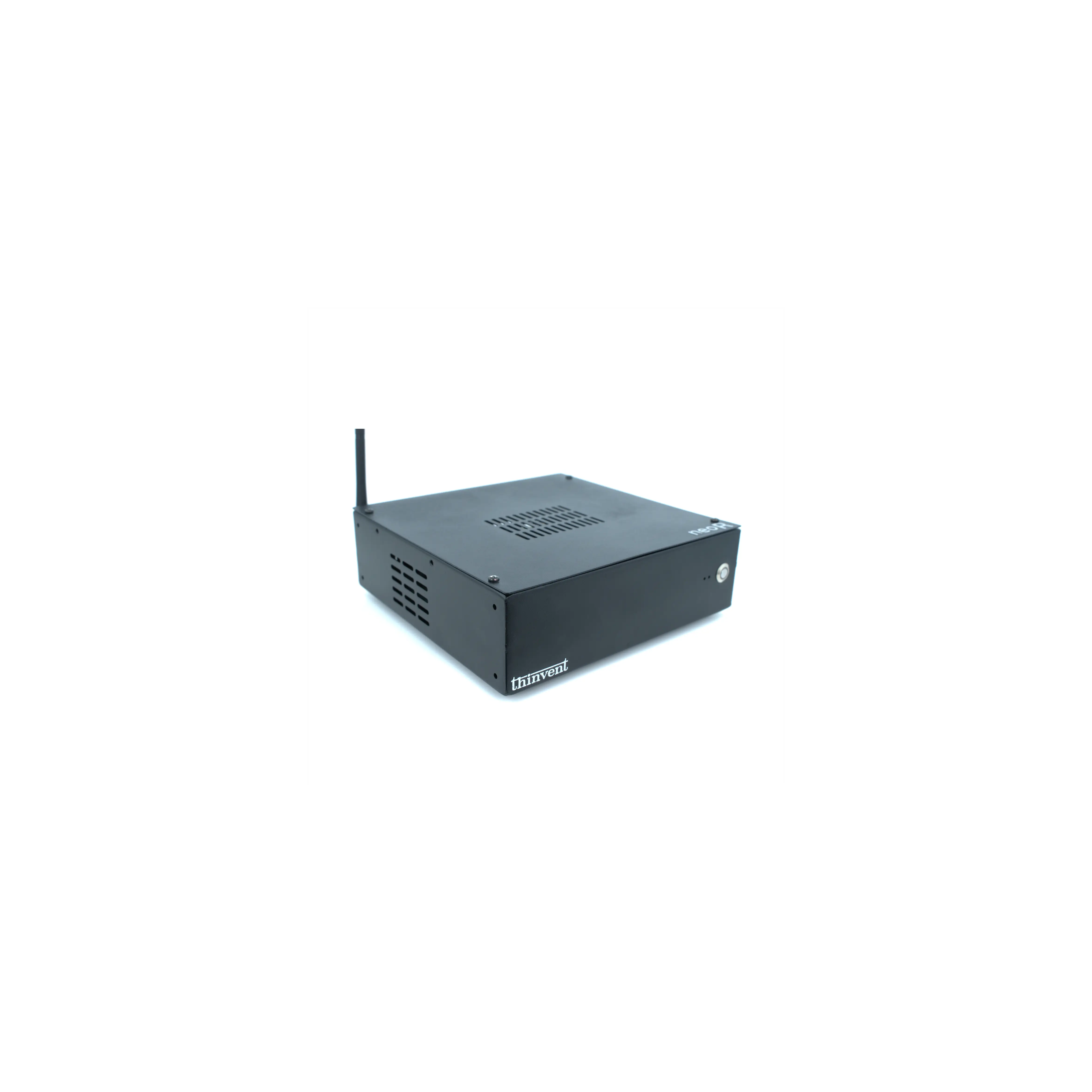
The Orange Pi 4 is a single-board computer built on the Rockchip RK3399 processor, with six ARM cores (two Cortex-A72 and four Cortex-A53), 4 GB of LPDDR4 memory and up to 16 GB of eMMC flash. The closest Thinvent match is the Thinvent Micro 6 Pro Mini PC, an ARM Cortex-A55 system with 4 cores, 4 GB of onboard RAM and 32 GB of eMMC storage, running Thinux embedded Linux.
Orange Pi 4 vs Thinvent Micro 6 Pro Mini PC
| Feature | Orange Pi 4 | Thinvent Micro 6 Pro Mini PC |
|---|---|---|
| Processor | Rockchip RK3399 | ARM Cortex-A55 |
| Cores/Threads | 6 cores (2x Cortex-A72 up to 2.0 GHz, 4x Cortex-A53 up to 1.5 GHz) | 4 cores, up to 1.9 GHz |
| RAM | 4 GB LPDDR4 | 4 GB onboard |
| Storage | 16 GB eMMC (option), MicroSD slot up to 128 GB | 32 GB eMMC |
| Form Factor | Single-board computer, 91 x 56 mm | Mini PC |
| Cache | Not stated | 1 MB |
| HDMI | Not stated | 1 |
| Wireless | Not stated | Dual antenna, dual band Wi-Fi |
| Operating System | Android 8.1, Ubuntu 16.04/18.04, Debian 9 | Thinux embedded Linux |
Key differences
-
The Thinvent Micro 6 Pro offers 32 GB of eMMC storage, double the 16 GB base storage of the Orange Pi 4, in a ready-to-use mini PC form factor.
-
The Thinvent unit includes dual antenna, dual band Wi-Fi and a 1 MB cache, which are listed in its specifications.
-
The Orange Pi 4 provides six cores, including two higher-clocked Cortex-A72 cores, so it has more processing cores than the Thinvent Micro 6 Pro's four.
-
The Orange Pi 4 supports expandable storage through a MicroSD slot of up to 128 GB, while the Thinvent unit's storage is its 32 GB eMMC.
-
Both systems use 4 GB of memory, so memory capacity is equal.
Which one should you choose?
Choose the Orange Pi 4 if you are a maker or developer who needs a six-core board and expandable MicroSD storage for hobby or prototyping projects. Choose the Thinvent Micro 6 Pro Mini PC if you need a compact, ready-to-deploy mini PC with dual band Wi-Fi, 32 GB of onboard storage and the Thinux embedded Linux platform for embedded applications.