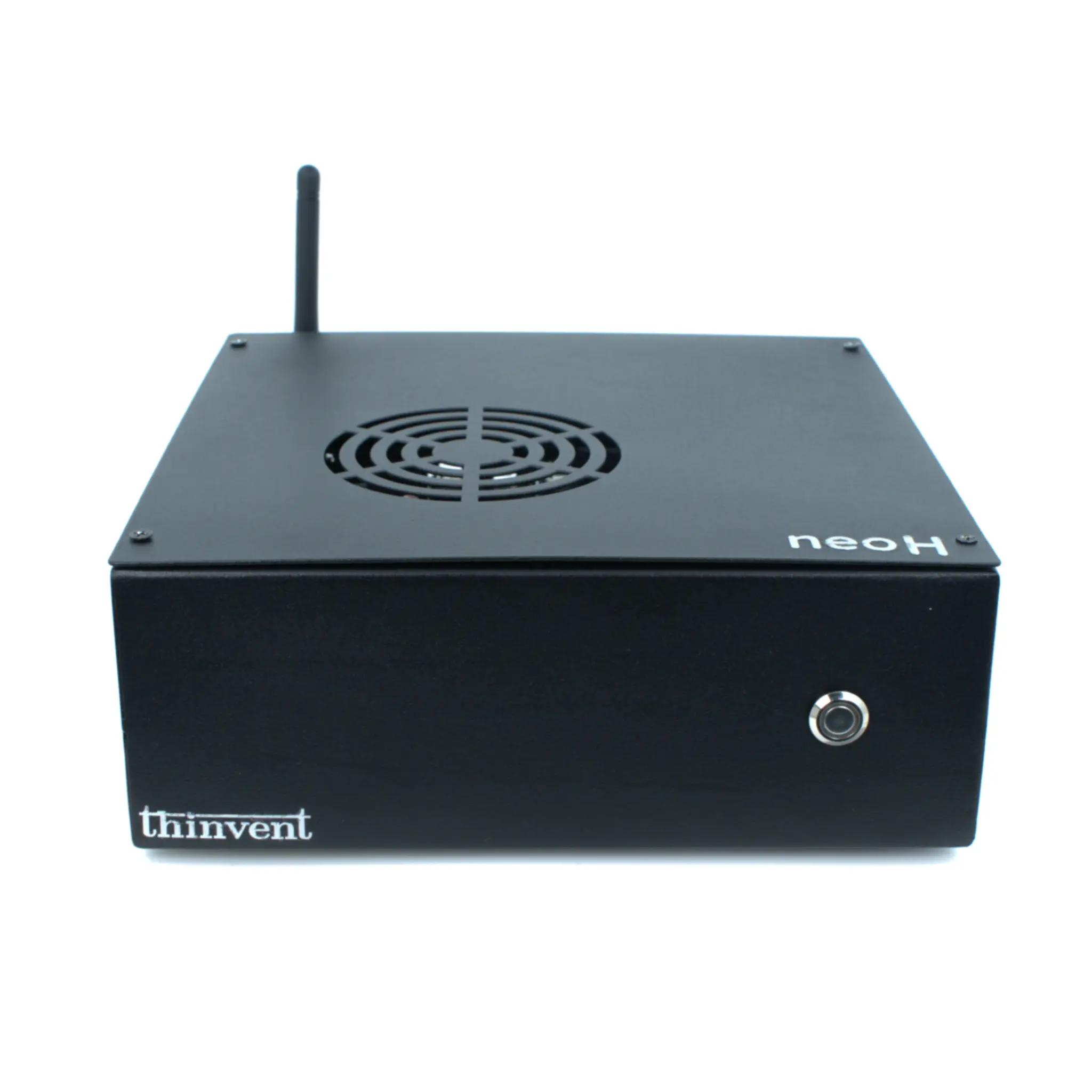
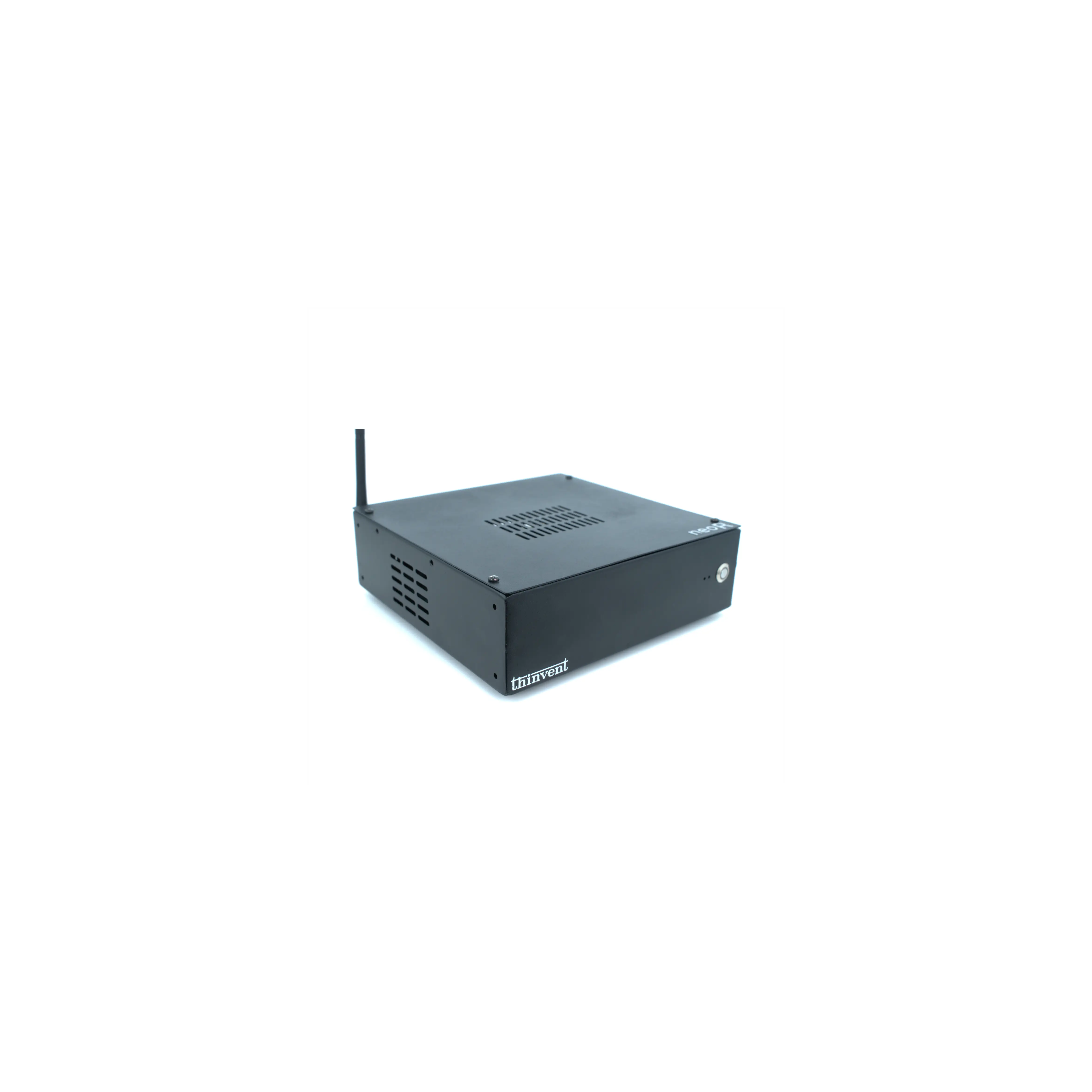
The Orbsmart AW-14 is a fanless mini PC with an Intel N5105 processor (4 cores), up to 16 GB RAM, up to 256 GB storage, Wi-Fi and Windows 11 Pro. The closest Thinvent match is the Thinvent Neo H Mini PC with Intel Celeron N5095A, which uses a closely related 4-core Intel Celeron processor and includes dual band Wi-Fi 5.
Orbsmart AW-14 vs Thinvent Neo H Mini PC
| Feature | Orbsmart AW-14 | Thinvent Neo H, Intel Celeron N5095A | Thinvent Neo H, Intel Core i3-1315U |
|---|---|---|---|
| Processor | Intel N5105 | Intel Celeron N5095A | Intel Core i3-1315U |
| Cores/Threads | 4 cores | 4 cores | 6 cores |
| RAM | Up to 16 GB | 8 GB | Up to 64 GB |
| Storage | Up to 256 GB | 128 GB SSD | 128 GB SSD |
| Form Factor | Mini PC | Mini PC | Mini PC |
| Operating System | Windows 11 Pro | Windows 11 Pro (also Windows 11 IoT, Ubuntu Linux, Thinux Embedded Linux, DOS, or no OS) | Windows 11 Pro (also Windows 11 IoT Value, Ubuntu Linux, Thinux Embedded Linux, DOS, or no OS) |
| Wireless | Wi-Fi | Dual band Wi-Fi 5 (802.11ac) | Dual band Wi-Fi 5 (802.11ac) |
| Cooling | Fanless | Passive cooling in fanless design (no fan listed) | Not confirmed |
Key differences
-
The Thinvent Neo H with Core i3-1315U supports up to 64 GB RAM, compared with the 16 GB maximum of the Orbsmart AW-14.
-
The Thinvent Neo H with Core i3-1315U has 6 cores, compared with 4 cores on the Orbsmart AW-14.
-
The Orbsmart AW-14 has a maximum storage of 256 GB. The Thinvent Neo H models in this comparison have a 128 GB SSD, and the Thinvent range has up to 2 TB.
-
The Orbsmart AW-14 has a 2.5-inch drive bay, which the Thinvent Neo H does not have. The Thinvent Neo H has a DB9 serial port and four USB 3.0 ports on the N5095A model.
-
The Thinvent Neo H Celeron N5095A model uses the same processor family as the Orbsmart's N5105 class, with 4 cores, and has dual band Wi-Fi 5.
Which one should you choose?
Choose the Orbsmart AW-14 if you need a fanless Windows 11 Pro mini PC with an Intel N5105 processor and a 2.5-inch drive bay. Choose a Thinvent Neo H model if you need more RAM, more cores or a choice of operating systems, including Linux and Windows 11 IoT.