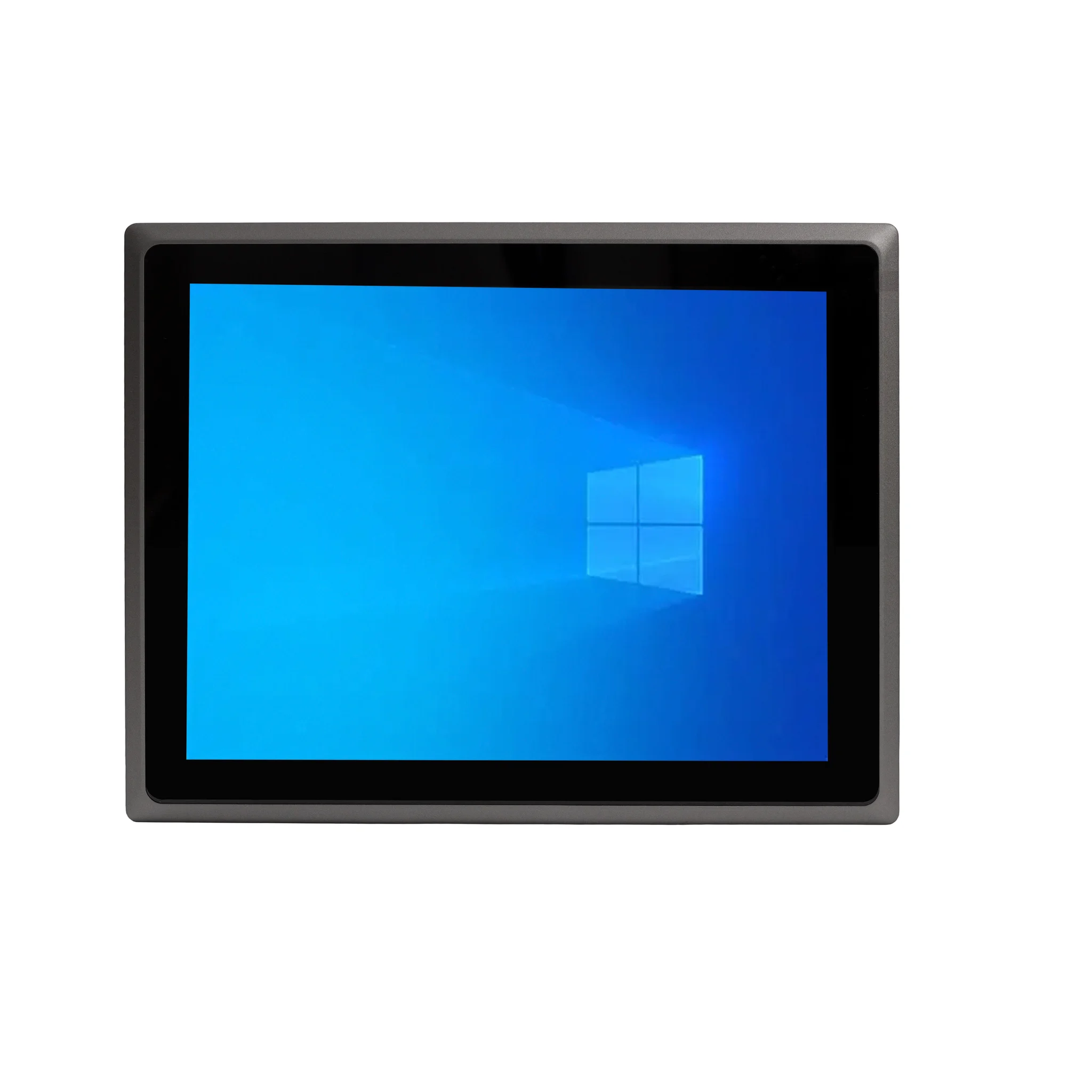
What is WiFi in Industrial Computing?
WiFi, or Wireless Fidelity, is a wireless networking technology that allows industrial computers to connect to local area networks and the internet without physical Ethernet cables. In industrial and commercial settings, WiFi-enabled computers provide crucial flexibility for deployment in locations where running cables is impractical, expensive, or restrictive. This technology typically adheres to IEEE 802.11 standards (like 802.11ac/WiFi 5 or 802.11ax/WiFi 6), offering varying levels of speed, range, and reliability.
Key Specifications and Technical Details
Industrial-grade WiFi modules are designed for stability in challenging environments. Key specifications to consider include the WiFi standard, which dictates maximum theoretical speed and features like MU-MIMO. Antenna configuration (internal or external connectors) significantly impacts range and signal strength in metal-heavy industrial settings. Security is paramount, with support for modern protocols like WPA3 being essential. Many industrial computers offer dual-band (2.4 GHz and 5 GHz) connectivity, with the 5 GHz band providing faster speeds and less interference, while the 2.4 GHz band offers better range and wall penetration.
Applications and Use Cases
WiFi connectivity unlocks a wide range of applications for industrial PCs. In Digital Signage and Kiosks, it allows for easy content updates and remote management without network cabling. For Mobile Workstations and Carts in healthcare or warehouses, WiFi provides untethered access to central databases and inventory systems. In Smart Manufacturing, WiFi-enabled PCs can connect to IoT sensors and machines on the factory floor, facilitating real-time data collection and process control. It's also ideal for Temporary Installations at trade shows, construction sites, or pop-up retail locations.
WiFi vs. Wired Ethernet: A Comparison
| Feature | WiFi (Wireless) | Wired Ethernet |
|---|---|---|
| Installation | Flexible, no cabling required. | Requires physical cable runs. |
| Mobility | Supports device movement within range. | Stationary; limited by cable length. |
| Speed & Latency | Very good (WiFi 6/6E), but can be affected by interference. | Excellent, consistent, and low latency. |
| Reliability | Can be affected by physical obstacles, interference, and range. | Highly reliable and predictable connection. |
| Security | Robust with WPA3, but inherently broadcasts signal. | Physically secure; data travels only through the cable. |
| Ideal For | Mobile setups, difficult-to-wire areas, temporary deployments. | Fixed installations requiring maximum throughput and stability. |
Thinvent Industrial Computers with WiFi
While the sample products listed are configured without WiFi, Thinvent offers a comprehensive range of industrial computing solutions where WiFi connectivity is a standard or configurable option. Our product lines, including robust Industrial PCs, versatile Mini PCs, and space-saving Thin Clients, can be equipped with industrial-grade wireless modules to meet your specific application needs. This allows for seamless integration into both new and existing wireless network infrastructures, providing the reliability and performance required for business-critical operations worldwide.