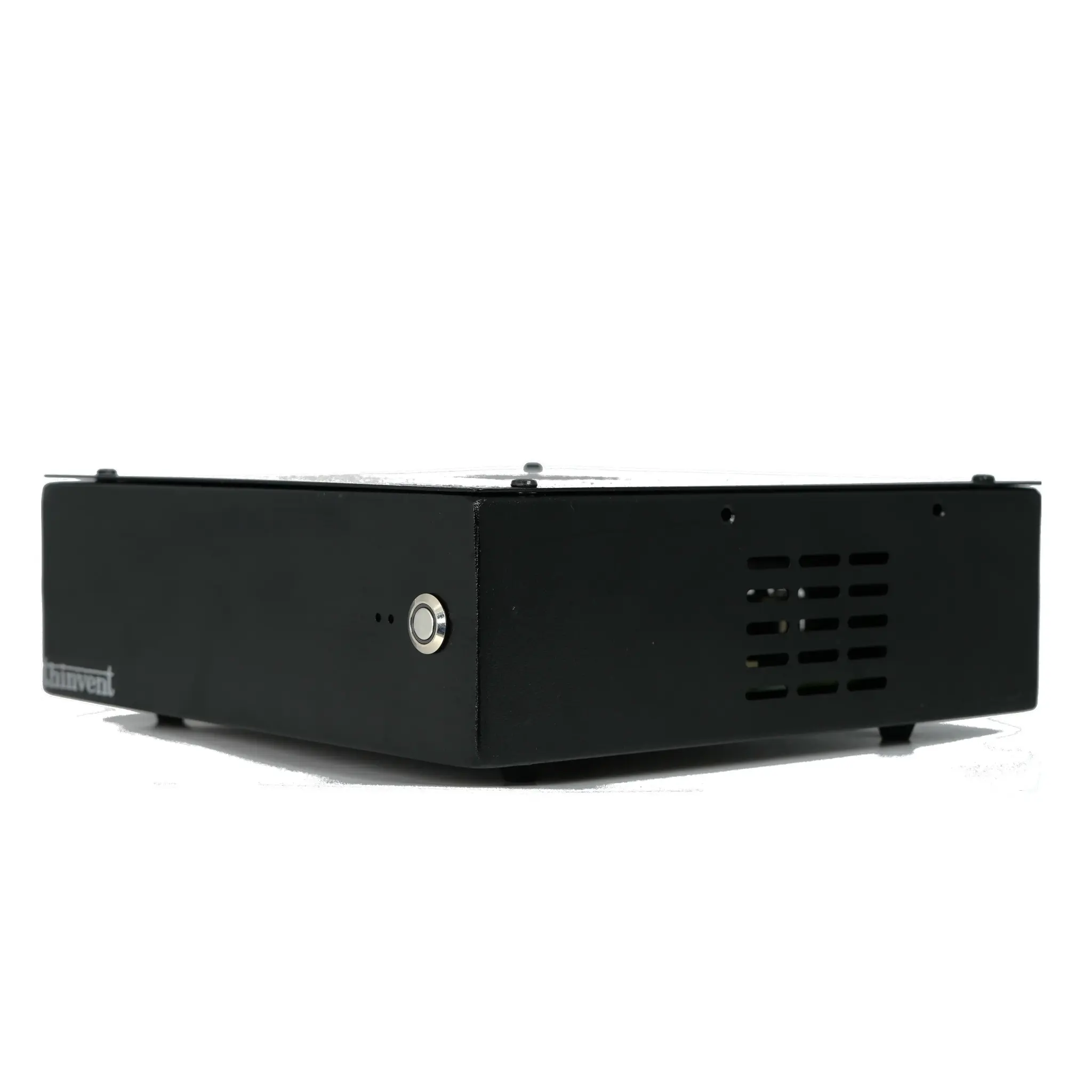
The Dell Wyse 5070 is a thin client with two SODIMM memory slots, rated for a maximum of 8 GB of DDR4 RAM, and its flash storage is an M.2 SATA SSD or eMMC. The closest Thinvent match is the Thinvent Neo S Thin Client, which uses the same Intel Celeron J1900 processor family and is also a fanless thin client that lets you choose Windows 11 IoT among its operating systems.
Dell Wyse 5070 vs Thinvent Neo S Thin Client
| Dell Wyse 5070 | Thinvent Neo S Thin Client | |
|---|---|---|
| Processor | Not confirmed | Intel Celeron J1900 (7th gen) |
| Cores/Threads | Not confirmed | 4 cores |
| RAM | Up to 8 GB DDR4 | 4 GB DDR3 |
| Storage | M.2 SATA SSD or eMMC | 128 GB SSD |
| Form Factor | Thin Client | Thin Client |
| Operating System | Not confirmed | Windows 11 Pro (also Windows 11 IoT, Ubuntu Linux, Thinux Embedded Linux, DOS, or without OS) |
| Cooling | Not confirmed | Fanless passive cooling |
| Serial/Parallel Ports | Not confirmed | 2 DB9 RS232 serial ports, 1 DB25 parallel port |
Key differences
-
The Thinvent Neo S supports Windows 11 IoT, Ubuntu Linux, Thinux Embedded Linux, DOS, or no OS, so the buyer can choose the operating system.
-
The Thinvent Neo S includes a 128 GB SSD and fanless passive cooling.
-
The Thinvent Neo S has serial and parallel ports: two DB9 RS232 serial ports and one DB25 parallel port.
-
The Dell Wyse 5070 supports up to 8 GB of RAM, while the Thinvent Neo S ships with 4 GB.
-
We could not confirm the Dell Wyse 5070's processor, cores, operating system or cooling, so those points are left out of this comparison.
Which one should you choose?
Choose the Dell Wyse 5070 if you need its specific Dell platform and its 8 GB memory ceiling. Choose the Thinvent Neo S if you need a fanless thin client with a 128 GB SSD, serial and parallel ports, and a choice of Windows 11 IoT or Linux.