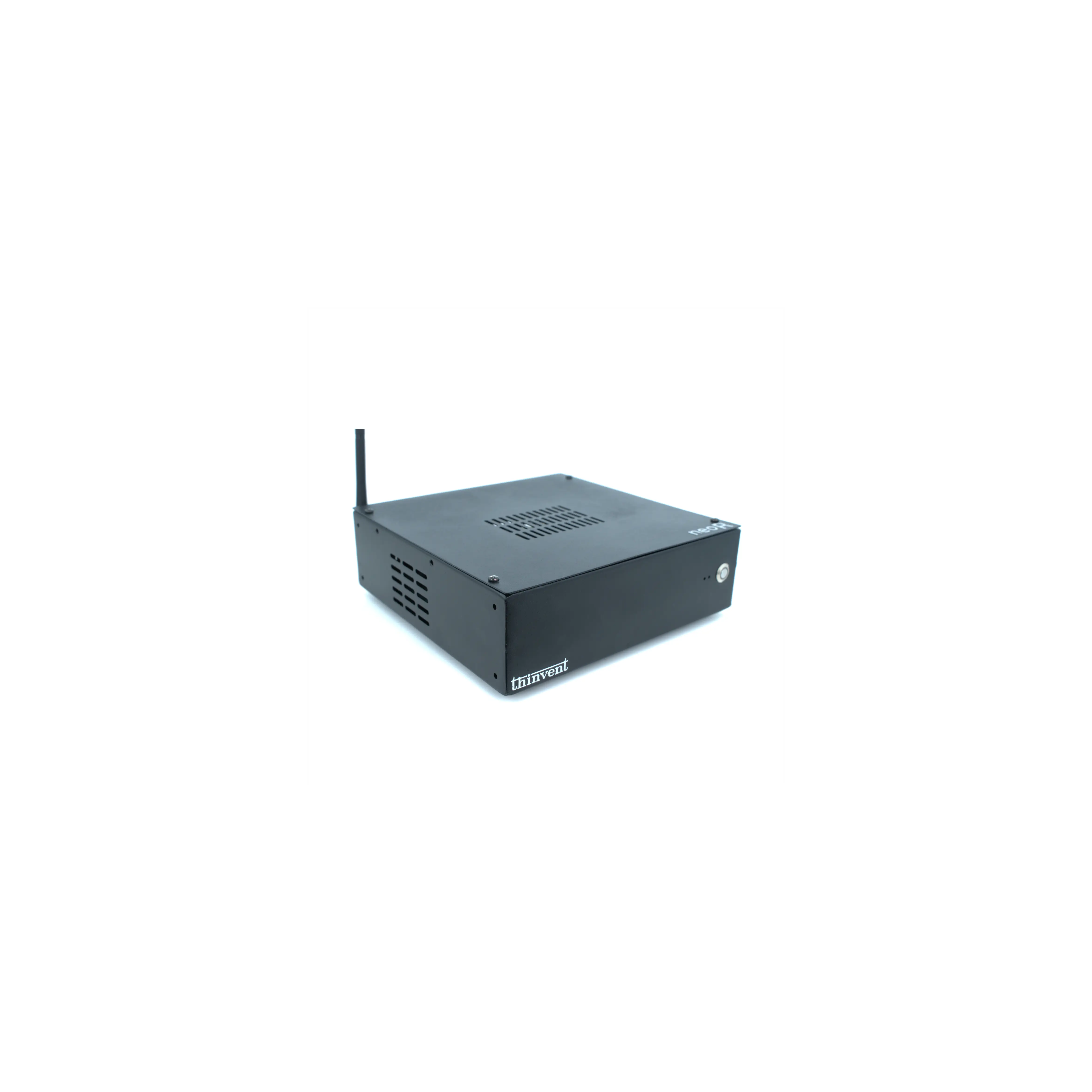
What Are Applied Mini PCs?
"Applied Mini PCs" typically refer to compact, fanless industrial computers designed for embedded and specialized applications. These systems prioritize reliability, low power consumption, and a small footprint over raw desktop performance. They are engineered to operate 24/7 in challenging environments where space is limited and consistent operation is critical. Key characteristics include fanless cooling for silent, maintenance-free operation, wide operating temperature ranges, and robust I/O connectivity for interfacing with industrial equipment.
Key Specifications and Technical Details
These systems are built around efficient, low-TDP processors from Intel's N-series (like the N100) or similar platforms. Common specifications include:
-
Form Factor: Ultra-compact designs, often measuring just a few inches in each dimension.
-
Processor: Modern, efficient CPUs (e.g., Intel N100) with 4 or more cores, balancing performance with minimal heat generation.
-
Memory: Typically 8GB to 16GB of soldered or SODIMM DDR4 RAM for stability.
-
Storage: Reliable M.2 or mSATA SSDs, commonly 128GB to 512GB.
-
Cooling: Completely fanless, using passive heatsinks to eliminate dust ingress and mechanical failure points.
-
Connectivity: Multiple Gigabit Ethernet ports, USB 3.2, HDMI/DisplayPort outputs, and often serial ports (COM) for legacy industrial devices.
-
Power: Low-voltage DC input (e.g., 12V), making them ideal for vehicle-mounted or remote power-constrained installations.
Use Cases and Applications
Applied Mini PCs excel in space-constrained, always-on scenarios. Common applications include:
-
Digital Signage & Kiosks: Driving displays in retail, hospitality, and public transportation.
-
Industrial Automation: Acting as a gateway or controller for PLCs, sensors, and machinery on the factory floor.
-
Thin Clients & VDI: Providing secure, centralized access to virtual desktops in offices and call centers.
-
Edge Computing: Processing data locally in IoT networks for smart cities, agriculture, and energy management.
-
Embedded Systems: Serving as the core computing module in medical devices, test equipment, and robotics.
Comparison: Applied Mini PC vs. Standard Desktop
| Feature | Applied Mini PC | Standard Desktop |
|---|---|---|
| Form Factor | Ultra-compact, wall/DIN-rail mountable | Large tower case |
| Cooling | Fanless, silent, dust-proof | Active fans, can be noisy |
| Operating Temp | Wide range (e.g., -20°C to 60°C) | Narrow (typical office environment) |
| Power Consumption | Very low (10W-25W) | High (65W-250W+) |
| I/O for Industry | Multiple LAN, COM, GPIO | Consumer ports (USB, Audio) |
| Reliability | Designed for 24/7 operation | For intermittent use |
Thinvent's Range of Applied Mini PCs
Thinvent manufactures a robust lineup of industrial-grade mini PCs perfect for applied and embedded use cases. Our Aero Series, for example, features the efficient Intel N100 processor in a rugged, fanless chassis. These systems come pre-configured with various operating system options—including Windows 11 IoT, Windows 11 Pro, Ubuntu Linux, and our own Thinux™ Embedded Linux—to match your specific software environment. With standard configurations offering 16GB RAM and 128GB SSD, plus versatile connectivity, Thinvent mini PCs provide a reliable, off-the-shelf computing solution for digital signage, automation, edge computing, and thin client deployments worldwide.