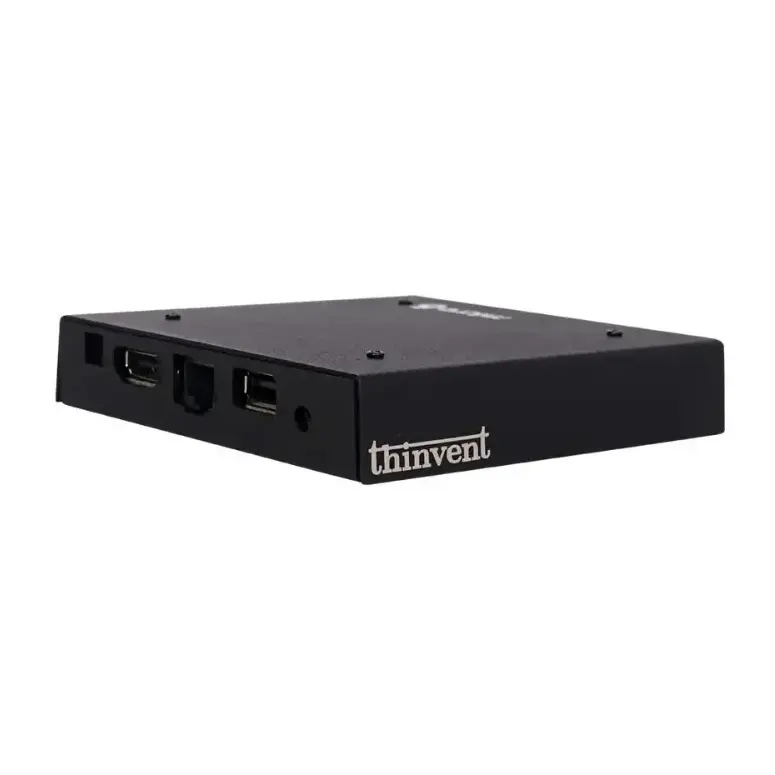
What Are Compact Desktop Computers?
Compact desktop computers, often referred to as mini PCs or small form factor (SFF) desktops, are complete computing systems designed to occupy minimal desk or mounting space. They provide the full functionality of a traditional desktop tower but in a significantly smaller footprint, typically using low-power, efficient processors and fanless cooling for silent, reliable operation. These systems are ideal for environments where space is at a premium, power consumption must be low, and dust-free, maintenance-free operation is critical.
Key Specifications and Technical Details
Modern compact desktops are powered by efficient processors like the Intel N-series (e.g., N100), which offer a balance of performance and low thermal design power (TDP). Common configurations include 4 to 16GB of DDR4 RAM and fast SSD storage from 128GB to 1TB. Key technical features often include:
-
Fanless Design: Eliminates moving parts for silent operation and increased reliability in dusty environments.
-
Rich I/O: Multiple USB ports (including USB 3.2 and Type-C), HDMI/DisplayPort outputs for dual displays, and Gigabit Ethernet.
-
Flexible Power: Often powered via a 12V DC adapter, making them suitable for vehicle or kiosk installations.
-
Operating System Options: Available with Windows, various Linux distributions, or without an OS for custom software deployment.
Use Cases and Applications
The small size and robust build of compact desktops make them perfect for a wide range of commercial and industrial applications:
-
Digital Signage & Kiosks: Driving displays in retail, hospitality, and public information points.
-
Office Productivity: As space-efficient workstations for general office tasks, web browsing, and document processing.
-
Industrial Automation: As a control unit in manufacturing environments due to their durability and wide operating temperature ranges.
-
Thin Client & VDI: Acting as endpoints for virtual desktop infrastructure, centralizing IT management.
-
Home Entertainment: Serving as a compact media center or home theater PC (HTPC).
Comparison: Compact Desktop vs. Traditional Tower
| Feature | Compact Desktop (Mini PC) | Traditional Tower Desktop |
|---|---|---|
| Size/Footprint | Extremely small (often palm-sized) | Large, requires significant space |
| Noise Level | Silent (fanless models) or very quiet | Can be noisy due to cooling fans |
| Power Consumption | Very low (typically 10-40W) | Moderate to High (65W+) |
| Expandability | Limited; often fixed RAM and storage | High; multiple expansion slots and drive bays |
| Typical Use Case | Space-constrained, embedded, commercial | High-performance gaming, workstations, servers |
Thinvent Compact Desktop Solutions
Thinvent offers a robust range of compact desktop computers engineered for reliability in demanding settings. Our Aero Mini PC series exemplifies this approach, featuring fanless aluminum chassis for superior heat dissipation, industrial-grade components for long-term stability, and a variety of configuration options to match specific project needs. From the efficient Intel N100 processor for everyday tasks to more powerful Intel Core series options for demanding applications, Thinvent provides scalable, durable computing solutions perfect for digital signage, point-of-sale systems, office workstations, and industrial control environments worldwide.