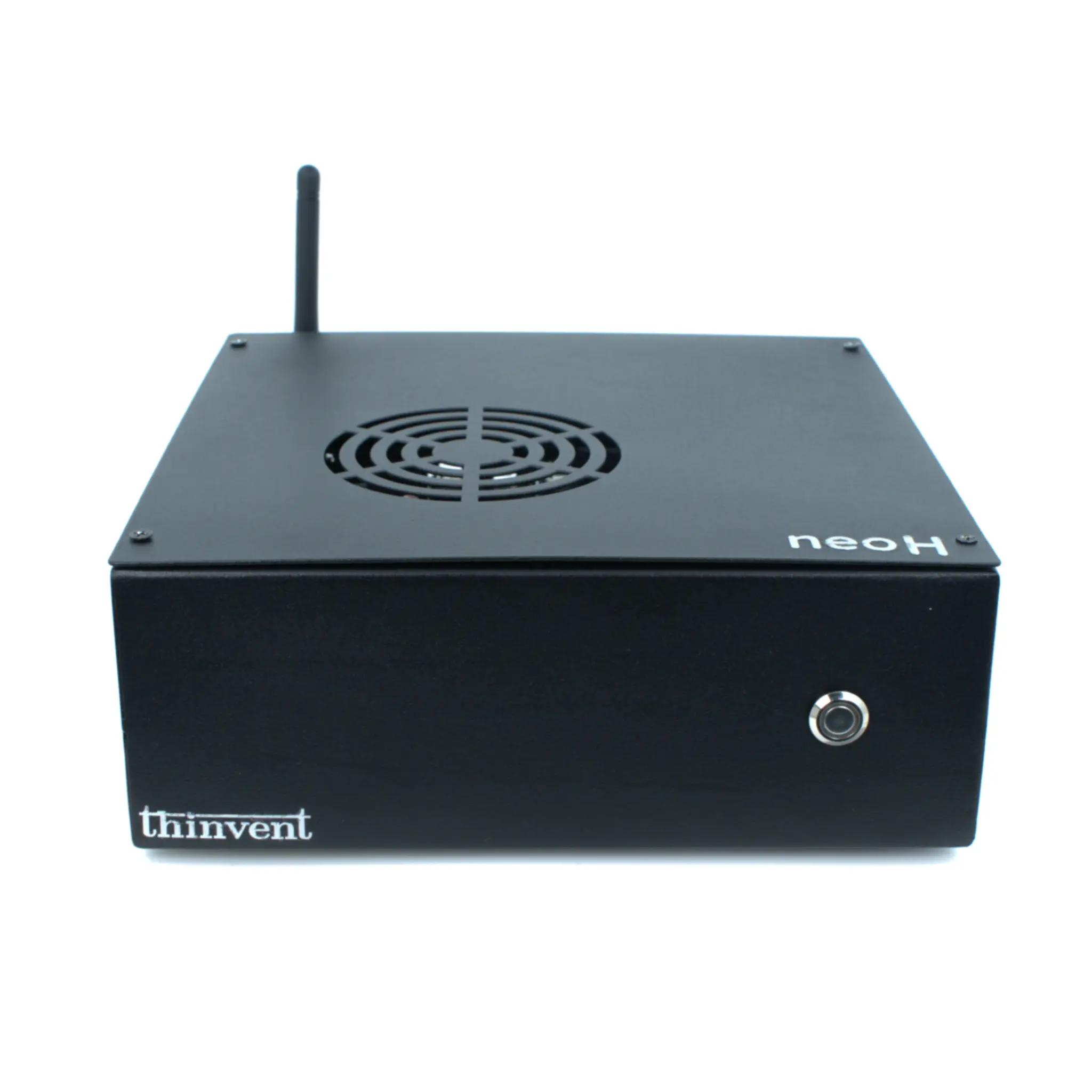
Compact industrial computers are purpose-built computing platforms designed for integration into larger systems or machinery, where space is limited and reliability is paramount. Unlike standard desktop PCs, these systems are engineered for durability, long-term availability, and operation in challenging environments. They are characterized by their small form factors, fanless designs for silent and dust-resistant operation, wide operating temperature ranges, and support for industrial interfaces and mounting options. Their core function is to provide stable, dedicated computing power for specific, often mission-critical, automated tasks.
Key Specifications and Design Features
These computers prioritize reliability over raw performance. Common specifications include low-power processors from Intel (Celeron, Atom, Core i-series) or ARM architectures, which generate minimal heat, enabling fanless cooling. Memory and storage are typically soldered or use industrial-grade components for vibration resistance. Key I/O includes multiple Ethernet ports for network connectivity, serial ports (RS-232/485) for legacy industrial equipment, and robust power inputs supporting wide voltage ranges (e.g., 9-36V DC). Their compact designs often support VESA, DIN-rail, or wall mounting for flexible installation.
Applications and Use Cases
The primary application for compact industrial computers is within embedded systems across various sectors. In Industrial Automation, they serve as PLCs, HMIs (Human-Machine Interfaces), and machine vision controllers on the factory floor. For Digital Signage and Kiosks, their small size and fanless operation make them ideal for driving displays in retail, hospitality, and public transportation. They are also crucial in Transportation and Logistics for fleet management and in-vehicle computing, and in IoT Gateways, where they aggregate data from sensors and connect edge devices to the cloud.
Choosing the Right Platform: ARM vs. x86
The choice between an ARM-based or Intel x86-based system depends on the application's requirements for software compatibility, performance, and power consumption.
| Feature | ARM-Based Systems | Intel x86-Based Systems |
|---|---|---|
| Architecture | RISC (Reduced Instruction Set Computer) | CISC (Complex Instruction Set Computer) |
| Typical Use | Lightweight, dedicated applications, IoT edge nodes | General-purpose computing, legacy Windows/Linux software |
| Power Consumption | Very low, often passively cooled | Low to moderate, often fanless in compact designs |
| Software Ecosystem | Linux-based (e.g., Debian, Yocto), Android | Full Windows, Linux distributions, legacy industrial software |
| Performance Profile | Excellent for focused, efficient tasks | Better for multitasking and complex computations |
| Cost | Generally lower | Generally higher |
Thinvent's Compact Industrial Computing Solutions
Thinvent offers a comprehensive range of compact industrial computers designed for embedded applications. Our portfolio includes robust Industrial PCs (IPCs) built with industrial-grade components for harsh environments, ultra-compact Mini PCs perfect for space-constrained digital signage or kiosks, and efficient Thin Clients for centralized computing architectures. Models are available with both Intel processors, such as the efficient N100 or powerful Core i5-1250P, and ARM-based processors for ultra-low-power needs. Many systems feature fanless designs, wide-temperature operation, and multiple mounting options, ensuring reliable performance in your specific embedded application.