Understanding Industrial Computer Costs and Specifications
Industrial computers are specialized devices designed for reliability, durability, and performance in demanding environments like factories, warehouses, and outdoor installations. Their pricing is not a single figure but a spectrum determined by core specifications, build quality, and intended use case. Key factors influencing cost include the processor (Intel Core vs. ARM), amount of RAM, storage type and capacity, operating system, and specialized features like wide-temperature operation or fanless cooling for dust resistance.
Key Specifications That Drive Pricing
The processor is the primary cost driver. High-performance Intel Core i5 or i7 processors (e.g., 12th-14th Gen) command a premium for complex tasks like machine vision, data analytics, or edge computing. Efficient Intel Core i3 or Celeron chips offer a balance for general industrial automation. ARM-based processors (like Cortex-A55) provide a cost-effective, low-power solution for thin client applications, digital signage, or kiosks. Memory (RAM) and storage (SSD) scale cost linearly; 8GB/256GB is a common starting point, while 64GB RAM/1TB SSD configurations are for high-end workstations. The choice of OS (Windows 11 Pro/IoT, Ubuntu Linux, or a lightweight embedded OS) also affects the final price.
Industrial PC Applications and Budget Alignment
Matching the specification tier to the application is crucial for cost optimization.
-
Entry-Level / ARM-Based: Ideal for digital signage, thin clients, and simple HMIs. Devices with ARM processors, 2-4GB RAM, and 16-64GB eMMC storage are the most budget-friendly.
-
Mid-Range / Intel Core i3/i5: Suited for factory automation, PLC supervision, and ruggedized POS systems. Configurations with 6-12 core CPUs (e.g., i3-1215U, i5-1240P), 8-16GB RAM, and 256-512GB SSD offer robust performance.
-
High-Performance / Intel Core i5/i7: Necessary for edge AI, advanced robotics, and medical imaging. These systems feature the latest Intel Core processors (e.g., 14th Gen), 32-64GB RAM, and large NVMe SSDs, representing the top tier of industrial computing investment.
Comparison of Common Industrial PC Tiers
| Specification Tier | Typical Processor | RAM | Storage | Common Use Cases | Relative Cost |
|---|---|---|---|---|---|
| Value / Thin Client | ARM Cortex-A53/A55 | 2-4 GB | 16-64 GB eMMC | Digital Signage, Kiosks, Basic Terminals | $ |
| Mainstream Automation | Intel Celeron / Core i3 | 8-16 GB | 256-512 GB SSD | PLC Gateways, HMIs, Lightweight Control | $$ |
| High-Performance Edge | Intel Core i5/i7 (12th-14th Gen) | 16-64 GB | 512 GB-1 TB SSD | Machine Vision, Data Analytics, Edge Servers | $$$ |
Industrial Computing Solutions from Thinvent
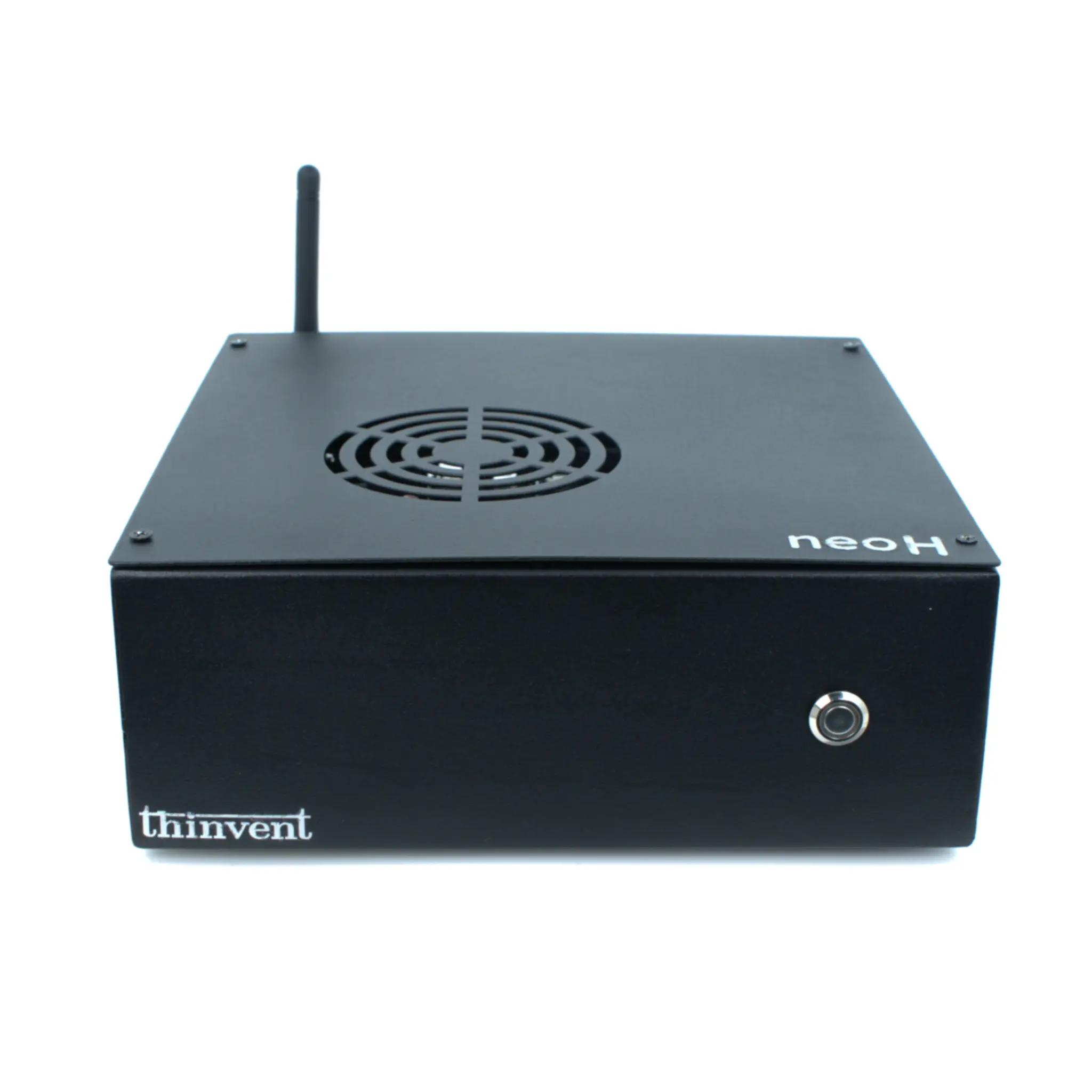
Thinvent offers a comprehensive range of industrial computers to fit any application and budget. Our portfolio includes fanless Industrial PCs (IPCs) built for harsh environments, compact Mini PCs for space-constrained installations, efficient Thin Clients for virtualized workloads, and integrated All-in-One PCs for clean, streamlined operator interfaces. From ARM-based entry-level models to powerful Intel Core-powered systems, each device is engineered for 24/7 reliability. Explore our catalog to find the perfect balance of specifications, durability, and value for your industrial automation project.