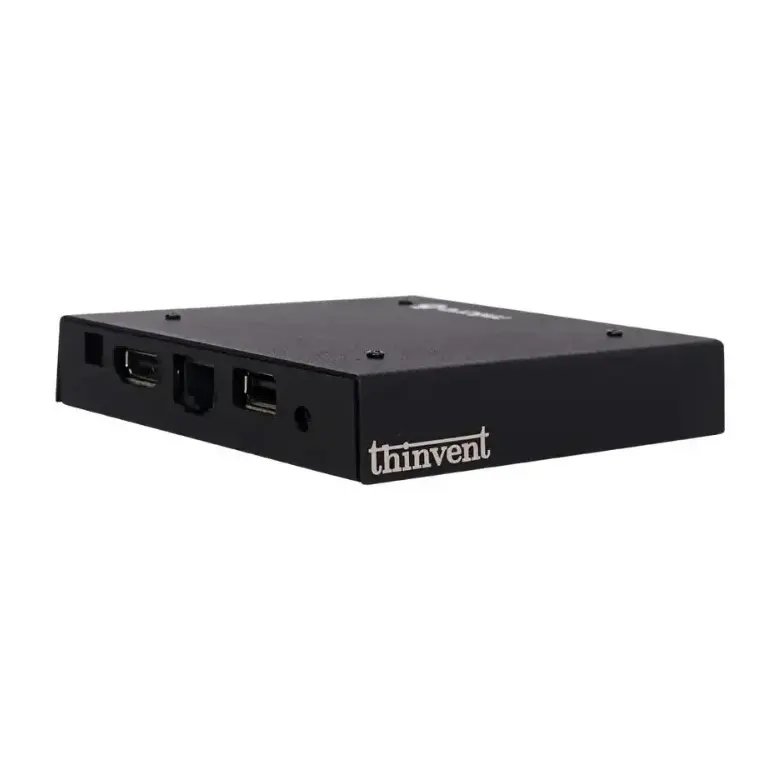
What Are Compact Fanless Mini PCs?
Compact fanless mini PCs are small-form-factor computing devices designed for industrial and commercial environments where reliability, space efficiency, and silent operation are critical. Unlike traditional desktop computers, these systems lack moving parts like fans, using passive cooling solutions such as heat sinks and chassis design to dissipate heat. This makes them ideal for dusty, dirty, or vibration-prone settings where fan failure could lead to system downtime. They typically feature low-power, efficient processors, ample connectivity, and robust construction to withstand continuous operation.
Key Specifications and Technical Details
These industrial mini PCs are engineered with specific components to balance performance, power consumption, and durability. Common specifications include:
-
Processors: Modern, efficient Intel processors like the N-series (e.g., Intel N100), which offer multiple cores (often 4) and high clock speeds (up to 3.4 GHz) while maintaining low thermal design power (TDP).
-
Memory & Storage: Configurations typically start at 8GB or 16GB of DDR4 RAM paired with solid-state drives (SSDs) from 128GB to 1TB, ensuring fast boot times and responsive application performance.
-
Connectivity: They offer comprehensive I/O including multiple USB ports (USB 3.2, USB-C), HDMI outputs for dual displays, and Gigabit Ethernet for reliable network connections. Many models also support optional WiFi.
-
Design: The fanless, sealed chassis protects internal components from contaminants and allows for operation in wide temperature ranges. Their compact size enables flexible mounting in kiosks, digital signage, or machinery.
Ideal Use Cases and Applications
The robustness and small footprint of fanless mini PCs make them suitable for a wide array of applications beyond standard office computing. Key use cases include:
-
Digital Signage & Kiosks: Powering interactive displays in retail, hospitality, and public spaces, where silent operation and 24/7 reliability are needed.
-
Industrial Automation: Serving as a controller or HMI (Human-Machine Interface) in manufacturing lines, processing plants, and logistics systems.
-
Thin Client & VDI: Acting as endpoints for virtual desktop infrastructure, providing a secure and manageable computing experience in corporate and educational settings.
-
Edge Computing: Processing data locally in IoT networks, transportation systems, and smart city applications, reducing latency and bandwidth usage.
Comparison of Common Mini PC Configurations
| Feature | Entry-Level / IoT Focus | Performance / General Purpose |
|---|---|---|
| Typical Processor | Intel N100 (4 cores) | Intel Core i3/i5 (10th Gen+) |
| Memory | 8GB - 16GB DDR4 | 16GB - 32GB DDR4 |
| Storage | 128GB - 256GB SSD | 512GB - 1TB SSD |
| Best For | Digital Signage, Basic Kiosks, Thin Clients | Industrial Workstations, Edge Servers, Multi-Task Applications |
| Cooling | Fully Fanless | Fanless or Low-Noise Active |
| Power Consumption | Very Low (~10-15W) | Low to Moderate (~15-45W) |
Thinvent's Range of Fanless Mini PCs
Thinvent specializes in manufacturing reliable, fanless industrial computers that embody the principles outlined above. Our product lines, such as the Aero Mini PC series, are built with high-quality components to ensure longevity in demanding conditions. We offer a variety of configurations to match different performance needs, from efficient Intel N-series processors for everyday tasks to more powerful Intel Core series options for compute-intensive applications. Every Thinvent mini PC is designed with extensive connectivity, flexible operating system support (including Windows, Linux, and custom embedded OS), and a rugged, compact form factor, providing a versatile computing solution for global industrial and commercial deployments.