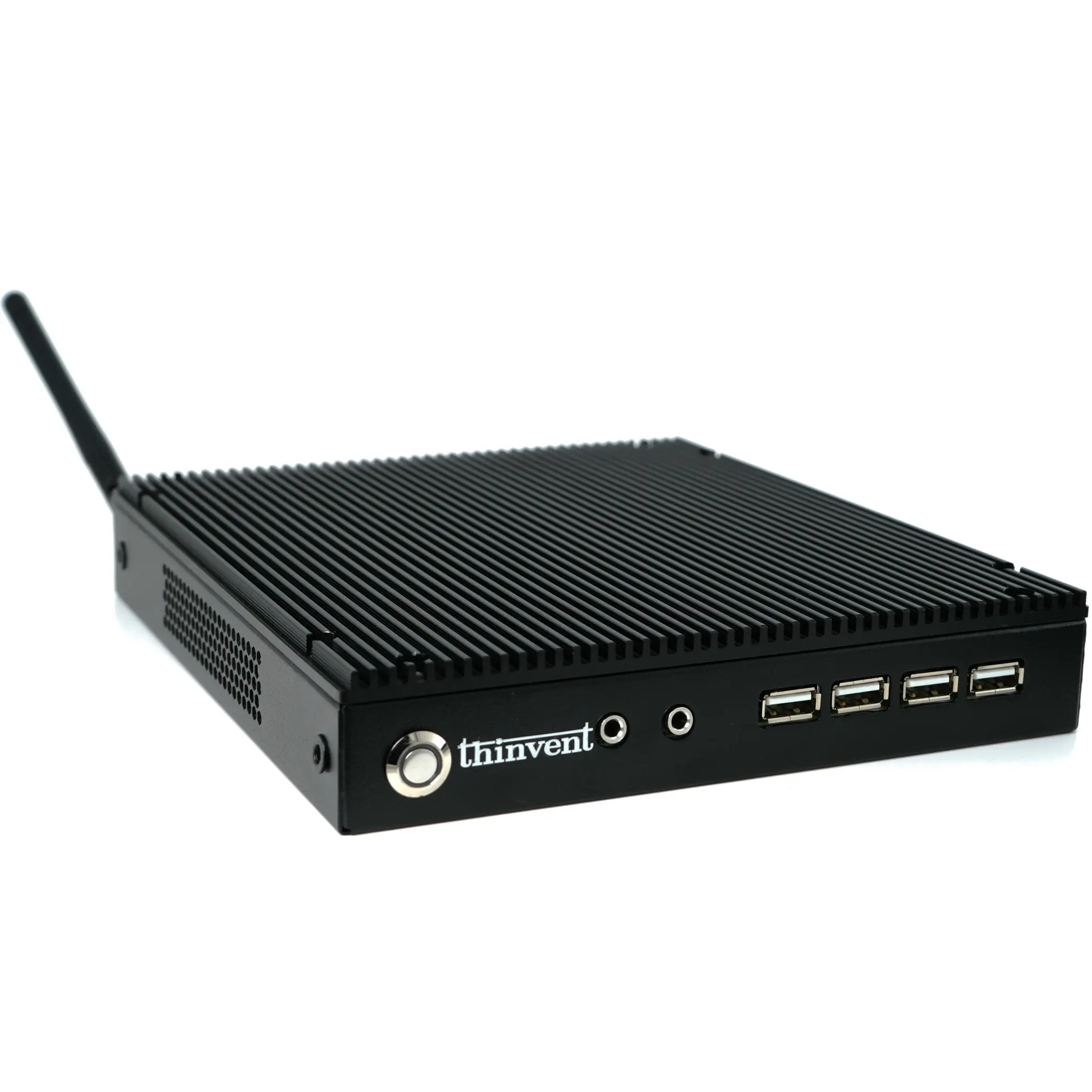
Understanding External CPU and Processing Options
The term "CPU external" can refer to several computing configurations where the central processor or processing unit is physically separate from the main system, or where the CPU offers enhanced external connectivity for expansion. Common interpretations include external processing units (EPUs), eGPU enclosures that house a discrete CPU or GPU, or even fanless mini PCs used as external compute modules in a distributed system. For industrial and embedded applications, an external CPU approach often means deploying a rugged, compact computing node that can be mounted remotely or used as a dedicated controller.
Key considerations for external CPU deployments include thermal management, power efficiency, and robust I/O for peripherals. A high-performance external compute module typically requires a fanless design to withstand dust and vibration, multiple Ethernet ports for networking, and support for various operating systems. The processor’s core count and clock speed directly affect workload handling, while ample RAM and SSD storage ensure smooth operation for data logging, edge processing, or digital signage.
Use Cases and Applications
External CPU configurations are popular in:
-
Edge computing: Placing processing power near sensors or machinery to reduce latency.
-
Thin client environments: Using a central server with remote computing nodes.
-
Industrial automation: Controllers that run PLC software or SCADA systems.
-
Kiosk and digital signage: Small form-factor PCs driving multiple displays.
For example, a fanless Mini PC with an Intel N-series processor can serve as an external CPU module for a workstation, handling basic tasks while the main unit runs heavy applications.
Comparison: Integrated vs. External CPU Approaches
| Feature | Integrated CPU (All-in-One) | External CPU (Mini PC/Module) |
|---|---|---|
| Form Factor | Built into monitor or chassis | Compact, separate enclosure |
| Cooling | Often fanless or low-noise | Typically fanless for industrial use |
| Connectivity | Dependent on built-in ports | Rich I/O (HDMI, USB, Ethernet) |
| Mounting Options | Limited | VESA, DIN-rail, wall-mount |
| Scalability | Fixed configuration | Can be replaced/upgraded independently |
Thinvent Products Featuring This Technology
Thinvent’s Aero Mini PC series is an excellent example of an external CPU solution for industrial and commercial environments. Powered by Intel N100 processors (4 cores, up to 3.4 GHz) with 16GB DDR4 RAM and 128GB SSD, these fanless, compact units are designed for 24/7 operation. They offer multiple operating system choices (Windows 11 Pro, Ubuntu Linux, Thinux Embedded, DOS) and can be mounted behind displays or on walls. With no built-in WiFi (reliable Ethernet connectivity), they are ideal for secure, wired external compute nodes in edge computing, digital signage, and industrial automation.