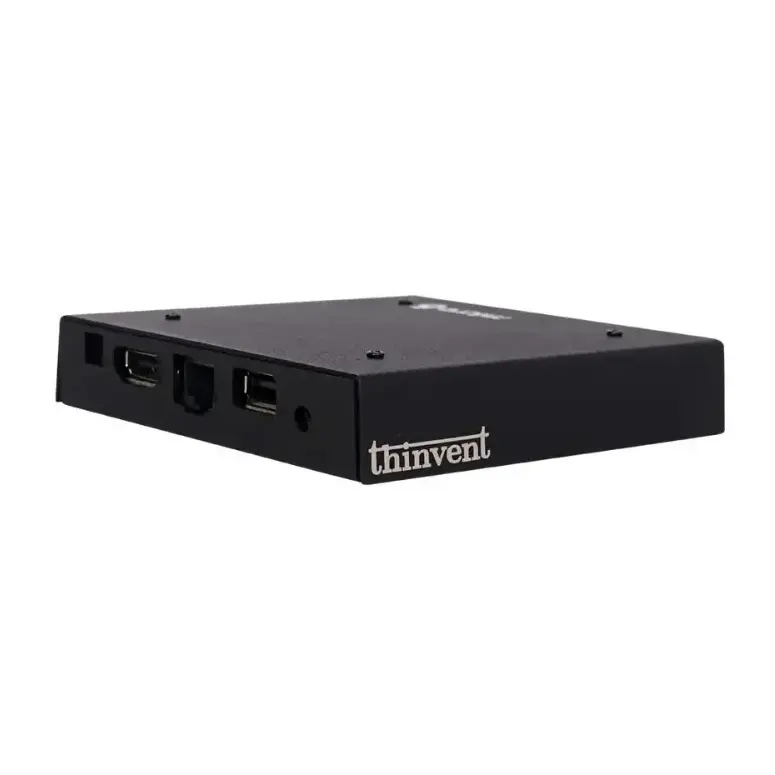
What Are Compact Industrial Computers?
Compact industrial computers, often referred to as mini PCs or fanless PCs, are specialized computing systems designed for deployment in demanding environments. They prioritize reliability, durability, and space efficiency over raw consumer-grade performance. These systems typically feature fanless cooling for silent, maintenance-free operation, robust metal enclosures, and wide-range power input to handle industrial voltage fluctuations. They are engineered to operate reliably in conditions with dust, vibration, and extreme temperatures where standard office computers would fail.
Key Specifications and Technical Details
The core of a modern compact industrial computer is a low-power, high-efficiency processor, such as the Intel N-series. Key specifications to consider include:
-
Processor: Modern Intel processors like the 4-core N100 offer a balance of performance and power efficiency, with integrated graphics sufficient for digital signage and basic UI tasks.
-
Memory (RAM): Typically 8GB to 16GB of DDR4 RAM, providing ample headroom for industrial software, HMIs (Human-Machine Interfaces), and lightweight virtualization.
-
Storage: Solid-state drives (SSDs) from 128GB to 512GB offer fast boot times, application loading, and resilience against shock and vibration compared to traditional hard drives.
-
Connectivity: Multiple Gigabit Ethernet ports for network redundancy, USB 3.2 ports for peripherals, and HDMI/DisplayPort outputs for multi-monitor setups are standard.
-
Operating System: Support for various OS options, including Windows 11 IoT/Pro for legacy software compatibility, or lightweight Linux distributions like Ubuntu for custom, secure applications.
Use Cases and Applications
These rugged mini PCs are versatile workhorses across numerous sectors:
-
Industrial Automation: Serving as PLCs, HMIs, or edge gateways on the factory floor for machine control and data acquisition.
-
Digital Signage & Kiosks: Powering interactive displays, wayfinding systems, and self-service terminals in public spaces, retail, and transportation hubs.
-
Thin Client & VDI: Acting as durable endpoints for virtual desktop infrastructure in offices, hospitals, and call centers.
-
Embedded Systems: Integrated into medical devices, transportation systems, and telecommunications equipment where reliability is paramount.
Comparison: Industrial Mini PC vs. Standard Desktop
| Feature | Industrial Mini PC | Standard Office Desktop |
|---|---|---|
| Form Factor | Compact, wall/DIN-rail mountable | Large tower case |
| Cooling | Fanless (passive) | Active (fans) |
| Operating Temp | Wide range (e.g., -20°C to 60°C) | Narrow (e.g., 5°C to 35°C) |
| Power Input | Wide-range DC (9-36V typical) | Standard AC (110-240V) |
| Durability | Resists dust, vibration, shock | Not designed for harsh conditions |
| Noise Level | Silent (0 dB) | Audible fan noise |
| Typical Use Case | Factory, outdoor kiosk, vehicle | Office, home, data center |
Thinvent's Range of Compact Industrial Computers
Thinvent specializes in manufacturing a comprehensive line of robust, fanless industrial computers designed for global deployment. Our product portfolio includes the Aero Series of ultra-compact mini PCs, which exemplify the principles discussed above. Built with the latest Intel processors like the efficient N100, these systems come pre-configured with industrial-grade components, multiple OS choices, and flexible I/O. They are ideal solutions for OEMs and system integrators needing a reliable, compact computing core for digital signage, automation, thin client, and embedded applications. Explore our catalog to find the perfect balance of performance, durability, and size for your specific project requirements.