What Are DDR5 Desktop Computers?
DDR5 desktop computers are systems equipped with the latest generation of Double Data Rate 5 (DDR5) Synchronous Dynamic Random-Access Memory (SDRAM). This technology represents a significant leap forward from the previous DDR4 standard, offering substantially higher data transfer rates, improved power efficiency, and greater overall system bandwidth. For demanding professional and industrial applications, DDR5 memory enables faster data processing, smoother multitasking, and enhanced performance for compute-intensive tasks.
Key Specifications and Technical Advantages
DDR5 memory modules operate at higher base frequencies, starting at 4800 MT/s (Megatransfers per second) and scaling beyond 6400 MT/s, compared to DDR4's typical 3200 MT/s. This results in a dramatic increase in peak bandwidth. A critical architectural improvement is the use of two independent 32-bit channels per module (instead of one 64-bit channel in DDR4), which improves efficiency and reduces latency for memory access. Furthermore, DDR5 incorporates on-die Error Correction Code (ECC) for improved data integrity and reliability, a vital feature for 24/7 industrial operations. The standard also operates at a lower voltage (1.1V vs. DDR4's 1.2V), contributing to better power efficiency and thermal management in compact, fanless designs.
Use Cases and Applications
The superior speed and efficiency of DDR5 make these desktops ideal for scenarios requiring rapid data handling and high throughput. Key applications include:
-
High-Performance Computing (HPC) & Workstations: For engineering simulations, financial modeling, scientific research, and media production where large datasets must be processed quickly.
-
AI and Machine Learning Inference: Accelerating AI model inference at the edge by rapidly feeding data to the CPU and integrated GPUs.
-
Advanced Digital Signage and Interactive Kiosks: Powering ultra-high-resolution, multi-screen displays and responsive touch interfaces.
-
Data-Intensive Industrial Automation: Handling real-time data from sensors and PLCs in manufacturing and process control environments.
-
Network Appliances and Security Gateways: Managing high-speed network traffic analysis, firewall rules, and VPN encryption/decryption.
DDR5 vs. DDR4: A Quick Comparison
| Feature | DDR5 | DDR4 |
|---|---|---|
| Base Speed | 4800 MT/s and higher | 2133 - 3200 MT/s |
| Voltage | 1.1V | 1.2V |
| Channels per Module | Two independent 32-bit | One 64-bit |
| On-Die ECC | Yes (for data integrity) | Typically not present |
| Maximum Module Density | Higher (currently up to 64GB per module) | Lower |
| Bandwidth & Efficiency | Significantly Higher | Standard |
Thinvent's DDR5-Enabled Industrial Solutions
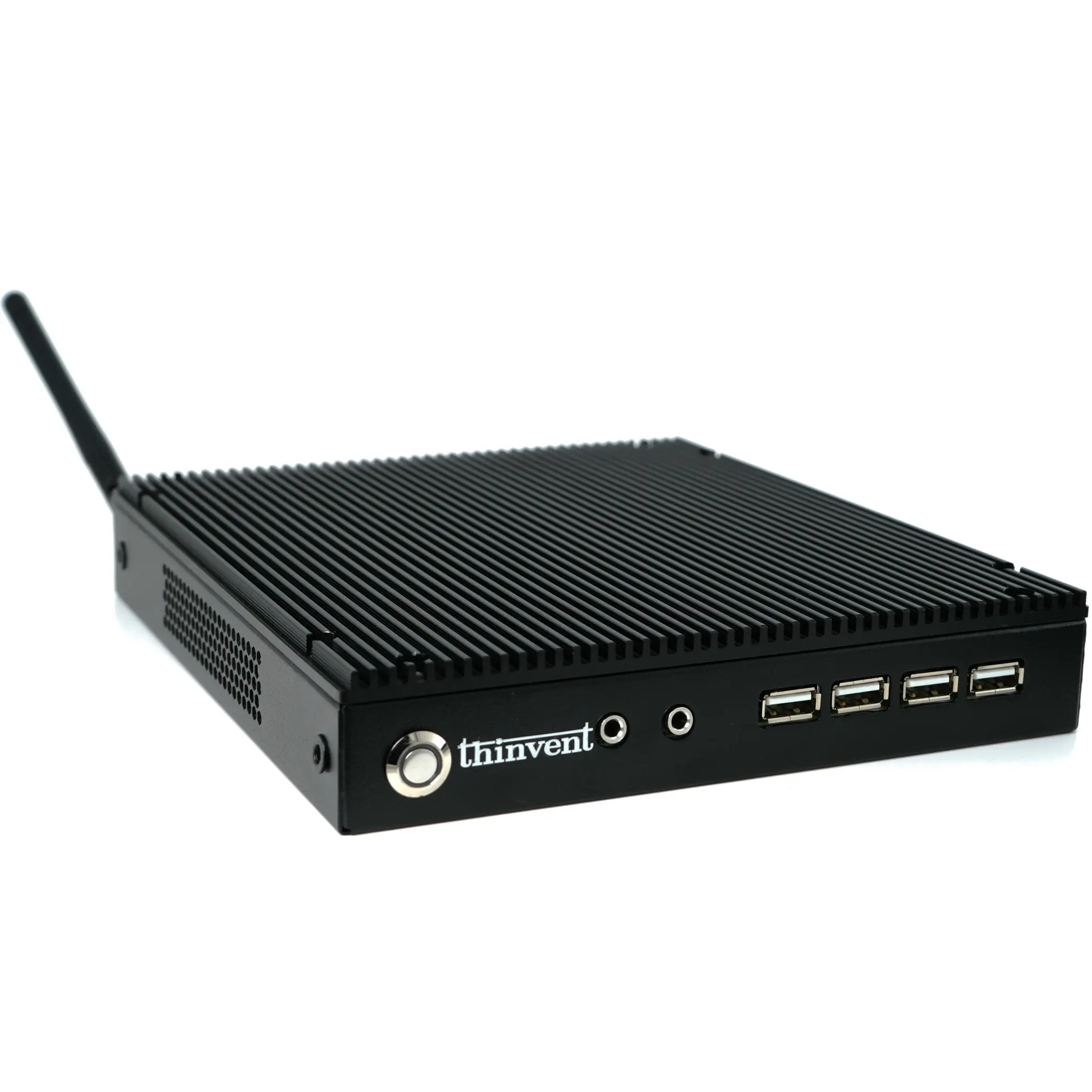
Thinvent integrates cutting-edge DDR5 memory technology into its robust industrial computing platforms to deliver unmatched performance and reliability. Our product range includes compact Mini PCs and powerful Industrial PCs designed for harsh environments, featuring fanless cooling for silent, dust-resistant operation. These systems leverage the power of DDR5 alongside the latest Intel Core processors (including i3, i5, and i7 series from 12th Generation and newer) to provide a future-proof foundation for demanding applications. Explore our selection to find a DDR5 desktop solution engineered for durability, performance, and seamless integration into your professional workflow.