Understanding the Dell PowerEdge R620 and Modern Alternatives
The Dell PowerEdge R620 is a legacy 1U rackmount server from Dell's 12th generation (Gen12) PowerEdge family, launched around 2012. It was designed as a high-density, dual-socket server for virtualization, database hosting, and enterprise applications. While powerful for its time, its architecture is now over a decade old, leading to higher power consumption, potential end-of-life support issues, and less efficient performance per watt compared to modern systems.
Key Specifications and Technical Details
The R620 typically featured Intel Xeon E5-2600 series processors (Sandy Bridge/Ivy Bridge), supporting up to two CPUs, 24 DIMM slots for up to 768GB of DDR3 RAM, and multiple drive bays for SAS/SATA storage. It included integrated management with iDRAC and offered extensive PCIe expansion. However, its reliance on DDR3 memory and older processor microarchitectures results in significantly lower performance efficiency and higher thermal design power (TDP) than current platforms. For many workloads, a modern, compact industrial computer can provide equivalent or superior compute power in a fraction of the physical and electrical footprint.
Modern Use Cases and Application Shifts
The core applications for servers like the R620—such as hosting virtual machines, acting as a network file server, or running business applications—are still vital. However, the trend is toward decentralization and edge computing. Instead of consolidating everything in a central data center rack, workloads are distributed. Modern, fanless industrial PCs and mini servers are now deployed at the edge for:
-
Lightweight Virtualization & Container Hosting: Running a few critical VMs or Docker containers locally in a factory or branch office.
-
Network Attached Storage (NAS): Serving as a compact, reliable storage node.
-
Industrial Automation & Control: Acting as a robust PLC supervisor or HMI server.
-
Digital Signage & Media Servers: Driving content for multiple displays in retail or public spaces.
Comparing Legacy Servers with Modern Industrial Computers
| Feature | Dell PowerEdge R620 (Legacy) | Modern Industrial Mini PC / Server |
|---|---|---|
| Form Factor | 1U Rackmount (Large) | Mini PC, Box PC, Thin Client (Compact) |
| Typical Processors | Intel Xeon E5 (Dual-Socket, 8-12 cores total) | Intel Core i3/i5/i7 or Celeron/N-Series (Single CPU, 4-14 cores) |
| Memory | DDR3 (High Capacity) | DDR4/DDR5 (Efficient, Lower Capacity) |
| Power & Cooling | High TDP, Loud Active Fans | Low TDP, Often Fanless & Silent |
| Deployment | Central Data Center | Edge, Office, Harsh Environments |
| Total Cost of Ownership | High (Power, Cooling, Space) | Low (Energy Efficient, Minimal Maintenance) |
Thinvent Solutions for Modern Server Workloads
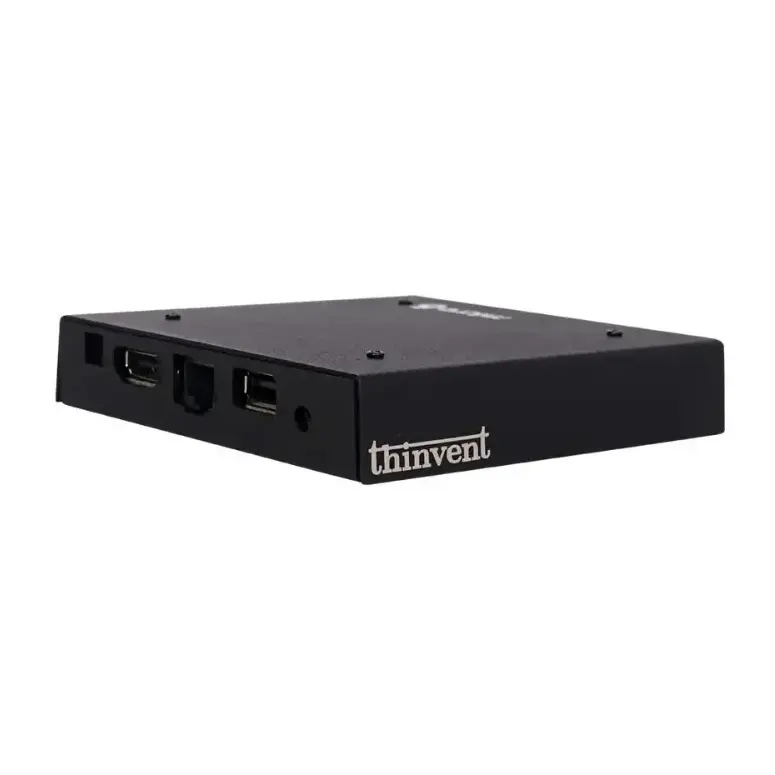
While Thinvent does not manufacture traditional rackmount servers like the PowerEdge R620, we specialize in robust, compact computing solutions that are ideal for modernized and distributed versions of traditional server tasks. Our industrial-grade computers offer the reliability, connectivity, and processing power needed for edge server applications, all in a fanless, space-saving design. For businesses looking to decommission aging hardware like the R620 and move workloads to the edge, Thinvent's range of Intel-powered Mini PCs and Industrial PCs provide a powerful, efficient, and silent alternative for a wide array of enterprise and industrial computing needs.