What is a High-Performance Industrial Workstation?
A high-performance industrial workstation is a robust computing system engineered for demanding professional applications. Unlike standard desktop PCs, these machines are built with industrial-grade components, superior thermal management, and enhanced reliability to handle intensive workloads in challenging environments. They are the backbone of critical operations in fields like engineering, scientific research, data analysis, and media production, where computational power, stability, and data integrity are non-negotiable.
Key Specifications and Technical Details
These workstations are defined by their powerful hardware configurations. Core specifications typically include high-core-count processors from Intel's Core i5, i7, or i9 series (often 12th generation or newer), substantial RAM (32GB to 128GB+), and fast NVMe SSD storage (512GB to 2TB+). They feature professional-grade discrete graphics cards (GPUs) for accelerated rendering and computation, multiple high-speed Ethernet ports for network redundancy, and extensive I/O connectivity including USB 3.2 Gen 2 and USB-C. A critical feature is their advanced cooling architecture—often fanless or with industrial-grade fans—ensuring silent, dust-resistant operation and 24/7 reliability in non-climate-controlled settings.
Use Cases and Applications
Industrial workstations are indispensable in sectors that require uncompromising performance and durability.
-
Engineering & Design: Running CAD/CAM/CAE software like SolidWorks, AutoCAD, and ANSYS for 3D modeling and simulation.
-
Scientific Computing & Data Analysis: Processing large datasets, running complex algorithms, and powering laboratory equipment interfaces.
-
Media & Entertainment: Serving as render nodes or editing stations for 4K/8K video production and 3D animation.
-
Industrial Automation: Acting as a central controller for PLCs, HMIs, and machine vision systems on the factory floor.
-
Financial Modeling & Trading: Executing high-frequency trading algorithms and complex financial simulations with low latency.
Comparison: Industrial vs. Commercial Workstations
| Feature | Industrial Workstation | Commercial Desktop/Workstation |
|---|---|---|
| Build Quality | Rugged, metal chassis; wide temperature tolerance | Standard plastic/metal; office environment only |
| Reliability | Designed for 24/7 operation; MTBF > 50,000 hours | For standard business hours |
| Cooling | Fanless or industrial fan; dust-resistant | Standard active cooling with fans |
| Power Supply | Wide-range voltage input (e.g., 9-36V DC) | Standard 110-240V AC |
| Deployment | DIN-rail, wall-mount, VESA, embedded | Desktop or tower placement |
| Longevity | Long-term component availability (5-7+ years) | Shorter product lifecycle |
Thinvent's High-Performance Industrial Computing Solutions
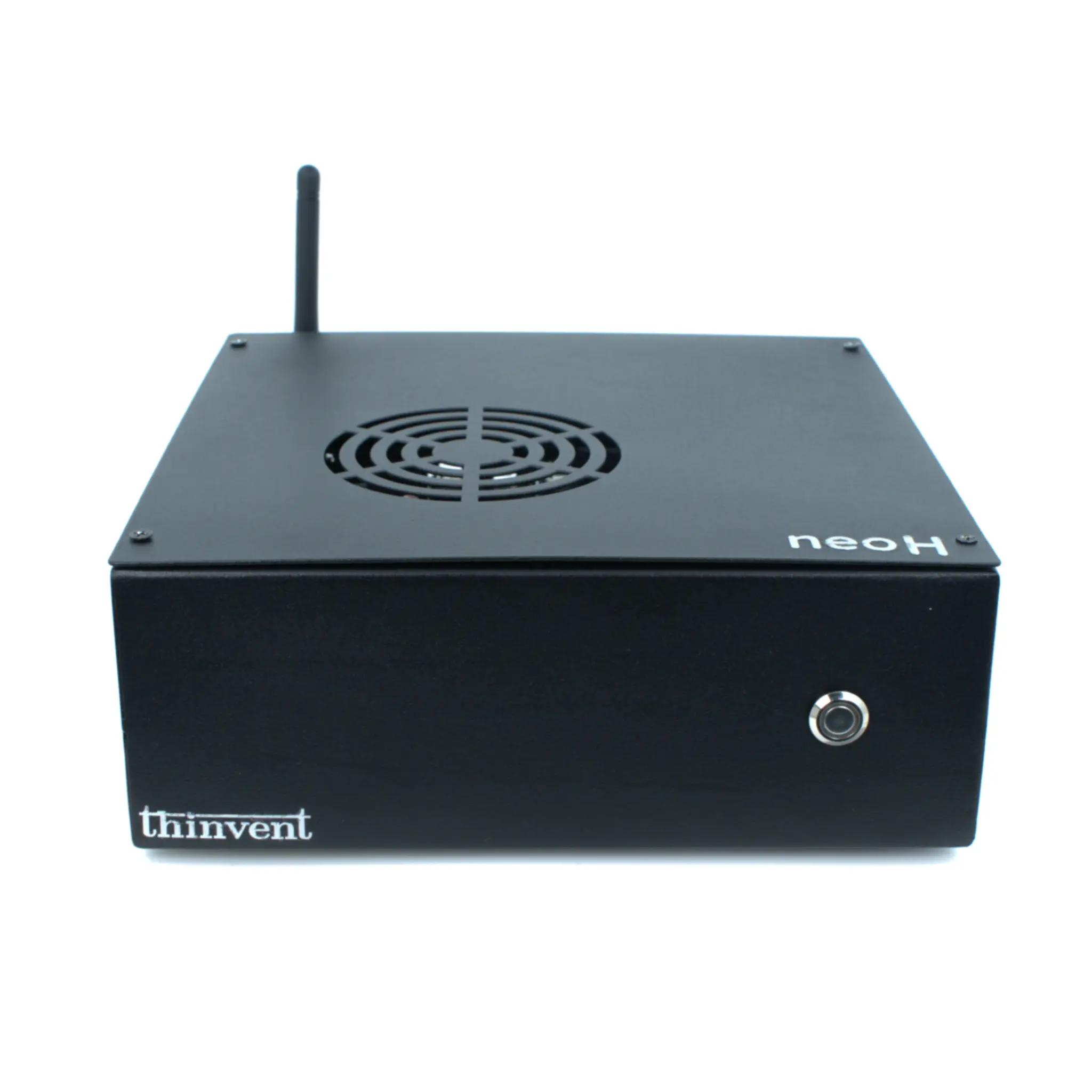
While Thinvent specializes in compact, fanless industrial computers, our product philosophy aligns with the core needs of a workstation user: reliability, performance, and adaptability. Our systems, such as those powered by Intel's latest Core processors, deliver workstation-level computing in robust, space-saving form factors. They are ideal for integrating high-performance computing into space-constrained or harsh industrial environments where traditional tower workstations would fail. Explore our range of industrial mini PCs and embedded systems that bring durable, high-performance computing to your most demanding applications.