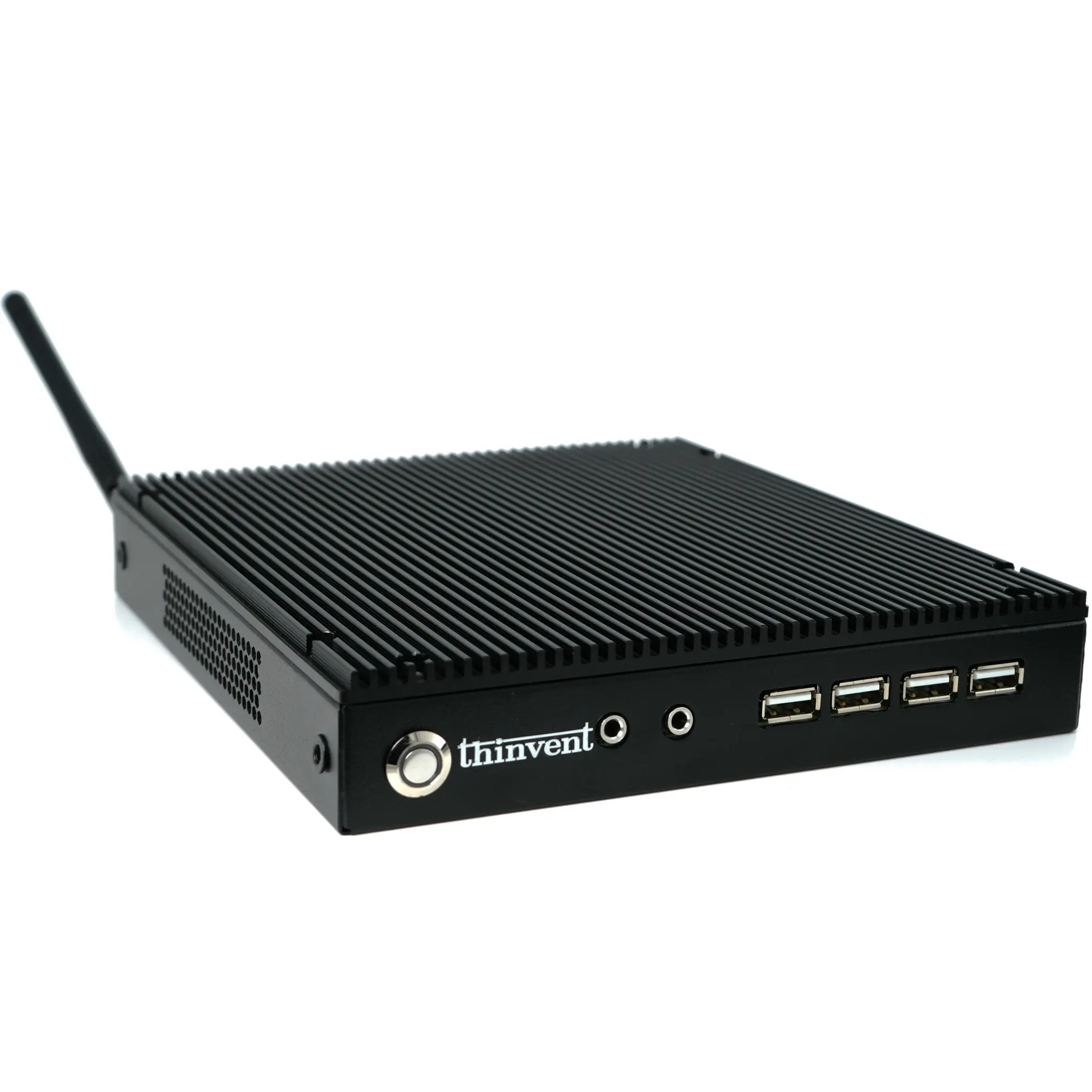
The Dell Wyse 3040 is a compact thin client known for its energy efficiency and suitability for virtual desktop infrastructure (VDI). A key upgrade for this device is the addition of an SSD (Solid State Drive), which significantly enhances its performance and responsiveness compared to traditional hard disk drives (HDDs). An SSD provides faster boot times, quicker application loading, and improved overall system agility, making the thin client more capable for modern computing tasks.
Key Specifications and Technical Details
The Dell Wyse 3040 is built on an Intel Atom x5-Z8350 processor. When equipped with an SSD, the system benefits from the drive's key characteristics:
-
Storage Interface: Typically uses a SATA III (6 Gb/s) interface for the SSD.
-
Form Factor: Often a 2.5-inch drive or an M.2 SATA SSD, depending on the specific model and configuration.
-
Performance: SSDs offer much higher read/write speeds (often 500+ MB/s) and lower latency than HDDs, eliminating mechanical bottlenecks.
-
Reliability: With no moving parts, SSDs are more resistant to shock, vibration, and physical wear, which is crucial for always-on environments.
Use Cases and Applications
Upgrading a Wyse 3040 with an SSD is ideal for scenarios demanding snappier performance within a VDI or cloud-centric framework:
-
Enhanced VDI Endpoints: Provides a smoother user experience for accessing virtual desktops, with faster login and application launch times.
-
Digital Signage & Kiosks: Ensures quick startup and reliable playback of media content without lag.
-
Lightweight Office Tasks: Improves performance for local applications like web browsers and office suites when used in a hybrid computing model.
-
Space-Constrained Deployments: The compact size of both the thin client and the SSD is perfect for retail POS, healthcare workstations, and call centers.
Comparison: HDD vs. SSD in Thin Clients
| Feature | Traditional HDD | Solid State Drive (SSD) |
|---|---|---|
| Speed | Slower (~100-150 MB/s); mechanical delays | Very Fast (500+ MB/s); instant access |
| Durability | Sensitive to shock/vibration; moving parts | Highly durable; no moving parts |
| Power Use | Higher power draw; spin-up required | Lower power consumption; energy-efficient |
| Noise | Audible spinning and seeking | Completely silent operation |
| Ideal For | Basic, cost-sensitive bulk storage | Performance, reliability, and responsive systems |
Thinvent Mini PCs with SSD Technology
Thinvent offers a robust range of modern, compact industrial computers that provide superior performance and reliability out-of-the-box, featuring fast SSD storage. Our Aero Mini PC series, for example, is powered by efficient Intel processors like the N100 and comes standard with DDR4 RAM and SSDs. These fanless systems are designed for 24/7 operation in demanding environments such as industrial automation, IoT gateways, and edge computing. They offer a compelling, modern alternative for deployments where the performance and reliability of SSD-based storage are critical.