What Does "Design Desktop Computer" Mean?
Designing a desktop computer means selecting a combination of processor, memory, storage, operating system and form factor that matches a specific workload. For industrial, commercial and embedded deployments, this is rarely an off-the-shelf consumer tower. Instead, designers choose from compact, long-lifecycle platforms — mini PCs, industrial PCs, thin clients and all-in-one computers — that can be mounted behind a display, inside a kiosk or on a DIN rail, and that will remain available and serviceable for years.
The starting point is always the workload. A point-of-sale terminal, a digital signage player, a machine-vision controller and a CAD workstation have very different requirements, and the specification should follow the task rather than the other way round.
Key Specifications to Decide First
Processor. For light, always-on tasks such as kiosks, signage, thin-client sessions and data-entry terminals, Intel Celeron and Intel N-series processors (N95, N100, N150, J4125) deliver low power draw and fanless operation. For multi-application workloads, virtualisation or local analytics, Intel Core i3, i5 and i7 processors from the 10th to 14th generation provide the headroom — for example, an Intel Core i3-1215U with 6 cores, up to 4.4 GHz and 10 MB cache.
Memory and storage. 4–8 GB suits single-application terminals; 16 GB is the practical baseline for multitasking or virtualised environments; 32–64 GB is appropriate for engineering, simulation and heavy database work. SSD storage of 128 GB to 1 TB covers most deployments, with 256 GB or 512 GB being the common balance between cost and headroom.
Form factor and mounting. Mini PCs and industrial PCs are typically fanless or actively cooled in a sealed chassis, with VESA or DIN-rail mounting. All-in-one computers integrate the display, which removes cabling and saves counter space in retail and reception environments.
| Workload | Typical CPU | RAM | Storage | Form Factor |
|---|---|---|---|---|
| Kiosk / signage / thin client | Celeron, N95–N150, J4125 | 4–8 GB | 128–256 GB SSD | Mini PC, Thin Client |
| Office, POS, ERP terminals | Intel Core i3 (10th–13th gen) | 8–16 GB | 256–512 GB SSD | Mini PC, All-in-One |
| Industrial control, multi-serial | Intel Core i3/i5 (12th–14th gen) | 16 GB | 512 GB–1 TB SSD | Industrial PC |
| Engineering, analytics, virtualisation | Intel Core i5/i7 (13th–14th gen) | 32–64 GB | 1 TB SSD | Industrial PC, Mini PC |
Connectivity, OS and Long-Term Support
Connectivity decisions matter as much as compute. Gigabit Ethernet, dual Ethernet ports for network segmentation, multiple HDMI outputs for dual-display setups, USB 3.2 Gen 2 and USB-C are the interfaces most often specified. Industrial deployments frequently add RS-232/RS-485 serial ports (DB9) for PLCs, weighbridges, barcode scanners and legacy machinery.
Operating system choice is usually driven by the application stack and by update policy. Windows 11 Pro is the default for mainstream business software; Windows 11 IoT Value and embedded Linux options suit appliances that must run unattended for years; FreeDOS or no-OS configurations let integrators deploy their own image. Fanless, wide-temperature designs and 12 V DC input are common requirements where dust, heat or vibration are present.
How to Approach the Design Process
- Define the application and its software stack, including whether it needs Windows, Linux or a custom image.
- Estimate peak compute, memory and storage, then add headroom for OS updates and future features.
- List every interface the installation requires — network ports, displays, serial devices, USB peripherals.
- Choose the form factor and mounting method based on the physical space and environment.
- Confirm lifecycle and serviceability, since industrial installations often outlive three or four generations of consumer hardware.
Thinvent Products for Desktop Computer Designs
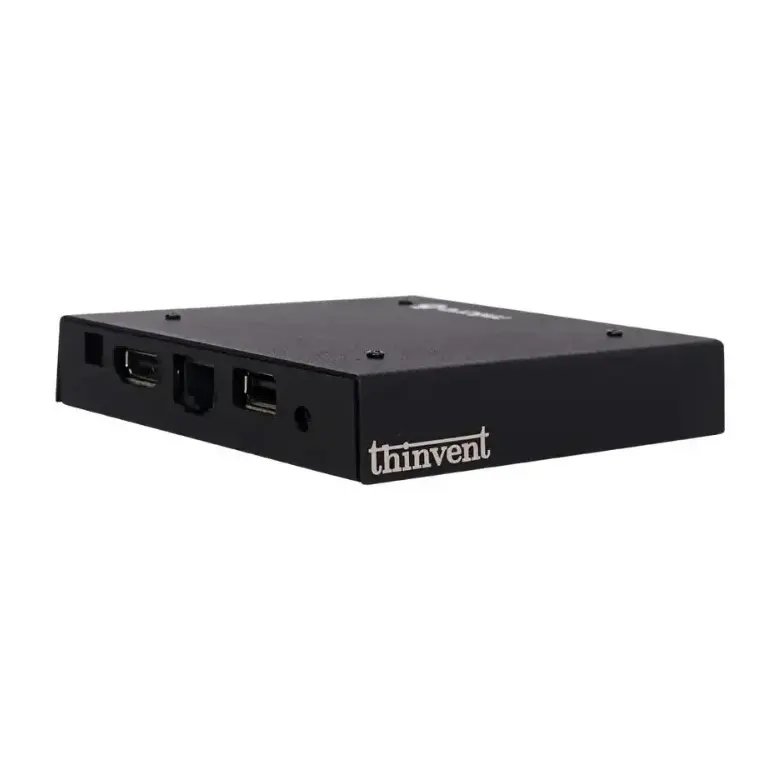
Thinvent manufactures industrial computers, mini PCs, thin clients and all-in-one PCs built for exactly this kind of specification work. Our industrial PC range includes Intel Core i3 platforms such as the 6-core i3-1215U with 16 GB DDR4 and 1 TB SSD, available with Windows 11 Pro, Windows 11 IoT Value, DOS or Thinux™ Embedded Linux, and with options such as quad DB9 serial ports for industrial connectivity. Lower-power Celeron and Intel N-series mini PCs cover kiosk, signage and thin-client roles, while all-in-one models integrate the display for retail and front-desk deployments. Every platform is available in multiple memory, storage and OS configurations so you can match the hardware to the workload rather than over- or under-specifying.