Understanding Desktop Computer Configurations
A desktop computer configuration refers to the combination of hardware components that determine a system's performance, capabilities, and suitability for specific tasks. The key elements include the processor (CPU), memory (RAM), storage (SSD/HDD), and form factor. For business and industrial use, choosing the right configuration is critical for reliability, efficiency, and longevity.
Modern desktop configurations range from low-power ARM-based systems ideal for thin clients and embedded applications, to high-performance Intel Core i5 and i7 processors designed for demanding workloads. The processor generation, core count, and clock speed directly impact multitasking and computational power. Memory capacity (typically 4GB to 16GB or more) affects how many applications can run simultaneously, while SSD storage (from 64GB to 512GB) determines boot times and data access speeds.
Key Specifications and Technical Details
When evaluating a desktop configuration, consider these critical specifications:
| Component | Entry-Level | Mid-Range | High-Performance |
|---|---|---|---|
| CPU | ARM Cortex A53/A55, Intel N95/N100 | Intel Core i3-1215U | Intel Core i5-1240P/120U |
| Cores | 4 cores | 6 cores | 10-12 cores |
| RAM | 2GB-4GB | 8GB | 16GB+ |
| Storage | 16GB-64GB eMMC | 128GB-256GB SSD | 512GB SSD |
| Use Case | Thin clients, basic tasks | Light industrial, office | Heavy computing, industrial |
The processor generation is crucial: 12th Gen Intel (Alder Lake) offers a hybrid architecture with performance and efficiency cores, while 14th Gen (like Core 5 120U) provides higher clock speeds. ARM Cortex processors excel in power efficiency for always-on systems.
Use Cases and Applications
Different configurations serve distinct purposes:
-
Thin Clients and Embedded Systems: ARM Cortex processors with 2-4GB RAM and eMMC storage are perfect for virtual desktop infrastructure (VDI), point-of-sale systems, and digital signage. They consume minimal power (5V adapters) and generate no heat.
-
Office and Light Industrial: Intel N-series processors (N95, N100) with 4-8GB RAM and 128-256GB SSD handle web browsing, office applications, and basic automation tasks reliably.
-
Industrial Automation and Edge Computing: Intel Core i3/i5 processors with 8-16GB RAM and 256-512GB SSD provide the processing power for real-time data processing, machine control, and AI inference at the edge.
-
High-Performance Workstations: Core i5 1240P or 120U with 12 cores and 16GB+ RAM support demanding applications like CAD, video rendering, and multi-VM environments.
Thinvent's Desktop Computer Solutions
Thinvent offers a comprehensive range of desktop configurations to match every requirement. Our lineup includes:
-
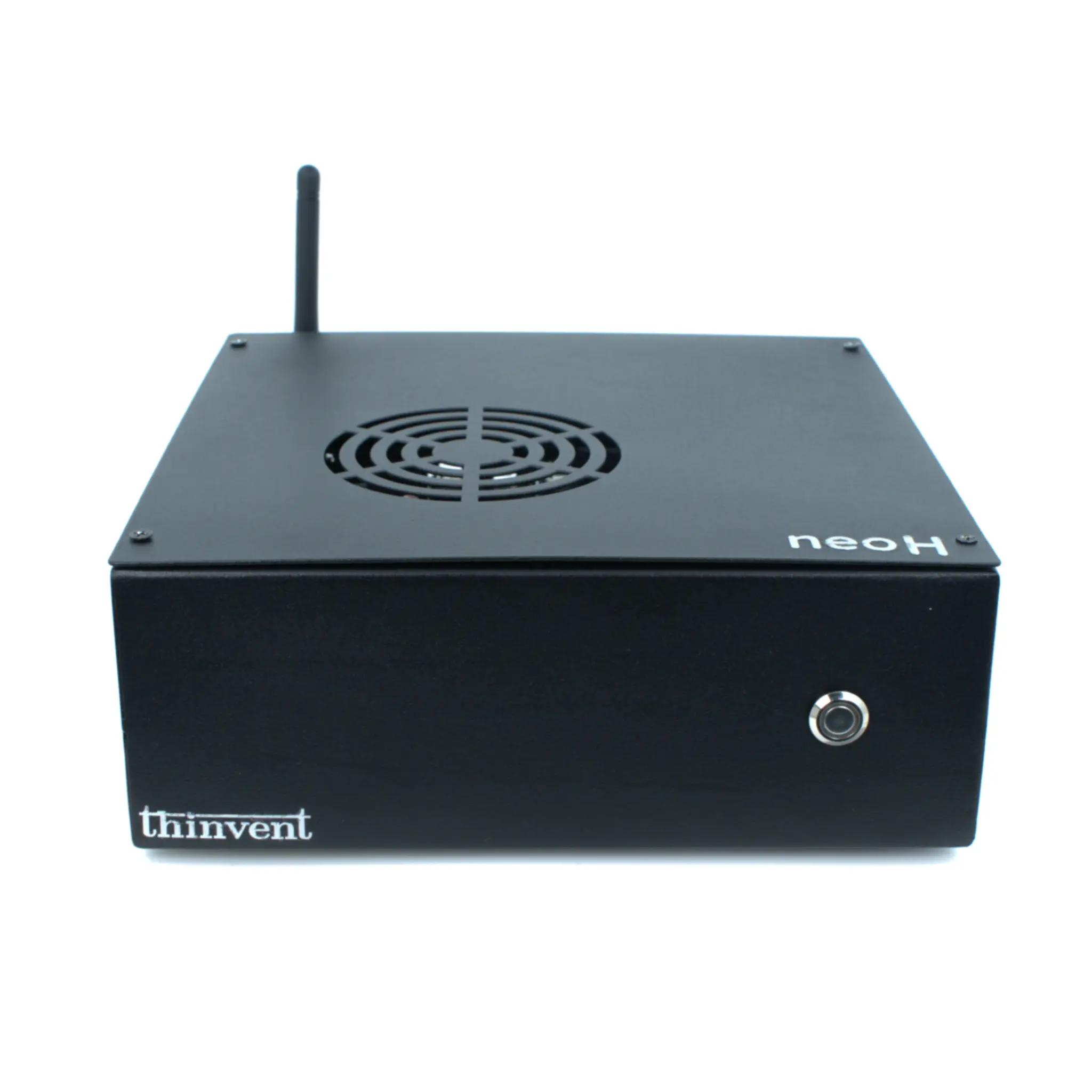
Thinvent Micro Series: Ultra-compact ARM-based thin clients with Thinux Embedded Linux, ideal for space-constrained environments
-
Thinvent Treo and Aero Mini PCs: Versatile Intel N-series and Core i3/i5 systems with Windows 11 Pro or Ubuntu Linux, perfect for office and light industrial use
-
Thinvent Industrial PC (IPC) Series: Rugged Intel Core i3/i5 systems with fanless cooling, wide voltage support, and industrial-grade reliability for harsh environments
Each configuration is optimized for specific workloads, ensuring you get the right balance of performance, power efficiency, and cost. Whether you need a low-power thin client or a powerful industrial computer, Thinvent's desktop configurations deliver reliable, long-lasting performance.