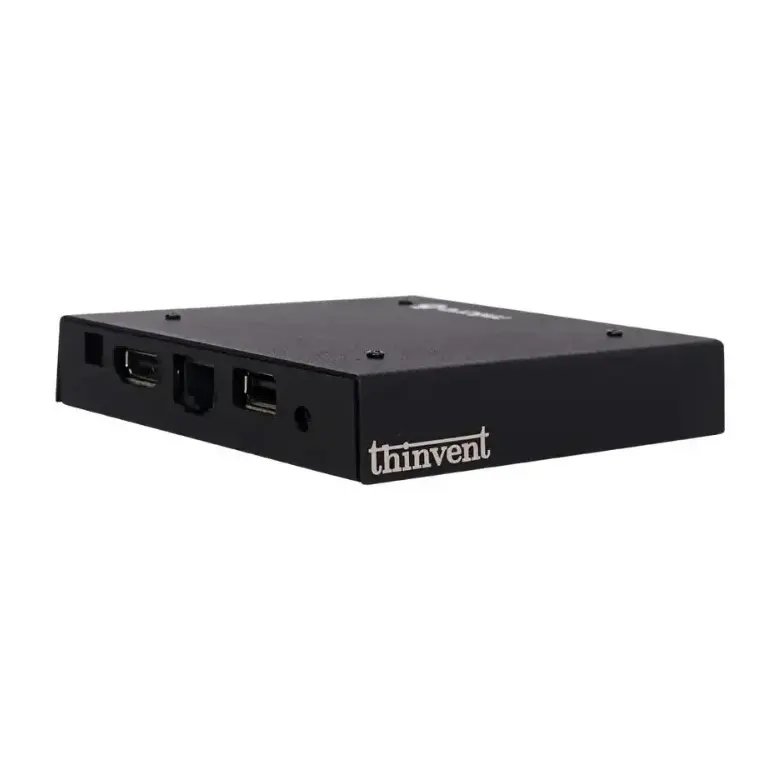
What Is a Desktop Computer System?
A desktop computer system combines a processing unit, memory, storage, display, and input peripherals into a setup designed for everyday productivity. Today's desktop systems have evolved far beyond bulky towers — compact mini PCs now deliver the same essential capabilities while using a fraction of the desk space and energy.
Key Specifications That Matter
When evaluating a desktop system, the processor is the foundation. The Intel® N5095A found in Thinvent's Aero Mini PC features 4 cores running up to 2.9 GHz, which is ample for office suites, web applications, and light multimedia tasks. Paired with 16 GB DDR4 RAM, the system keeps multiple applications running smoothly, while a 128 GB SSD ensures quick boot times and responsive file access.
Operating system flexibility is another benefit. These desktop systems are available with Windows 11 Pro, Ubuntu Linux, an embedded Linux option, or DOS, allowing businesses to choose the software environment that best fits their existing infrastructure and management policies.
Common Applications
Desktop computer systems serve a wide range of environments, including corporate offices, educational labs, healthcare front desks, retail counters, and home workspaces. Their compact design makes them ideal for space-constrained areas, and options without wireless connectivity provide extra security for networks that prefer wired-only communications.
Comparing Typical Configurations
| Component | Typical Thinvent Aero Mini PC |
|---|---|
| Processor | Intel® N5095A, 4 Cores, up to 2.9 GHz |
| Memory | 16 GB DDR4 |
| Storage | 128 GB SSD |
| Ethernet | Gigabit LAN |
| Operating System | Windows 11 Pro / Ubuntu / Linux / DOS |