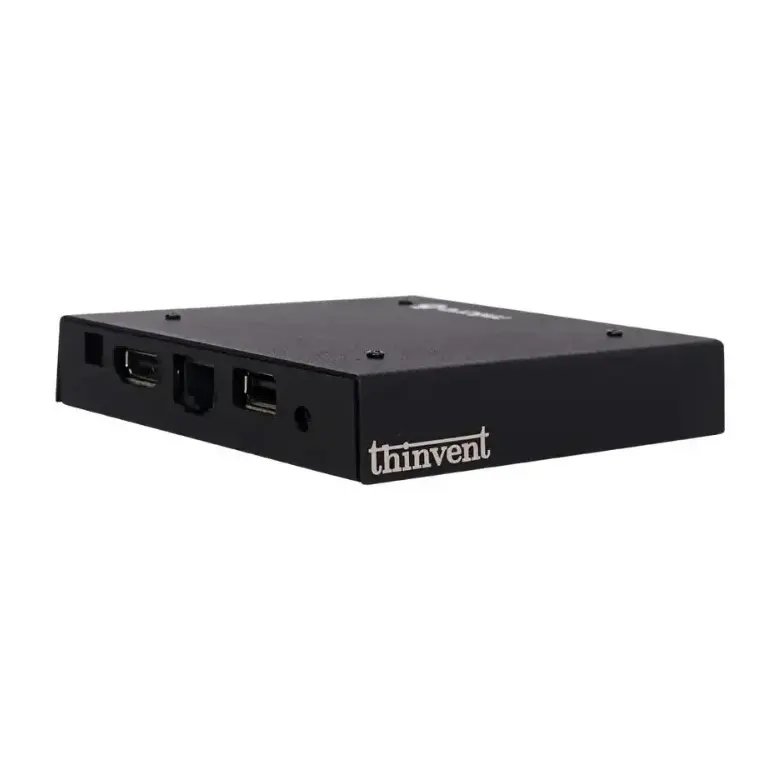
Why a Mini PC is the Ideal Desktop for Students
For students, a desktop computer needs to balance performance, affordability, and space efficiency. A mini PC is an excellent choice, offering a powerful computing experience in a compact footprint that easily fits into a dorm room, shared apartment, or home study desk. Unlike bulky traditional towers, these small form factor computers provide all the necessary capabilities for academic work without taking up valuable space.
The key specifications to look for in a student desktop include a modern, power-efficient processor like the Intel N100, which features 4 cores and can boost up to 3.4 GHz. This is more than sufficient for running productivity suites (Microsoft Office, Google Workspace), browsing the web with multiple tabs, attending online classes via Zoom or Teams, and even light programming or media consumption. Paired with 16GB of DDR4 RAM, multitasking between a browser, document editor, and communication apps remains smooth and responsive.
Storage is another critical factor. A 128GB SSD provides fast boot times and quick application loading, which is a significant upgrade over traditional hard drives. For most students, this capacity is adequate for the operating system, software, and documents. If more space is needed for projects or media, external drives or cloud storage can easily supplement it. Additionally, the low power consumption of these mini PCs (often running on a small 12V adapter) makes them economical to run 24/7.
Use Cases and Applications
The primary use cases for a student desktop revolve around education and productivity. Typical applications include:
-
Online Learning: Video conferencing, accessing learning management systems (LMS) like Canvas or Blackboard.
-
Research and Writing: Web browsing, word processing, creating presentations, and managing PDFs.
-
Light Programming: Running IDEs for Python, Java, or web development.
-
Media Consumption: Streaming lectures, movies, and music.
Comparison: Mini PC vs. Traditional Desktop for Students
| Feature | Mini PC (e.g., Intel N100) | Traditional Desktop |
|---|---|---|
| Size | Ultra-compact, space-saving | Large tower, requires dedicated space |
| Power Consumption | Very low (15W typical) | Higher (65W+ typical) |
| Performance | Excellent for daily tasks | Can be overkill for students |
| Upgradability | Limited (RAM, SSD) | Extensive |
| Cost | Affordable, all-in-one value | Can be more expensive for similar specs |
| Portability | Easy to move between locations | Difficult to move |
For the vast majority of students, a mini PC offers the best balance of cost, performance, and convenience.
Thinvent's Range of Student Desktops
Thinvent offers a range of mini PCs perfectly suited for student life. Our Aero Mini PC series, powered by the Intel N100 processor with 16GB RAM and 128GB SSD, provides a reliable and efficient desktop experience. We offer configurations with Windows 11 Pro, Ubuntu Linux, or without an operating system (DOS) to match your software preferences. All models come with essential connectivity including HDMI, USB 3.2, and Gigabit Ethernet, making it easy to connect to monitors, peripherals, and campus networks. With a silent, fanless cooling design, it ensures a quiet study environment.