Choosing the Right Desktop Office Computer
When selecting a desktop office computer, the primary focus should be on reliability, sufficient performance for everyday tasks, and a compact form factor that saves desk space. Typical office workloads include web browsing, email, document editing (Microsoft Office, Google Workspace), video conferencing, and light data management. For these tasks, a balance between processor power, memory, and storage is key to ensuring smooth multitasking without unnecessary expense.
Key Specifications for Office Use
For a standard office environment, we recommend the following baseline specifications:
-
Processor: Intel® N100 or Core™ i3 (12th Gen or newer) – these provide excellent efficiency and responsiveness for productivity software.
-
Memory: 8GB to 16GB DDR4 RAM – sufficient for running multiple applications and browser tabs simultaneously.
-
Storage: 256GB to 512GB SSD – ensures fast boot times and quick file access, with ample space for documents and applications.
-
Operating System: Windows 11 Pro or Ubuntu Linux 24.04 LTS – choose based on your organization’s software compatibility requirements.
These specifications deliver a fluid experience for office suites, video calls, and web-based tools, while keeping power consumption low and reliability high.
Use Cases and Applications
Desktop office computers excel in environments where stability and longevity are prioritized. Common deployments include:
-
Corporate workstations: For employees handling spreadsheets, presentations, and email.
-
Hot-desking and shared spaces: Compact mini PCs that can be easily mounted behind monitors.
-
Education and training labs: Reliable systems for student use with minimal maintenance.
-
Front-desk and reception areas: Quiet, fanless designs that blend into professional settings.
Many modern office PCs also support dual-monitor setups via HDMI and USB-C, enhancing productivity for multitasking users.
Comparison: Entry-Level vs. Performance Office PCs
| Feature | Entry-Level (e.g., N100) | Performance (e.g., Core i3) |
|---|---|---|
| Cores/Threads | 4 cores / 4 threads | 6 cores / 8 threads (with hyper-threading) |
| Max Frequency | Up to 3.4 GHz | Up to 4.4 GHz |
| Ideal For | Basic office tasks, light web browsing | Heavy multitasking, large spreadsheets, video conferencing |
| Memory | 4GB–8GB | 8GB–16GB |
| Storage | 128GB–256GB SSD | 256GB–512GB SSD |
For most office users, an entry-level Intel N100 system with 8GB RAM and a 256GB SSD offers the best value. Power users who run multiple virtual desktops or data-heavy applications should consider a Core i3-based model.
Thinvent’s Desktop Office Computer Range
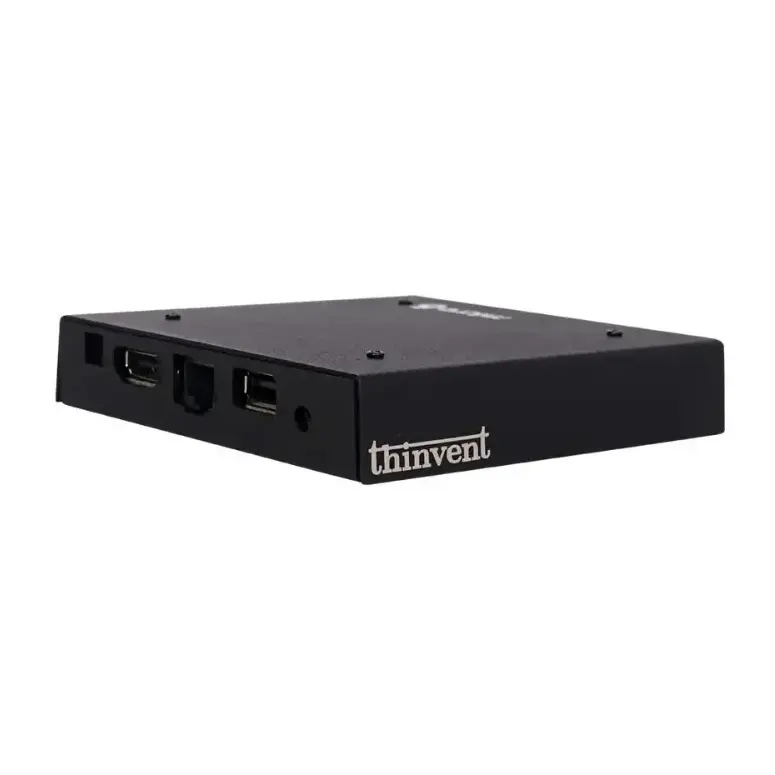
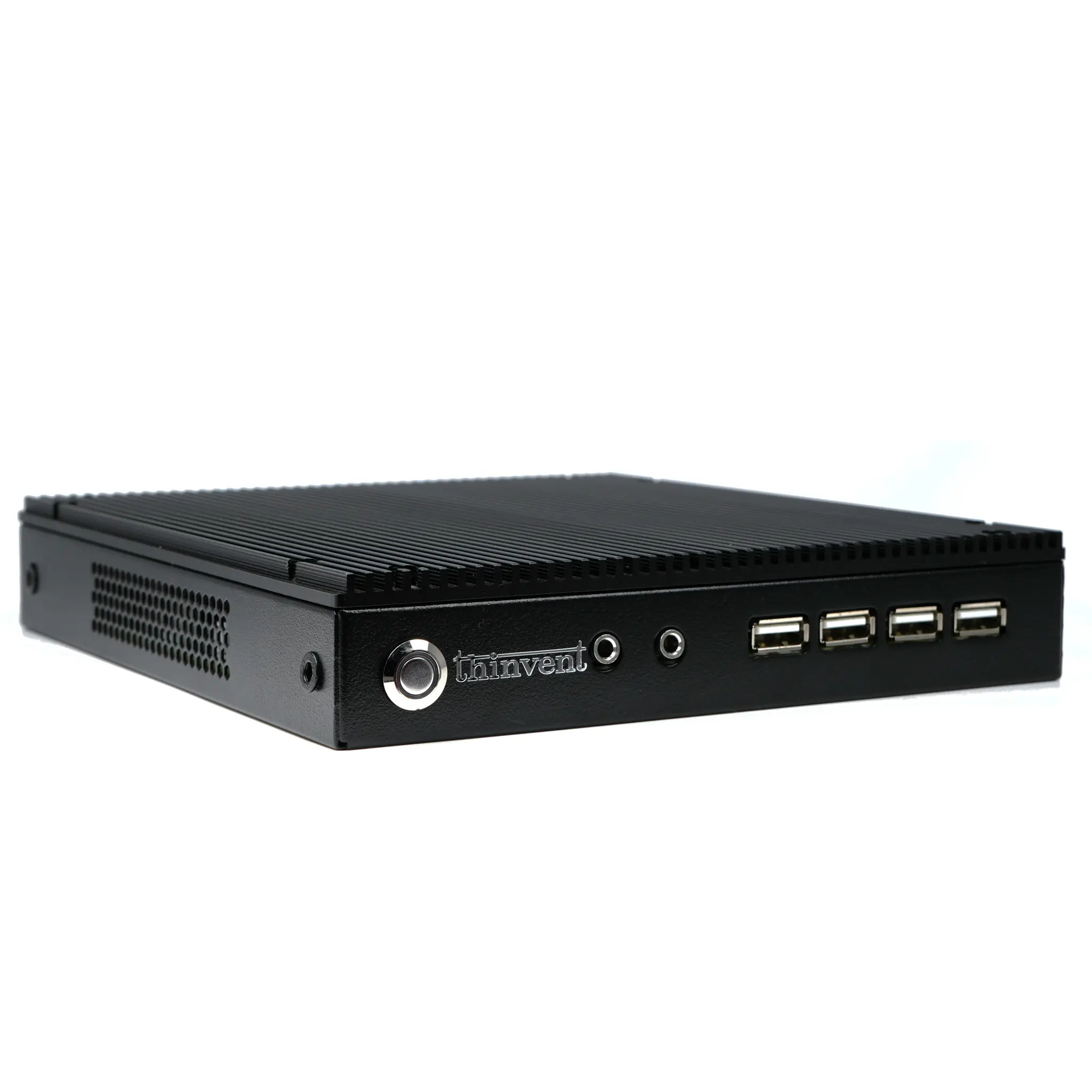
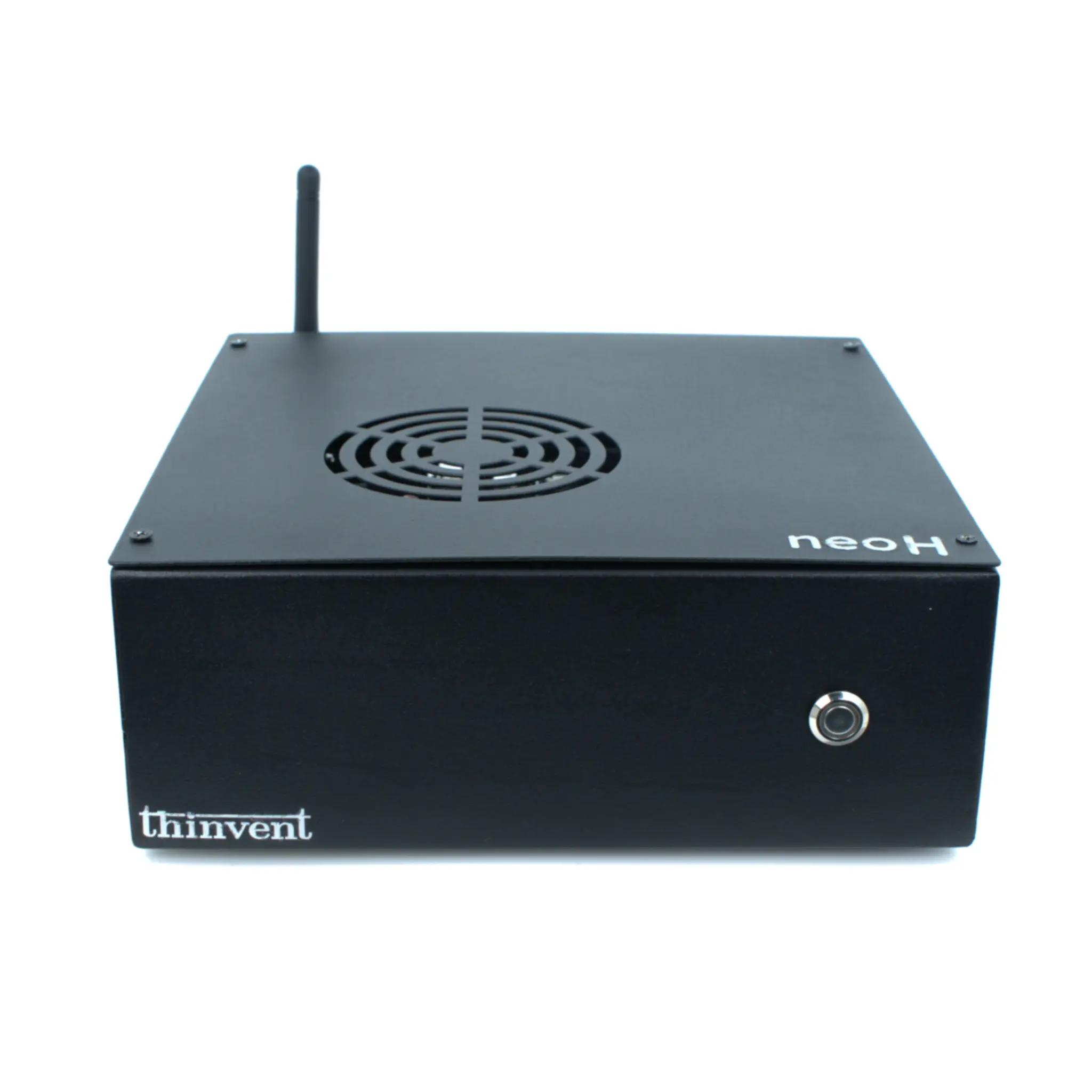
Thinvent offers a variety of desktop office computers tailored to different business needs. Our Treo Mini PC series (powered by Intel N100 or N95 processors) provides an ultra-compact, fanless design ideal for silent office environments. For higher performance, the Aero Mini PC series (with Intel Core i3-1215U or Core 5 120U) delivers the processing headroom needed for demanding office applications. All models feature solid-state storage, reliable DDR4 memory, and support for Windows 11 Pro or Ubuntu Linux, ensuring seamless integration into any office IT infrastructure.