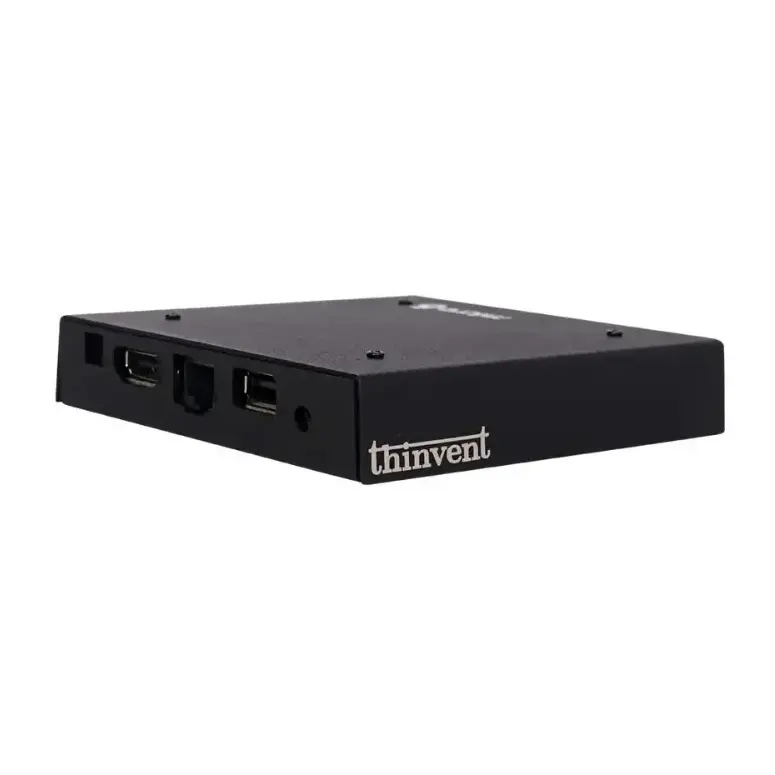
A Zero Client Desktop is a specialized computing endpoint designed for virtual desktop infrastructure (VDI) and cloud-based computing environments. Unlike traditional PCs or thin clients, a true zero client contains no local operating system, storage, or applications. It is a hardware device that acts purely as a display, input, and network interface, with all processing and data storage occurring on a central server or in the cloud. This architecture provides exceptional security, simplified management, and reduced total cost of ownership.
Key Specifications and Architecture
The core principle of a zero client is its lack of local compute intelligence. Key technical specifications are therefore focused on connectivity and display capabilities. These devices typically feature multiple high-resolution video outputs (like HDMI or DisplayPort), robust wired Ethernet ports (often dual Gigabit or 2.5GbE for redundancy), and a variety of USB ports for peripherals. They are powered by low-power, fanless System-on-Chip (SoC) processors, often from ARM or Intel, specifically designed to decode and display remote desktop protocols like Citrix HDX, VMware Blast, or Microsoft RDP efficiently.
Primary Use Cases and Applications
Zero client desktops are ideal for environments demanding high security, centralized control, and consistent user experiences. Common applications include:
-
Financial Services and Healthcare: For handling sensitive data where local storage is a compliance risk.
-
Call Centers and Task Workers: Providing a standardized, reliable desktop that is easy to deploy and replace.
-
Education Labs: Allowing students to access powerful virtual desktops from low-maintenance hardware.
-
Industrial Kiosks: Offering a locked-down, durable interface for public or factory floor use.
Comparison: Zero Client vs. Thin Client
It's important to distinguish between a zero client and a thin client, as the terms are sometimes used interchangeably.
| Feature | Zero Client | Thin Client |
|---|---|---|
| Local OS | None (firmware only) | Lightweight embedded OS (e.g., Linux, Windows IoT) |
| Local Storage | Minimal or none for firmware | Small SSD for OS and cache |
| Management | Centralized server-side only | Can be managed locally or centrally |
| Security | Highest (no attack surface locally) | High, but OS requires patching |
| Flexibility | Low (tied to specific protocol/server) | Higher (can run some local apps) |
| Performance | Consistent, server-dependent | Can be affected by local OS tasks |
Thinvent Solutions for Zero Client Deployments
While Thinvent manufactures a range of robust industrial computing solutions, our product philosophy aligns with the core benefits of zero-client architecture: reliability, security, and manageability. Our fanless Mini PCs and Thin Clients, such as the Aero series, serve as excellent platforms for zero-client functionality. When configured with a lightweight or diskless operating system option, they provide the durable, low-power hardware foundation required for secure VDI endpoints. Their compact form factor, wide operating temperature range, and rich I/O connectivity make them perfectly suited for deploying centralized desktop solutions in demanding commercial and industrial settings worldwide.