Industrial computers for rugged applications are specialized hardware devices engineered to operate reliably in demanding and often hostile environments. Unlike standard commercial PCs, these systems are built with durability as a core principle, featuring robust construction, wide operating temperature ranges, and protection against dust, moisture, vibration, and electrical interference. They are the backbone of automation and data acquisition in sectors where failure is not an option.
Key specifications that define a rugged industrial computer include its form factor, ingress protection (IP) rating, operating temperature range, power input tolerance, and shock/vibration resistance. Technically, they often utilize fanless cooling systems with passive heatsinks to eliminate moving parts that can fail and to prevent dust ingress. Components are typically soldered or secured to withstand constant movement. Power supplies are designed for wide voltage input (e.g., 9-36V DC) to handle power fluctuations common in industrial settings, and they feature multiple I/O ports like serial (COM), Ethernet, and GPIO for connecting to machinery and sensors.
These computers are deployed across a wide range of critical applications. In manufacturing, they serve as machine controllers, PLCs, and HMIs on the factory floor. In transportation, they power in-vehicle systems for logistics, rail, and maritime use. They are essential in outdoor kiosks, digital signage, and agricultural automation, exposed to sun, rain, and temperature extremes. In energy sectors like oil & gas or utilities, they monitor and control remote infrastructure. Their reliability ensures continuous operation where maintenance is difficult or dangerous.
When selecting a rugged industrial computer, key considerations include processing power for the task (from efficient ARM cores to high-performance Intel Core processors), sufficient memory and storage for the operating system and applications, and the necessary environmental certifications. A comparison of common architectures is useful:
| Feature | ARM-based Systems | Intel x86-based Systems |
|---|---|---|
| Typical Use | Thin clients, embedded control, lightweight HMIs | Data-intensive processing, complex automation, edge computing |
| Power & Heat | Very low power, minimal heat generation | Higher power, may require advanced fanless cooling |
| OS Compatibility | Linux, RTOS, Android | Windows, Linux, real-time OS variants |
| I/O & Expandability | Often fixed configuration | Greater potential for expansion cards (PCIe) |
| Performance Profile | High efficiency for dedicated tasks | High compute power for versatile workloads |
Thinvent Rugged Industrial Computing Solutions
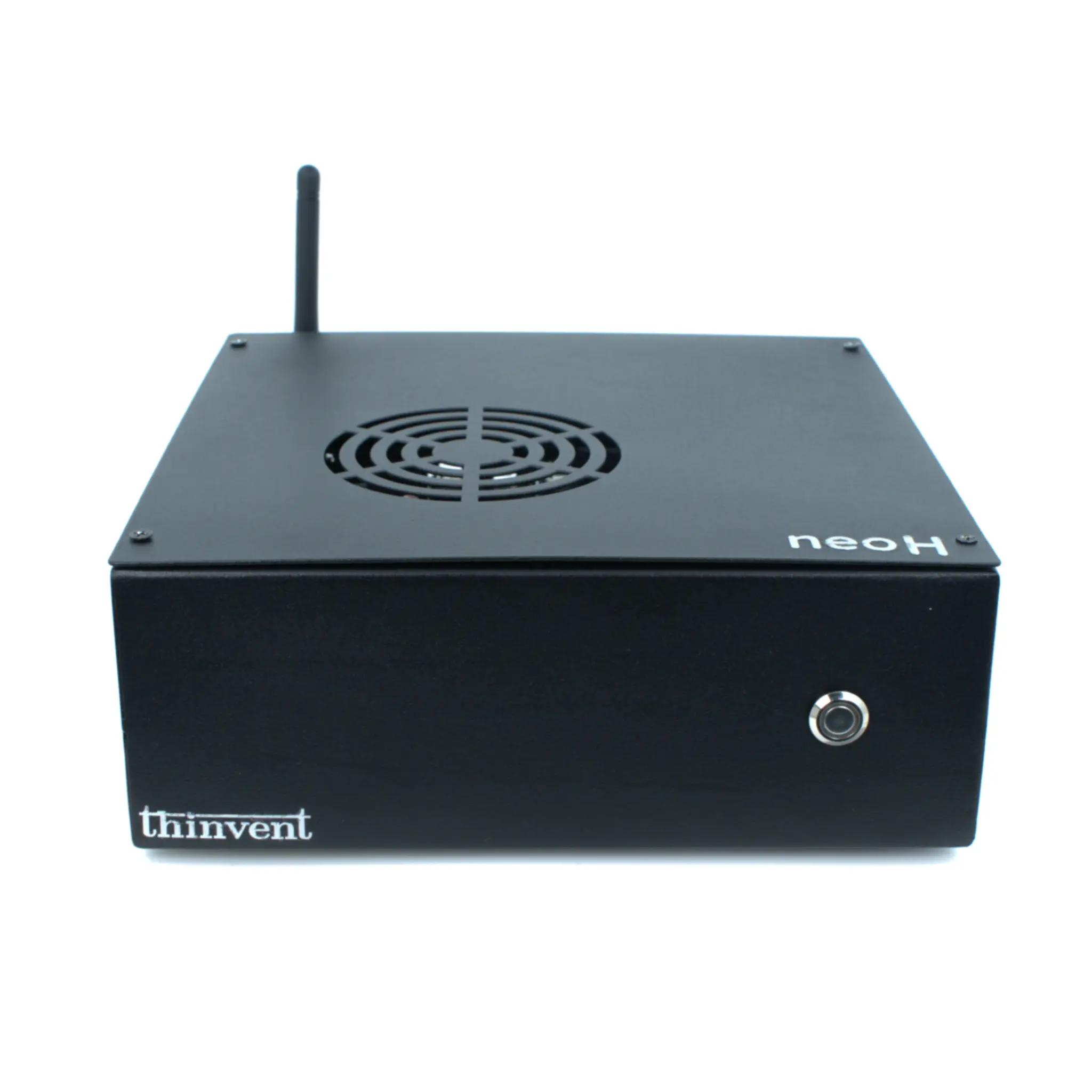
Thinvent offers a comprehensive portfolio of industrial-grade computing hardware designed for rugged applications. Our product lines include compact Industrial PCs (IPCs), fanless Mini PCs, and specialized Thin Clients, built to thrive in challenging conditions. For demanding computational tasks, our IPC series features powerful Intel Core i3, i5, and i7 processors from the latest generations, paired with robust DDR4 memory and fast SSD storage, all housed in durable, fanless metal chassis. For embedded and edge applications requiring ultra-reliability and low power consumption, we provide solutions powered by efficient Intel N-series processors or ARM-based architectures. Every Thinvent industrial computer is engineered for wide-temperature operation, stable performance under vibration, and long-term reliability, making them an ideal choice for automation, transportation, digital signage, and outdoor deployments worldwide.