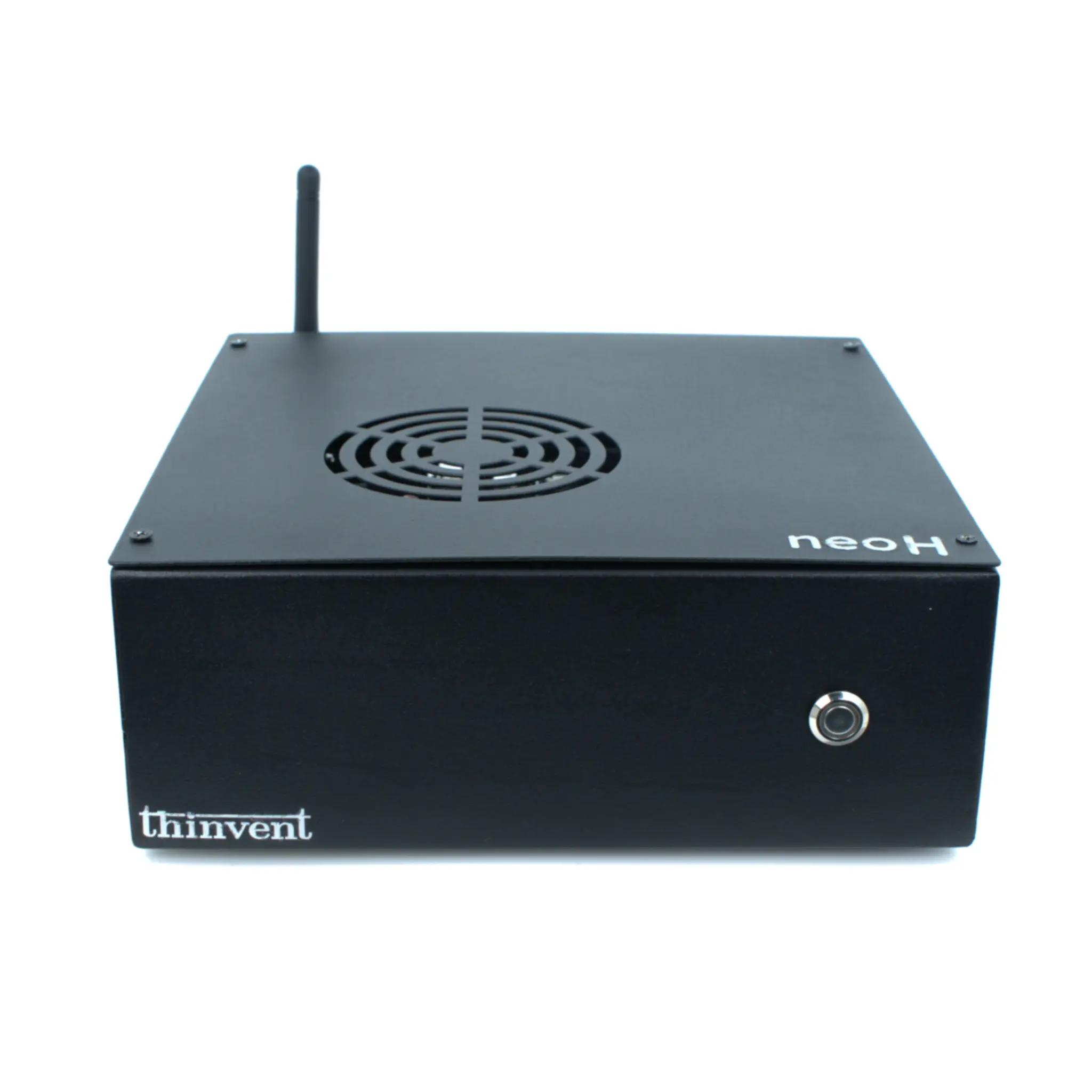
What Are Compact Fanless Mini PCs?
Compact fanless mini PCs are small-form-factor computers designed for industrial and commercial environments where reliability, space efficiency, and silent operation are critical. These systems eliminate moving parts like fans, using passive cooling solutions such as heat sinks and chassis design to dissipate heat. This makes them ideal for dusty, dirty, or vibration-prone settings where traditional PCs would fail. They offer a robust computing platform in a minimal footprint, often featuring low-power processors, multiple connectivity options, and wide operating temperature ranges.
Key Specifications and Technical Details
A typical industrial fanless mini PC, like those powered by the Intel N100 processor, balances performance with efficiency. Core specifications often include:
-
Processor: Modern, efficient CPUs like the Intel N-series (e.g., N100, N95) or Celeron series, offering 4 cores and clock speeds up to 3.4 GHz.
-
Memory: Configurations typically range from 8GB to 16GB of DDR4 RAM, sufficient for multitasking and running specialized software.
-
Storage: Solid-state drives (SSDs) from 128GB to 512GB provide fast boot times and reliable data storage without mechanical hard drives.
-
Connectivity: Standard features include Gigabit Ethernet for network reliability, multiple USB ports (including USB 3.2), and HDMI outputs for display.
-
Power: They operate on low-voltage DC power (e.g., 12V), making them easy to integrate into various setups and power-efficient for 24/7 operation.
-
Operating System: Support for Windows IoT, Windows 11 Pro, Ubuntu Linux, or other embedded OSes provides flexibility for different application needs.
Use Cases and Applications
The fanless, compact design makes these PCs exceptionally versatile for demanding scenarios:
-
Digital Signage & Kiosks: Powering interactive displays, menu boards, and information terminals in retail, hospitality, and public spaces.
-
Industrial Automation: Serving as a controller or HMI (Human-Machine Interface) in manufacturing, controlling machinery and monitoring processes.
-
Thin Client & VDI: Acting as endpoints for virtual desktop infrastructure in offices, schools, and call centers, centralizing management and security.
-
Edge Computing: Processing data locally in IoT networks for smart cities, transportation systems, and agricultural monitoring, reducing latency and bandwidth use.
-
Embedded Systems: Integrated into medical devices, transportation vehicles, or security systems where consistent, maintenance-free operation is non-negotiable.
Comparison of Common Processor Options
| Feature | Intel Processor N100 | Intel Celeron J4125 |
|---|---|---|
| Generation | 12th Gen (Alder Lake-N) | Gemini Lake Refresh |
| Cores / Threads | 4 / 4 | 4 / 4 |
| Max Turbo Frequency | Up to 3.4 GHz | Up to 2.7 GHz |
| Cache | 6 MB L3 | 4 MB L2 |
| GPU | Intel UHD Graphics (24 EU) | Intel UHD Graphics 600 |
| TDP | 6W | 10W |
| Best For | Modern efficiency, better graphics performance | Cost-effective, proven reliability for basic tasks |
Thinvent's Range of Fanless Mini PCs
Thinvent specializes in robust, fanless industrial computing solutions designed for global deployment. Our Aero Mini PC series exemplifies this commitment, featuring the efficient Intel N100 processor in a compact, all-metal chassis. These systems are built for 24/7 operation and come configured with your choice of operating system—Windows 11 IoT, Windows 11 Pro, Ubuntu Linux, or a lightweight embedded option—to match your project's exact requirements. With standard configurations including 16GB RAM and 128GB SSD, plus options for peripheral bundles, Thinvent provides a reliable, ready-to-deploy computing foundation for a wide array of industrial and commercial applications.