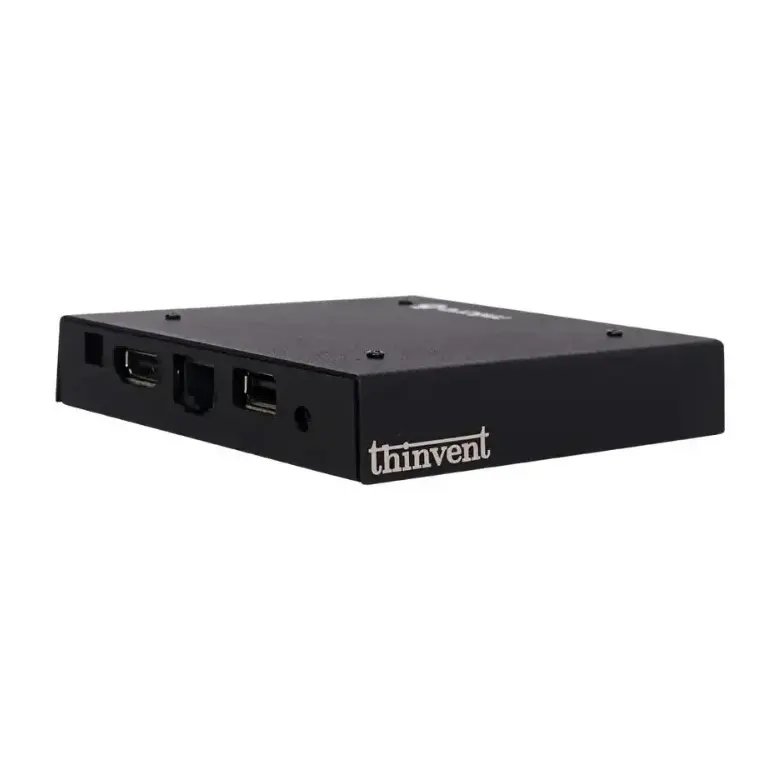
A Home NAS (Network Attached Storage) is a dedicated device for centralized data storage and sharing across your home network. It provides a private cloud for your photos, videos, documents, and media libraries, accessible from any device. Unlike a standard external hard drive, a NAS offers features like automated backups, remote access, and media streaming, making it an essential hub for modern digital homes.
For a home NAS, key specifications focus on connectivity, storage expansion, and efficient 24/7 operation. The ideal device should have multiple high-speed Ethernet ports (1 GbE or higher) for network redundancy (link aggregation) and fast data transfer. It requires sufficient SATA or M.2 interfaces to connect multiple hard drives or SSDs, typically configured in a RAID array for data protection. Since a NAS often runs quietly in a living space, a fanless or near-silent design is a major advantage. Adequate RAM (8GB or more) is recommended for smooth operation of the NAS operating system and any additional services like media servers or virtual machines.
Primary use cases for a home NAS include:
-
Centralized Media Library: Store and stream movies, music, and photos to smart TVs, phones, and tablets.
-
Automated PC & Mobile Backups: Create scheduled backups for all family devices to a single, secure location.
-
Personal Cloud Storage: Access your files securely from anywhere, replacing reliance on third-party cloud services.
-
Home Surveillance Hub: Run network video recorder (NVR) software to manage and record footage from IP security cameras.
When choosing hardware, a balance between performance and power efficiency is key. An Intel N-series processor (like the N100) offers excellent performance-per-watt for basic to mid-range NAS duties. For more demanding tasks like running multiple Docker containers, Plex transcoding, or a lightweight virtual machine, an Intel Core i3 or i5 processor provides the necessary headroom.
| Consideration | Basic/Media NAS | Power User/Prosumer NAS |
|---|---|---|
| Recommended CPU | Intel N100, ARM-based | Intel Core i3/i5 (12th Gen+) |
| Recommended RAM | 8 GB | 16 GB or more |
| Storage Bays | 2-4 bays | 4+ bays, M.2 for cache |
| Networking | Dual 1 GbE ports | 2.5 GbE or 10 GbE ports |
| OS | Lightweight Linux (Ubuntu), TrueNAS Core | Ubuntu Server, TrueNAS Scale, UnRAID |
Thinvent Solutions for Your Home NAS
Thinvent's range of compact and industrial-grade mini PCs are excellent foundations for building a powerful and reliable home NAS. Their fanless designs ensure silent 24/7 operation, while robust construction guarantees longevity. Models like the Thinvent Treo Mini PC with an Intel N100 processor offer a perfect balance of efficiency and capability for a media-focused NAS. For users with more advanced needs, the Thinvent Industrial PC IPC3 with an Intel Core i3-1215U processor provides superior multi-core performance for running multiple services. These systems can easily be paired with external multi-bay drive enclosures or installed into custom cases, offering a flexible and high-performance alternative to off-the-shelf NAS appliances.