What Does a CPU Look Like?
A Central Processing Unit (CPU) is a small, flat, square or rectangular piece of silicon, typically housed in a protective ceramic or plastic package. It is the primary chip on a computer's motherboard. The most common visual characteristic is a metal or ceramic lid, often called the Integrated Heat Spreader (IHS), which protects the delicate silicon die underneath and provides a surface for a heatsink to attach for cooling. The underside of a modern desktop or server CPU features hundreds of small, gold-plated contact points or pins (depending on the socket type) that connect it to the motherboard.
Key Physical Components and Specifications
The physical appearance is defined by its form factor and socket type, which must match the motherboard. Common consumer CPU packages include:
-
Land Grid Array (LGA): Used by modern Intel desktop CPUs. The contact pins are on the motherboard socket, and the CPU has flat pads.
-
Pin Grid Array (PGA): Used by many AMD and older Intel CPUs. The CPU itself has an array of pins on its underside that insert into the socket.
-
Ball Grid Array (BGA): Used in laptops, mini PCs, and embedded systems. The CPU is permanently soldered to the motherboard and is not user-replaceable.
Technical details are printed on the IHS, including the brand (Intel or AMD), processor series (e.g., Core i5, Ryzen 7), model number, specification code, and batch information. The size is surprisingly compact; a standard desktop CPU is roughly the size of a large postage stamp, measuring about 1.5 to 2 inches per side.
Applications and Use Cases by Form Factor
The physical CPU type dictates the computer's application:
-
Desktop LGA/PGA CPUs: Designed for high performance and upgradability in workstations, gaming PCs, and servers. They require active cooling (fans).
-
Mobile/BGA CPUs: Soldered onto laptop or mini PC motherboards. They are optimized for power efficiency and thermal performance in compact, fanless, or low-profile designs ideal for digital signage, kiosks, industrial automation, and edge computing.
CPU Comparison: Desktop vs. Embedded Form Factors
| Feature | Standard Desktop CPU (LGA/PGA) | Embedded/Mobile CPU (BGA) |
|---|---|---|
| Physical Size | ~1.5" x 1.5" square | Varies; often smaller |
| Mounting | Removable, seated in socket | Permanently soldered to board |
| Upgradability | Yes, by end-user | No, part of system board |
| Typical Cooling | Large heatsink + fan | Low-profile heatsink, often fanless |
| Primary Use Case | Upgradable desktops, servers | Compact, reliable systems (Mini PCs, All-in-Ones) |
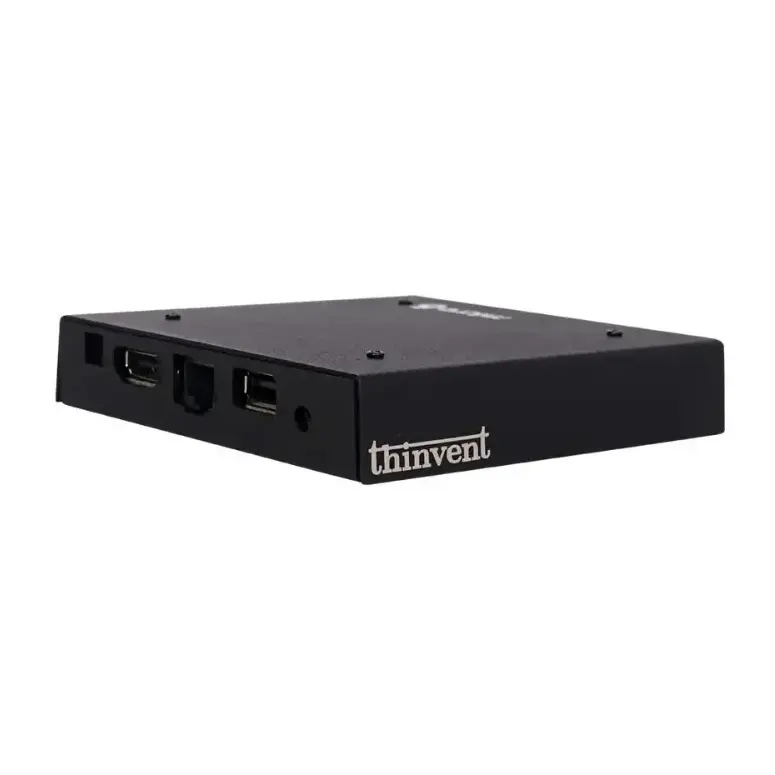
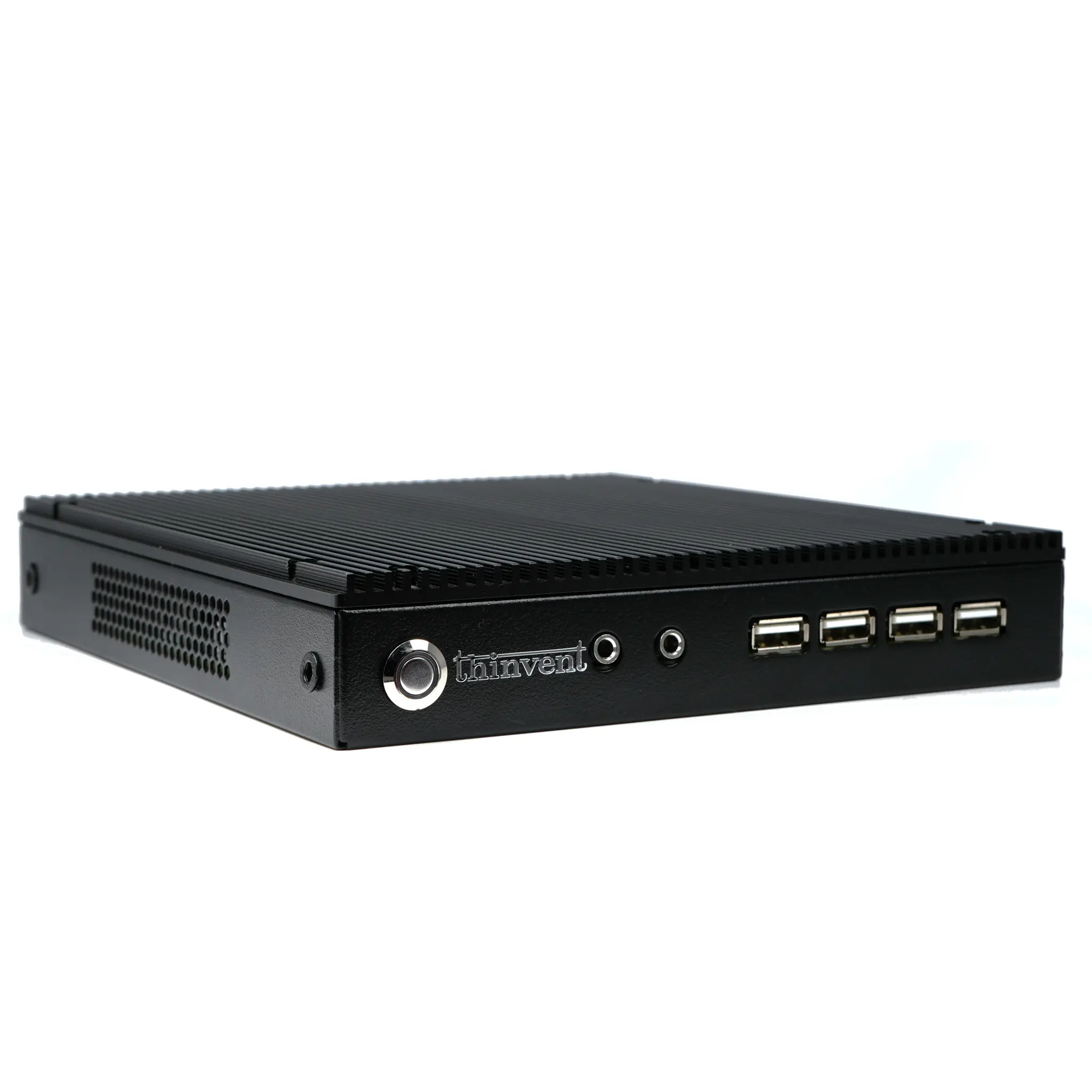
Thinvent Products Featuring Modern CPUs
Thinvent specializes in compact, reliable computing solutions that utilize modern, efficient CPUs in a Ball Grid Array (BGA) format. These processors are integrated directly onto the system board, enabling fanless, rugged designs perfect for 24/7 operation. For example, our Aero Mini PC series features the Intel processor N100. This 12th Gen, 4-core CPU provides excellent performance-per-watt, allowing for a completely silent, fanless design while handling tasks like digital signage, thin client applications, and light industrial computing. By selecting optimized embedded CPUs, Thinvent ensures our industrial computers deliver reliable performance in space-constrained and demanding environments worldwide.