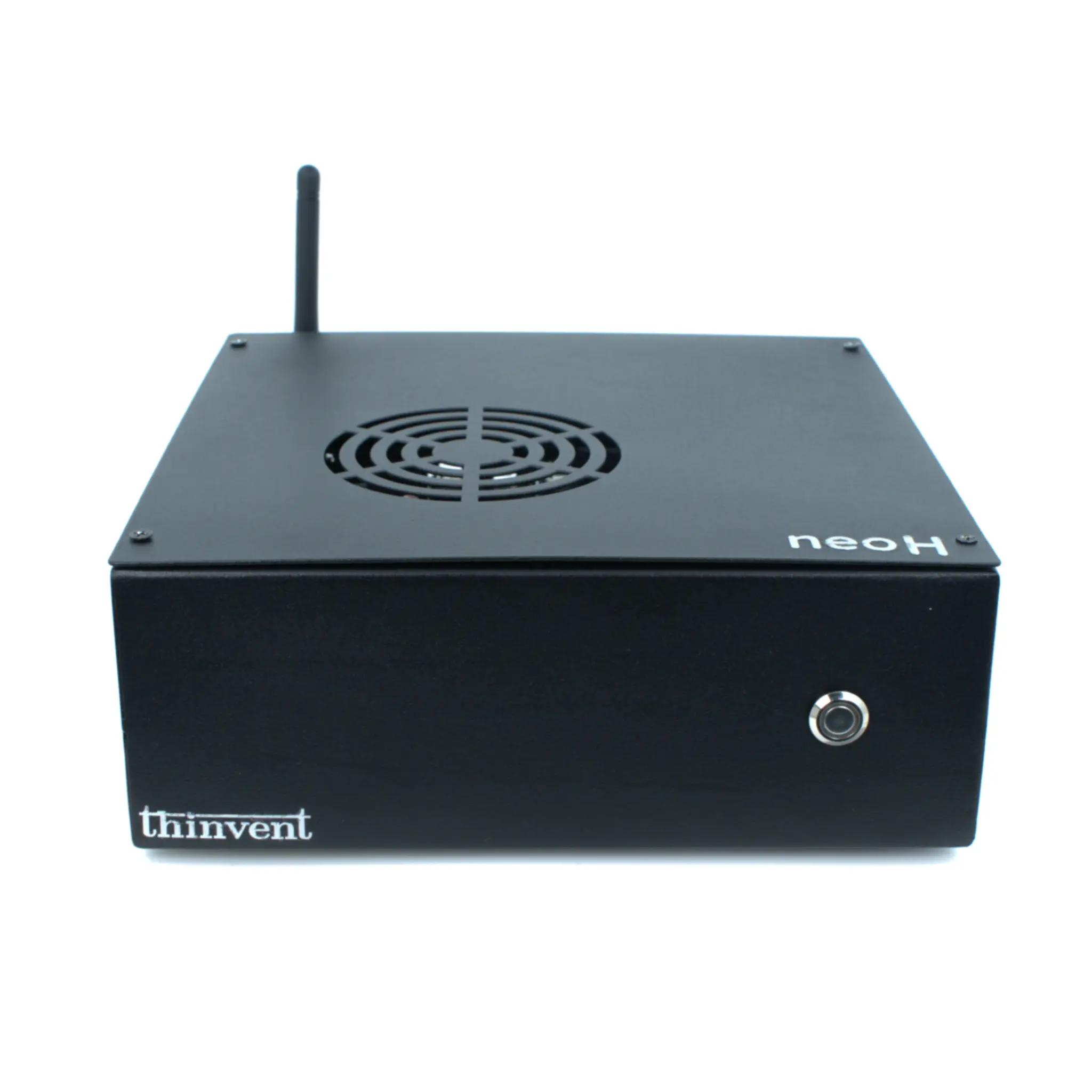
What Are Compact Fanless Mini PCs?
Compact fanless mini PCs are small-form-factor computing devices designed for reliability and silent operation in demanding environments. By eliminating moving parts like fans, these systems offer enhanced durability, reduced maintenance, and immunity to dust and particulate ingress. They are engineered to dissipate heat passively through advanced chassis design and heat sinks, making them ideal for 24/7 operation in industrial, commercial, and embedded applications where consistent performance and a small footprint are critical.
Key Specifications and Technical Details
These systems typically feature energy-efficient processors, such as Intel's N-series, which balance performance with low thermal design power (TDP). Common specifications include DDR4 RAM, solid-state storage, multiple I/O ports (USB, HDMI, Ethernet), and support for wide-range DC power input (e.g., 12V). The fanless design ensures operation in extended temperature ranges and noisy environments where cooling fans would be a liability. Key technical aspects often include:
-
Processor: Modern, efficient CPUs (e.g., Intel N100) with multiple cores for multitasking.
-
Memory & Storage: Configurations with 8GB-16GB RAM and 128GB-512GB SSDs for responsive operation.
-
Connectivity: Gigabit Ethernet, USB 3.2, and multiple display outputs for versatile deployment.
-
Operating Systems: Support for Windows, Linux, and embedded OS options for flexibility.
Use Cases and Applications
The robustness of fanless mini PCs makes them suitable for a wide array of applications beyond standard office use. They excel in settings where space is limited, cleanliness is paramount, or environmental conditions are challenging.
-
Digital Signage & Kiosks: Reliable media playback in retail, hospitality, and public spaces.
-
Industrial Automation: As a controller or HMI in manufacturing and process control.
-
Thin Client & VDI: Dense, quiet endpoints for virtual desktop infrastructure.
-
Edge Computing: Data processing and gateway functions in IoT networks.
-
Embedded Systems: Integrated into medical devices, transportation, and telecommunications equipment.
Comparison of Common Mini PC Form Factors
| Feature | Fanless Mini PC | Traditional Mini PC (with fan) | Industrial Panel PC |
|---|---|---|---|
| Cooling Method | Passive (No Fan) | Active (Fan) | Varies (Often Fanless) |
| Noise Level | Silent | Audible | Silent to Low |
| Dust Resistance | Excellent (Sealed) | Standard | Excellent (IP-rated options) |
| Typical Use Case | Embedded, Industrial | Office, Home Theater | HMI, Control Panel |
| Deployment Flexibility | High (Wall-mount, DIN-rail) | Moderate (Desk) | Fixed (Integrated display) |
Thinvent's Range of Fanless Mini PCs
Thinvent offers a comprehensive portfolio of compact, fanless industrial computers designed for global deployment. Our Aero series, exemplified by the models on this page, features the efficient Intel N100 processor, robust DDR4 memory, and solid-state storage in a rugged, silent chassis. These systems are pre-configured with a choice of operating systems—including Windows 11, Ubuntu Linux, and our proprietary Thinux™ Embedded Linux—to match your project's specific software requirements. Built for reliability and ease of integration, Thinvent mini PCs provide a dependable computing foundation for digital signage, thin client solutions, edge computing, and industrial automation projects worldwide.