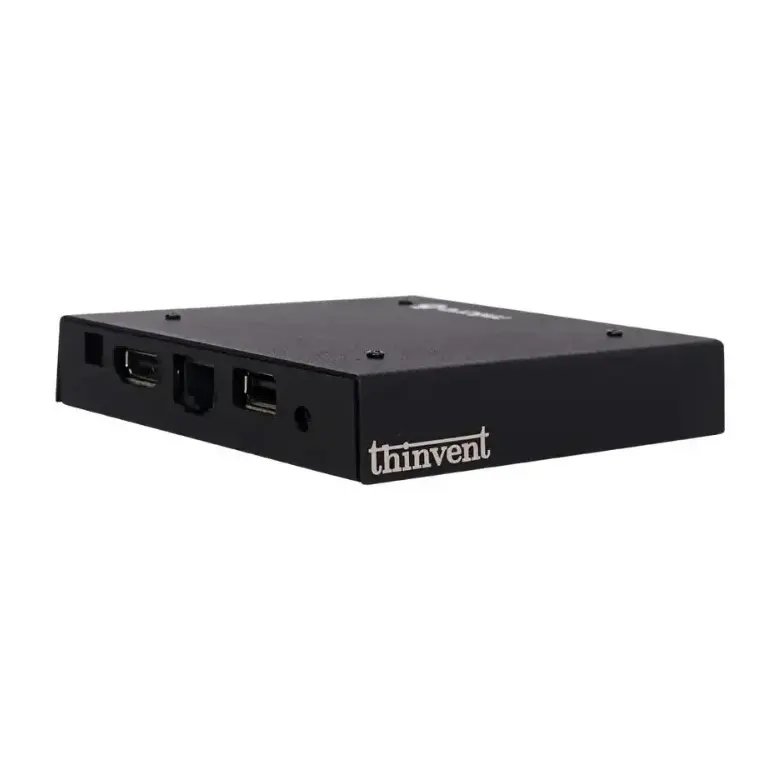
What Is a Mini CPU?
A "mini CPU" is a compact computer built around a small-form-factor processor, typically an Intel Celeron, N-series or Core i3/i5 chip. Despite the name, the CPU itself is a full desktop-class processor — the "mini" refers to the tiny chassis that houses it. These systems fit in the palm of your hand, draw very little power, and are designed to run quietly for years, often with fanless cooling that eliminates dust ingress and moving-part failure.
Key Specifications to Look For
When comparing mini PCs, focus on the processor model, memory, storage and connectivity rather than physical size. Modern Intel N-series and Celeron chips offer 4 to 8 cores at low power, while Core i3 and i5 options deliver higher clock speeds for demanding workloads. Look for DDR4 or DDR5 memory, SSD storage, dual display outputs, and multiple USB and Ethernet ports.
| Specification | Typical Entry Level | Mid Range | High Performance |
|---|---|---|---|
| Processor | Intel N95 / N100 / Celeron | Intel N150 / 1215U | Intel Core i3 / i5 (12th–14th Gen) |
| Cores | 4 | 4–6 | 10–12 |
| Memory | 4–8 GB | 8–16 GB | 16–32 GB |
| Storage | 128 GB SSD | 256–512 GB SSD | 512 GB–1 TB SSD |
| Cooling | Fanless | Fanless | Active / Fanless options |
| Typical Use | Kiosks, thin client, POS | Office, retail, digital signage | Workstations, virtualization |
Why Fanless Mini PCs Matter
Fanless designs remove the single most common failure point in small computers: the cooling fan. With no vents pulling in dust, these systems survive in workshops, factories, retail counters and dusty offices where standard desktops clog and overheat. They also run silently, which suits clinics, classrooms and customer-facing environments. Low power draw means they can run on a small 12V adapter or even a battery-backed supply, keeping them alive through power interruptions.
Common Use Cases
Mini CPUs are widely used as thin clients connecting to virtual desktops, as digital signage players driving displays, as point-of-sale terminals, as edge gateways collecting sensor data, and as everyday office desktops for browsing, email and documents. Because they mount behind a monitor or under a desk, they free up workspace and reduce cable clutter. Many models support dual HDMI outputs for two-screen setups, and dual Gigabit Ethernet for network redundancy or segregated traffic.
How to Choose
Match the processor to the workload. For browsing, billing and thin-client use, a 4-core Intel N-series or Celeron is more than enough. For multi-tab office work, light design or running several virtual machines, step up to a Core i3 or i5 with 16–32 GB RAM. Choose SSD capacity based on local data needs, and pick an operating system — Windows 11 Pro, Ubuntu Linux, or a licence-free option — that fits your deployment. Always check the warranty, serviceable design and availability of spares, since industrial deployments run for many years.
Thinvent Mini PCs
Thinvent builds a complete range of mini PCs, thin clients, industrial computers and all-in-one PCs for global deployment. The Thinvent Aero Mini PC family pairs Intel processors with DDR4 memory, SSD storage and a choice of Windows 11 IoT, Windows 11 Pro, Ubuntu Linux, Thinux™ Embedded Linux or DOS. Fanless construction, 12V DC input, dual display support and long-term spares availability make them suited to kiosks, retail, healthcare, education and industrial control. Buyers worldwide can configure memory, storage and OS to match their exact application.