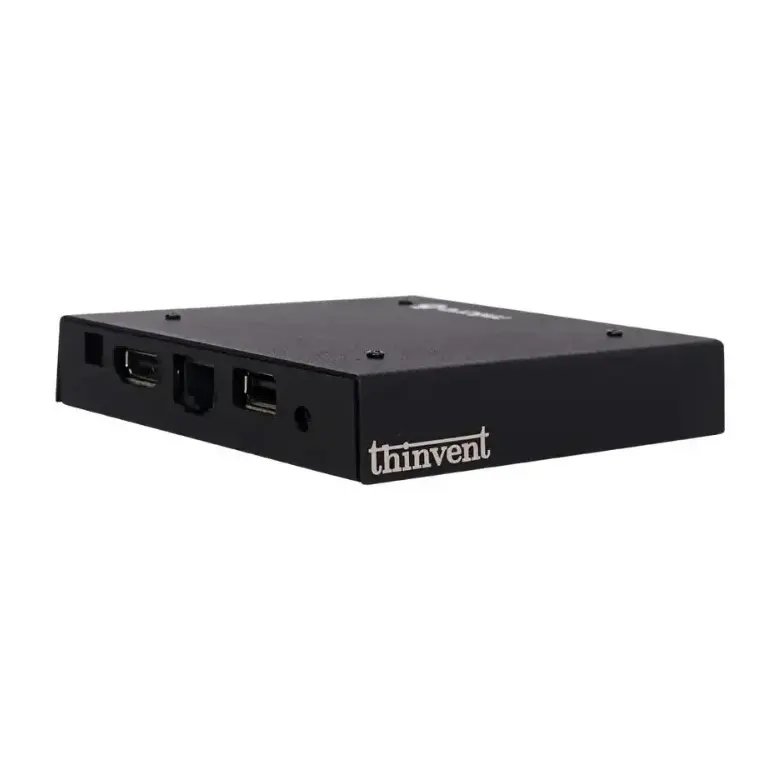
A mobile computer is any computing device designed to be used while in motion or in locations where a fixed desktop installation is impractical. The category spans several distinct device classes: rugged handheld terminals used for barcode scanning and inventory work, vehicle-mounted computers installed in forklifts and delivery fleets, rugged laptops and tablets for field service, and compact fanless PCs that travel inside mobile carts, kiosks and portable workstations. What unites them is not a single form factor but a set of requirements — vibration tolerance, wide-voltage DC power input, fanless cooling, and reliable operation across a wide temperature range.
What Defines a Mobile Computer
The engineering priorities for mobile computing hardware differ sharply from office desktops. Because the unit may be powered from a vehicle battery, a solar setup or a portable pack, the power stage typically accepts a wide DC input range (commonly 9–36V) rather than a fixed 12V rail. Vibration and shock from vehicle mounts or hand-carrying make fanless, solid-state designs preferable — no spinning drives, no fans to clog with dust or fail from constant jolting. Enclosures are usually metal rather than plastic, and connectors are often screw-locking so cables do not work loose in service.
Key Specifications to Evaluate
| Specification | Why It Matters in Mobile Use |
|---|---|
| Processor | Low-power Intel N-series, Celeron, or Core i3/i5 parts balance performance against heat and battery draw |
| Cooling | Fanless passive cooling survives dust, vibration and sealed enclosures |
| Memory | 8–16GB DDR4/DDR5 covers POS, telematics, dispatch and data-capture workloads |
| Storage | 128GB–1TB SSD or eMMC; no moving parts to fail under shock |
| Power Input | Wide-range DC input for vehicle and battery operation |
| I/O | Multiple serial (DB9) ports for legacy instruments, plus USB 3.2 and HDMI |
| Networking | Dual Gigabit Ethernet for segregated networks; Wi-Fi/4G optional |
| Operating System | Windows 11 Pro/IoT, Linux or DOS depending on the application stack |
Typical Applications
Mobile computers appear wherever work happens away from a desk. In logistics they run warehouse management and proof-of-delivery software on forklift-mounted terminals. In field service they power diagnostics, job dispatch and digital forms. In retail and hospitality they drive mobile POS, queue management and table-side ordering. In public transport and fleet operations they handle ticketing, telematics, GPS tracking and driver displays. In healthcare they support bedside data entry and medication verification carts, and in manufacturing they serve as portable test benches and machine HMI panels that move between production lines.
Choosing Between Device Classes
If the work is fundamentally about scanning and data capture, a purpose-built rugged handheld is usually right. If the work involves a full desktop application running inside a vehicle or on a moving cart, a compact industrial PC with wide-voltage input is the better fit — it gives desktop-class I/O and expansion while tolerating the electrical and mechanical environment. If the requirement is simply a screen and