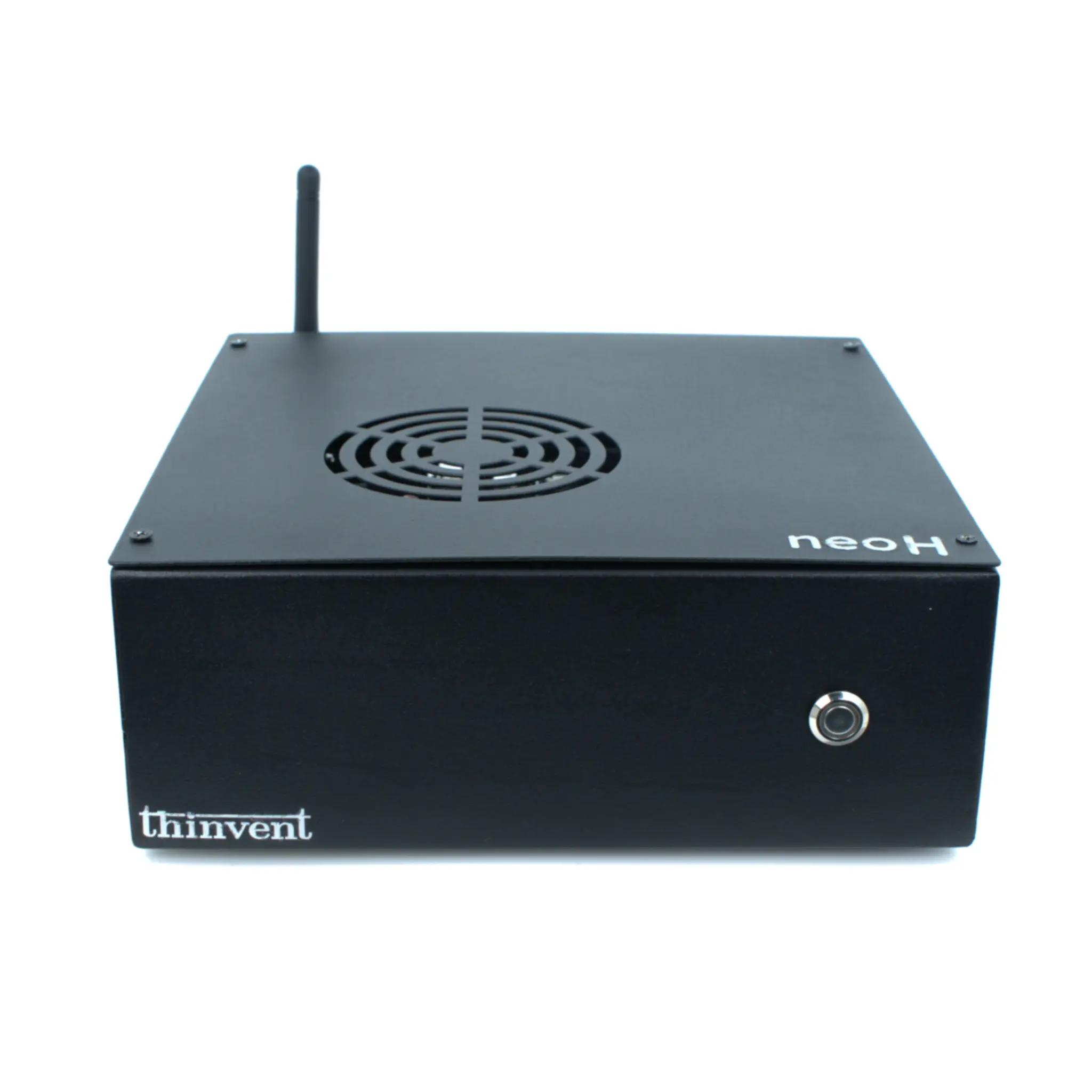
What Are Compact Fanless Mini PCs?
Compact fanless mini PCs are small-form-factor computers designed for industrial and commercial environments where reliability, space efficiency, and silent operation are critical. These systems eliminate moving parts like fans, using passive cooling solutions such as heat sinks and chassis design to dissipate heat. This makes them ideal for dusty, dirty, or vibration-prone settings where traditional computers with fans would fail. They typically feature low-power, efficient processors, ample connectivity, and robust construction for 24/7 operation.
Key Specifications and Technical Details
A modern compact fanless mini PC, like those powered by Intel's N-series processors, offers a balanced profile of performance and efficiency. Core specifications often include:
-
Processor: Intel processors like the N100 (4 cores, up to 3.4 GHz) provide ample power for everyday computing, digital signage, and light industrial tasks while maintaining low thermal design power (TDP).
-
Memory: Configurations typically range from 8GB to 16GB of DDR4 RAM, ensuring smooth multitasking.
-
Storage: Solid-state drives (SSDs) from 128GB to 512GB offer fast boot times, application loading, and data access.
-
Connectivity: Standard features include Gigabit Ethernet for network reliability, multiple USB ports (including USB 3.2), and HDMI outputs for dual-display setups.
-
Power: They operate on low-voltage DC power (e.g., 12V), making them easy to integrate into various setups and power-efficient.
Use Cases and Applications
The fanless, compact design opens a wide array of applications beyond standard office use:
-
Industrial Automation: As a controller for PLCs, HMIs, or machine vision systems on the factory floor.
-
Digital Signage & Kiosks: Driving displays in retail, hospitality, transportation hubs, and public information points.
-
Thin Client & VDI: Serving as a durable endpoint for virtual desktop infrastructure in offices, schools, and call centers.
-
Edge Computing: Processing data locally in IoT networks for smart cities, agriculture, or security systems.
-
Embedded Systems: Integrated into medical devices, point-of-sale systems, or in-vehicle infotainment.
Comparison of Common Mini PC Processors
| Processor Model | Cores/Threads | Max Frequency | Typical Use Case |
|---|---|---|---|
| Intel N100 | 4 Cores / 4 Threads | Up to 3.4 GHz | Basic computing, digital signage, thin clients |
| Intel N95 | 4 Cores / 4 Threads | Up to 3.4 GHz | Entry-level kiosks, light-duty embedded systems |
| Intel J4125 | 4 Cores / 4 Threads | Up to 2.7 GHz | Legacy fanless systems, low-power IoT gateways |
| Intel i3-1215U | 6 Cores / 8 Threads | Up to 4.4 GHz | General office productivity, more demanding applications |
Thinvent's Range of Fanless Mini PCs
Thinvent offers a comprehensive portfolio of robust, fanless mini PCs engineered for challenging environments. Our Aero series, for example, features the efficient Intel N100 processor in a compact, all-metal chassis designed for superior heat dissipation. These systems come pre-configured with various operating system options, including Windows 11 IoT/Pro, Ubuntu Linux, or our custom Thinux™ embedded platform, providing flexibility for different project requirements. Built for global deployment, Thinvent computers are tested for reliability and longevity, making them a trusted choice for industrial and commercial integration worldwide.