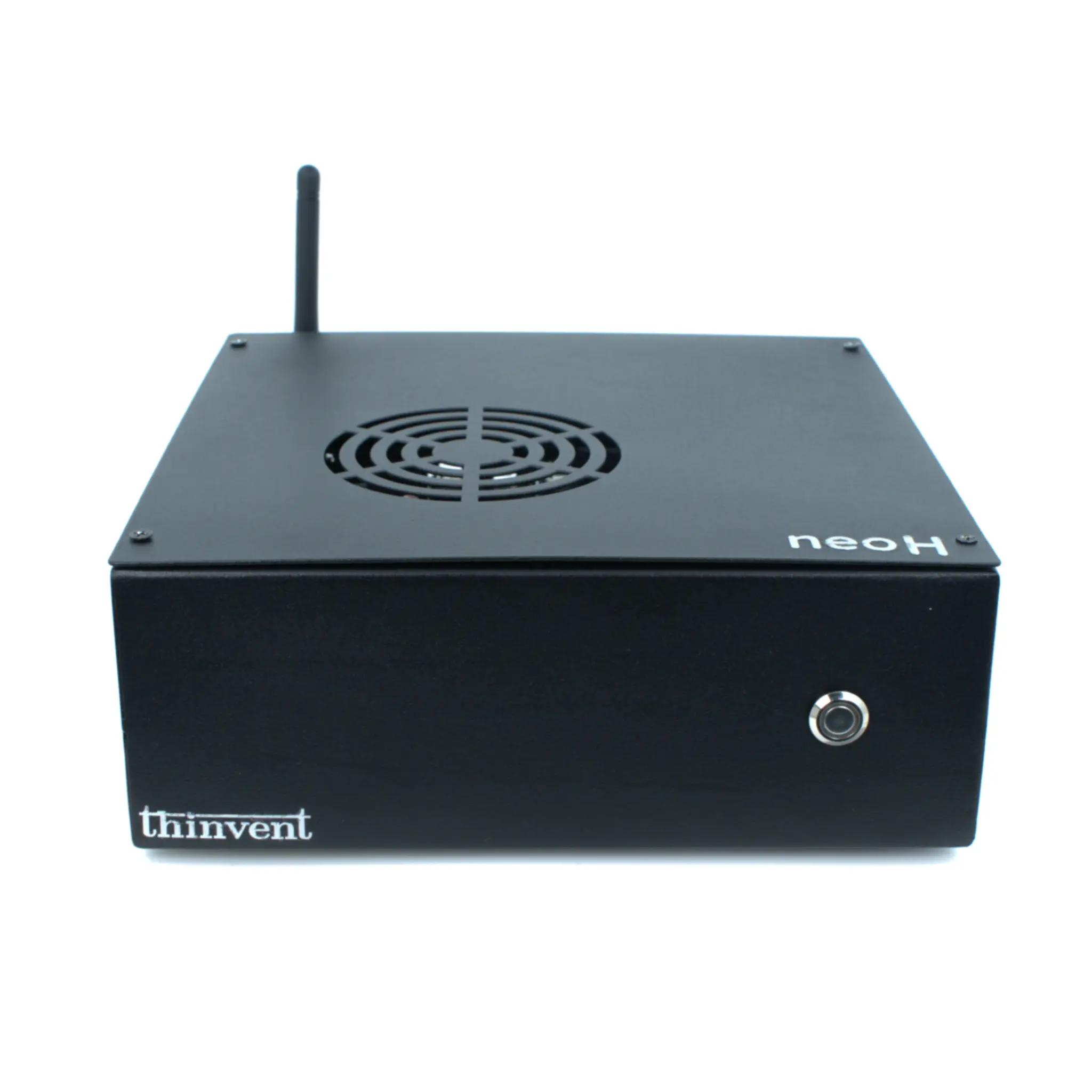
What Are Compact Fanless Mini PCs?
Compact fanless mini PCs are small-form-factor computers designed for embedded, industrial, and edge computing applications. They are characterized by their silent, fanless cooling systems, which use passive heatsinks to dissipate heat, making them ideal for environments where dust, vibration, or noise are concerns. These systems typically feature low-power, efficient processors, robust I/O connectivity, and support for a wide range of operating systems, offering a reliable and maintenance-free computing solution.
Key Specifications and Technical Details
These industrial-grade mini PCs are built around modern, efficient processors like the Intel N-series (e.g., N100). Key specifications often include:
-
Processor: Intel Celeron or N-series CPUs (e.g., 4-core N100) with integrated graphics.
-
Memory: Configurations from 4GB to 16GB of DDR4 RAM.
-
Storage: Solid-state drives (SSD) ranging from 128GB to 512GB for fast, reliable storage.
-
Cooling: 100% fanless design for silent operation and high reliability.
-
Connectivity: Multiple Gigabit Ethernet ports, USB 3.2, USB-C, HDMI/DisplayPort outputs, and often support for serial ports (COM).
-
Power: Low-voltage DC input (e.g., 12V), ideal for industrial power setups.
-
OS Support: Compatible with Windows IoT/Pro, various Linux distributions (Ubuntu, Thinux), and FreeDOS.
Use Cases and Applications
The robust and compact nature of these PCs makes them perfect for a variety of demanding applications:
-
Digital Signage & Kiosks: Reliable media playback in retail, hospitality, and public spaces.
-
Industrial Automation: Control and monitoring in manufacturing and process control environments.
-
Thin Clients & VDI: Secure endpoints for virtual desktop infrastructure.
-
Edge Computing & IoT Gateways: Data processing and protocol conversion at the network edge.
-
Embedded Systems: Integration into medical devices, transportation systems, and telecommunications equipment.
Comparison: Fanless Mini PC vs. Traditional SBC
For users considering alternatives like single-board computers (SBCs), here is a key comparison:
| Feature | Industrial Fanless Mini PC | Typical Single-Board Computer (SBC) |
|---|---|---|
| Form Factor | Enclosed, rugged metal chassis | Exposed PCB, may require a case |
| Cooling | Passive, fanless heatsink | Often requires active fan or large heatsink |
| I/O & Expansion | Rich standard I/O (USB, Ethernet, COM); often has M.2 slots | Limited onboard ports; expansion via GPIO or HATs |
| Power Supply | Standard DC barrel jack or terminal block | Micro-USB, USB-C, or GPIO header |
| Operating System | Full Windows & Linux desktop/embedded OS support | Primarily Linux-based distributions |
| Ruggedness | Designed for 24/7 operation in wide temperature ranges | Consumer-grade, for benign environments |
| Support | Commercial warranty and technical support | Community-driven forums |
Thinvent's Range of Fanless Mini PCs
Thinvent offers a comprehensive lineup of industrial-grade, fanless mini PCs designed to meet the needs of embedded and edge computing. Our Aero Mini PC series, for example, features the efficient Intel N100 processor in a compact, rugged aluminum chassis. These systems are pre-configured with your choice of memory, storage, and operating system—including Windows 11 IoT/Pro, Ubuntu Linux, or our own Thinux™ Embedded Linux—providing a turnkey solution. Built for reliability and silent operation, Thinvent mini PCs are ideal for digital signage, factory automation, thin client deployments, and as robust IoT gateways, delivering professional performance in a durable, maintenance-free package.