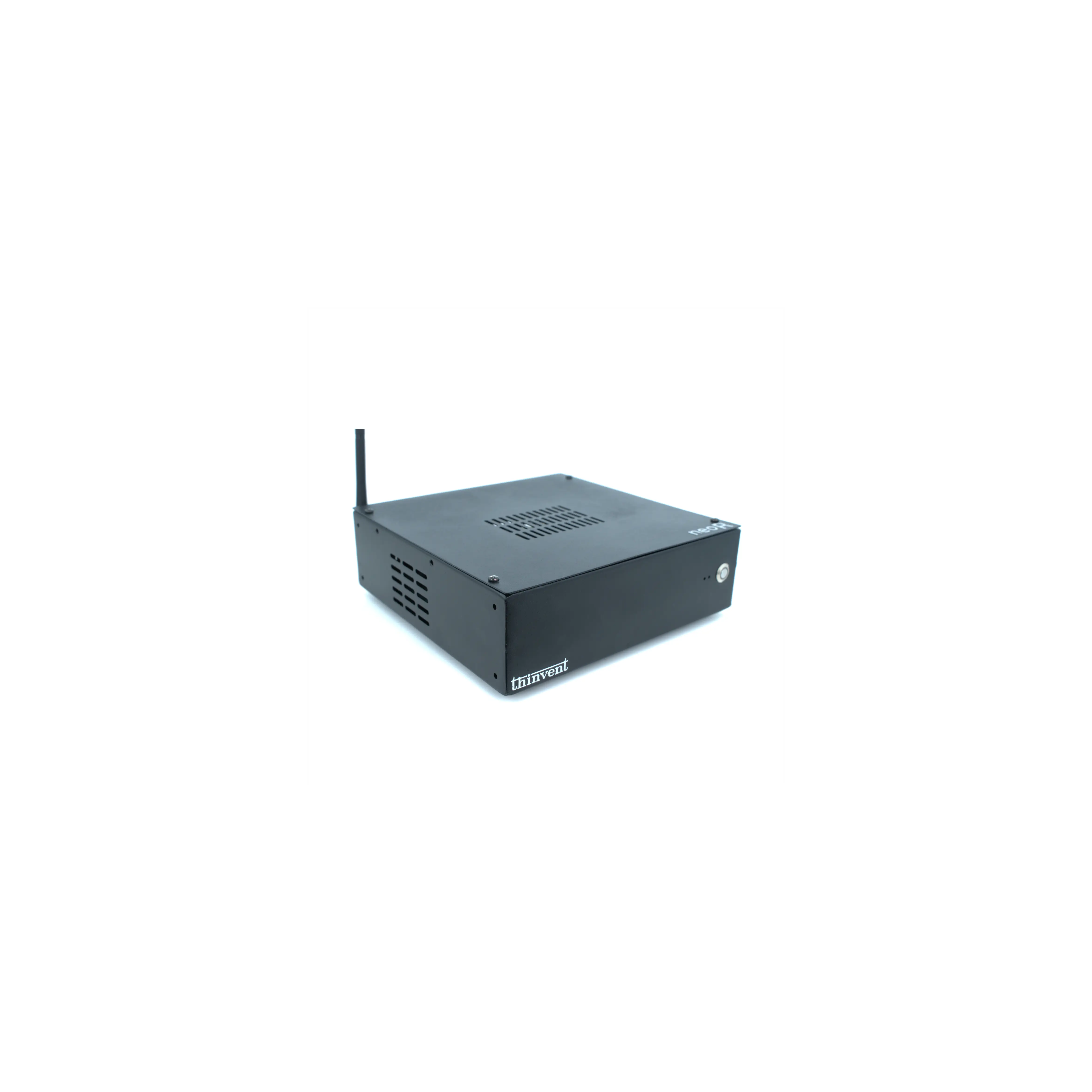
What is a Small Form Factor (SFF) PC?
A Small Form Factor (SFF) PC, like the Dell OptiPlex 7020 SFF, is a compact desktop computer designed to deliver full computing power while occupying minimal desk or rack space. These systems are engineered for business and industrial environments where reliability, manageability, and a small physical footprint are critical. They typically offer a balance of performance, connectivity, and expansion options in a chassis significantly smaller than a traditional desktop tower.
Key Specifications and Technical Details
Modern SFF PCs are built around efficient, low-power processors that generate less heat, allowing for quiet, fanless, or near-silent operation—a key advantage for office and digital signage applications. Core specifications often include Intel Core i-series or Celeron processors, support for SODIMM memory (typically 8GB to 32GB), and M.2 SSD storage for fast boot times and data access. They maintain robust connectivity with multiple USB ports (including USB-C), dual display outputs (HDMI/DisplayPort), and Gigabit Ethernet for network reliability. Their compact size is achieved through integrated graphics and carefully designed internal layouts.
Ideal Use Cases and Applications
The primary strength of an SFF PC is its versatility in space-constrained scenarios. Common applications include:
-
Office Workstations: Providing a clutter-free, energy-efficient desktop for general productivity, CRM, and ERP software.
-
Digital Signage & Kiosks: Easily mounted behind monitors or embedded into kiosk enclosures for retail, hospitality, or transportation hubs.
-
Thin Clients & VDI: Serving as endpoints for virtual desktop infrastructure, centralizing management and security.
-
Industrial Automation: Deployed in control rooms or on factory floors for HMI (Human-Machine Interface) and monitoring tasks due to their rugged potential and small size.
-
Edge Computing: Processing data locally in retail, healthcare, or smart city applications where a small, reliable computer is needed at the network's edge.
Comparison: SFF vs. Other Form Factors
| Feature | Small Form Factor (SFF) | Mini PC | Traditional Tower |
|---|---|---|---|
| Size | Compact, but may allow for some internal expansion (e.g., half-height cards). | Ultra-compact, often palm-sized; minimal to no internal expansion. | Largest; ample room for multiple expansion cards and drives. |
| Performance | Balanced; supports standard desktop CPUs for good multi-threaded performance. | Efficient; uses mobile or low-power CPUs optimized for thermal constraints. | Highest; can accommodate powerful CPUs, GPUs, and cooling systems. |
| Use Case | General office, space-saving workstations, light-duty servers. | Digital signage, thin clients, embedded systems, ultra-compact workspaces. | High-performance workstations, gaming, servers, intensive creative work. |
| Power & Cooling | Moderate power draw; often uses efficient internal fans. | Very low power draw; frequently fanless for silent operation. | High power draw; requires robust active cooling solutions. |
Thinvent's Range of Compact Computing Solutions
While Thinvent does not manufacture the OptiPlex 7020 SFF, we offer a comprehensive portfolio of industrial-grade compact computers that serve similar and often more demanding roles. Our Aero Series Mini PCs exemplify the modern evolution of SFF principles, featuring fanless, rugged designs with Intel processors like the N100. They are built for 24/7 operation in challenging environments, from factory floors to outdoor kiosks, offering superior reliability, wide operating temperature ranges, and flexible mounting options. For users seeking the space efficiency of an SFF with the durability required for industrial and commercial deployments, Thinvent's solutions provide a robust and versatile alternative.