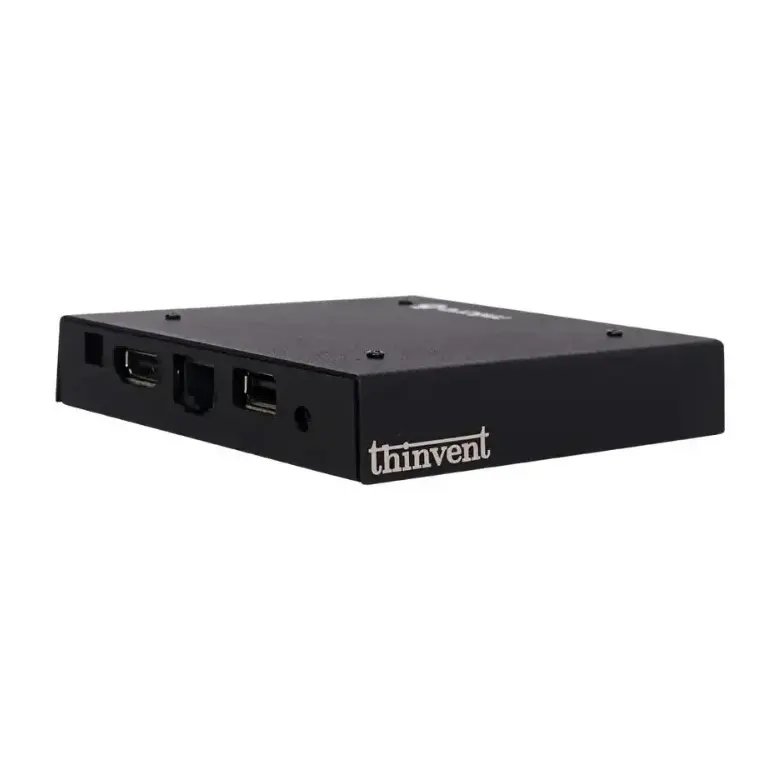
What Are Industrial PCs?
Industrial PCs (IPCs) are specialized computing systems designed for reliable operation in demanding environments. Unlike standard consumer PCs, they are built with ruggedized components, fanless cooling for silent and dust-resistant operation, and wide operating temperature ranges. They prioritize long-term stability, 24/7 uptime, and resistance to shock, vibration, and electrical noise. These computers are engineered for integration into larger systems, offering extensive I/O connectivity and support for industrial protocols.
Key Specifications and Technical Details
Industrial PCs are defined by their robust specifications. They typically feature efficient, low-power processors from Intel's Celeron, N-series, or Core i-series families, which generate less heat for fanless designs. Memory and storage are often socketed or modular for easy upgrades and maintenance. Key technical features include:
-
Rugged Construction: Metal chassis, often with DIN-rail or VESA mount compatibility.
-
Extended Temperature Range: Operates reliably from -20°C to 60°C or beyond.
-
Fanless Design: Eliminates moving parts, reducing points of failure and allowing operation in dusty environments.
-
Rich I/O: Multiple Ethernet ports (often with PoE), serial ports (COM), USB, HDMI/DisplayPort, and digital I/O for sensor/actuator control.
-
Wide Voltage Input: Supports 9-36V DC power for vehicle or industrial power supply compatibility.
Use Cases and Applications
Due to their reliability, industrial PCs are deployed in sectors where system failure is not an option.
-
Factory Automation: Machine vision, PLC supervision, HMI (Human-Machine Interface) panels, and robotic control.
-
Digital Signage & Kiosks: Powering interactive displays in retail, transportation hubs, and public spaces.
-
Thin Client & VDI: Centralized computing endpoints for office, education, and healthcare environments.
-
Embedded Systems: IoT gateways, in-vehicle computers for fleet management, and environmental monitoring stations.
-
Edge Computing: Processing data locally in smart cities, energy grids, and telecommunications.
Comparison: Industrial PC vs. Consumer Desktop
| Feature | Industrial PC | Consumer Desktop |
|---|---|---|
| Design Purpose | Reliability, Longevity, Integration | Performance, Cost, Gaming/Office |
| Operating Temp | Wide Range (e.g., -20°C to 60°C) | Narrow Range (e.g., 5°C to 35°C) |
| Cooling | Fanless (Passive) or Reinforced Fans | Active Fans (can be noisy) |
| Mechanical Design | Rugged, Metal, Mounting Options | Plastic/Metal, Desktop Tower |
| Lifecycle Support | Long-term (5-10+ years) | Short-term (1-3 years) |
| I/O Connectivity | Industrial (COM, DIO, PoE, Dual LAN) | Consumer (USB, HDMI, Audio) |
Thinvent Industrial Computing Solutions
Thinvent manufactures a comprehensive range of industrial-grade computing hardware designed for global deployment. Our product portfolio includes compact Mini PCs and Thin Clients powered by efficient Intel processors, ideal for space-constrained and embedded applications. For integrated display solutions, we offer robust All-in-One panels. Our systems are characterized by fanless operation for silent and maintenance-free performance, support for wide operating temperatures, and flexible configuration options for memory, storage, and operating systems (including Windows, Linux, and FreeDOS). Built for 24/7 reliability, Thinvent computers are engineered to deliver consistent performance in commercial, industrial, and edge computing environments worldwide.