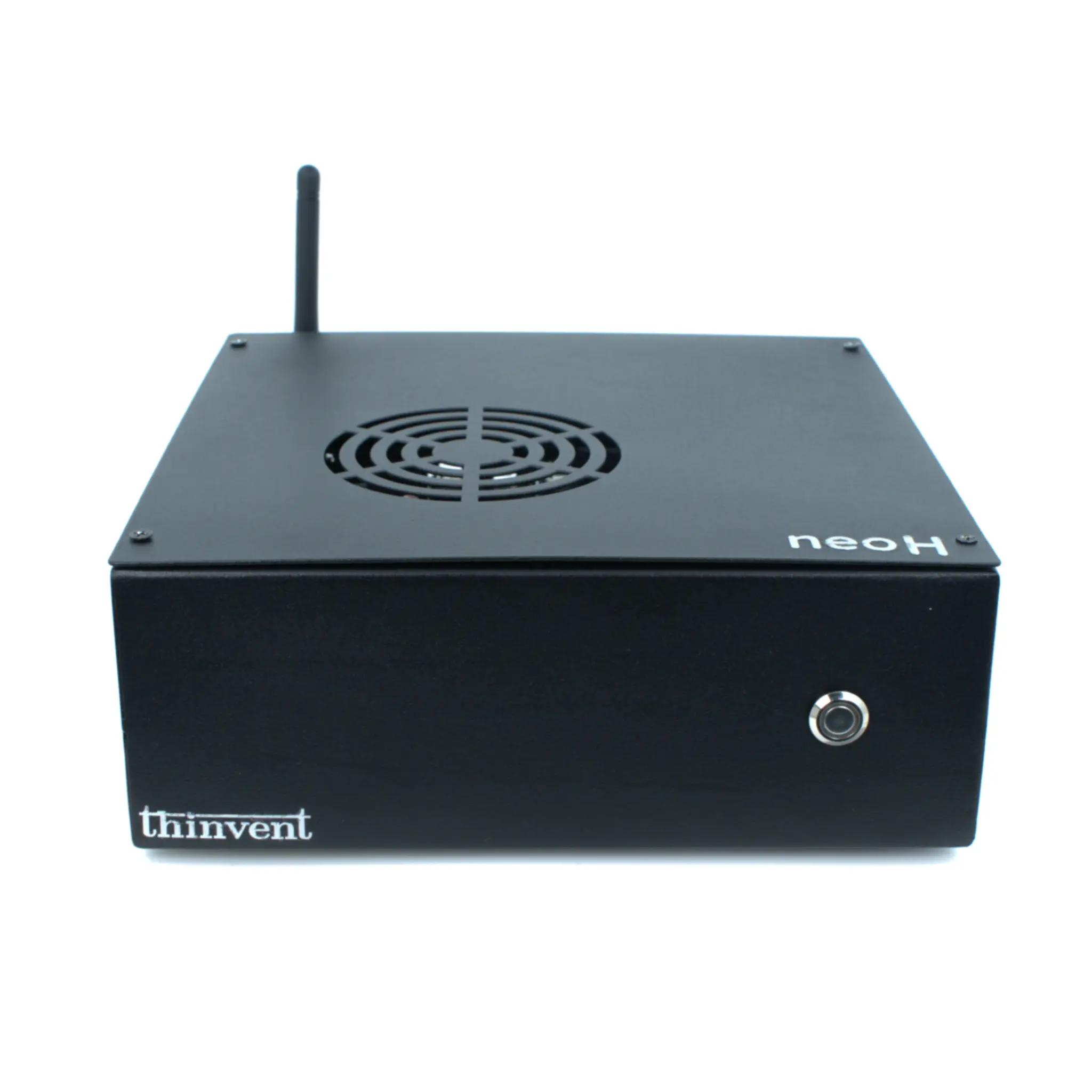
PC thin client conversion, or "thin client-ization," refers to the process of transforming a standard desktop PC into a dedicated thin client device. This involves reconfiguring the hardware and software to primarily function as a terminal for accessing virtual desktops, applications, and cloud resources hosted on central servers. The core goal is to centralize management, enhance security, and reduce total cost of ownership by shifting computational workloads from the endpoint to the data center.
Key Specifications for Thin Client Conversion
An ideal device for conversion is a compact, low-power, and reliable system. Key technical specifications include:
-
Processor: Modern, efficient Intel processors like the N-series (e.g., Intel N100) are ideal. They provide ample performance for decoding remote display protocols while maintaining low thermal design power (TDP) for fanless, silent operation.
-
Memory: 8GB to 16GB of RAM is typically sufficient for smooth operation of the thin client software and local caching.
-
Storage: A modest 128GB SSD provides fast boot times and ample space for the thin client operating system and local applications.
-
Connectivity: Reliable Gigabit Ethernet is essential for a stable connection to the server. Multiple USB ports are needed for peripherals.
-
Form Factor: A small Mini PC form factor saves valuable desk space and allows for flexible mounting options (VESA mount).
Applications and Use Cases
Converting PCs to thin clients is a strategic move for various environments:
-
Corporate Offices: For task workers accessing virtual desktop infrastructure (VDI) like VMware Horizon or Citrix.
-
Call Centers & Retail: Deploying standardized, secure terminals for point-of-sale (POS) or customer service applications.
-
Education & Libraries: Providing students with secure, managed access to educational software and resources.
-
Healthcare: Ensuring HIPAA/GDPR compliance by keeping patient data secure on central servers, not on endpoints.
Comparison: Standard PC vs. Thin Client-Converted PC
| Feature | Standard Desktop PC | Thin Client-Converted PC |
|---|---|---|
| Primary Role | Local processing and data storage | Remote access terminal |
| Management | Individual, complex | Centralized, streamlined |
| Security | Data at risk on endpoint | Data secured in the data center |
| Total Cost of Ownership | Higher (HW/SW/Management) | Lower (Reduced maintenance & upgrades) |
| Hardware Lifespan | 3-5 years (performance-dependent) | 5-7+ years (workload is server-side) |
| Noise & Size | Often larger with cooling fans | Compact, fanless, and silent |
Thinvent Solutions for Thin Client Conversion
Thinvent offers a range of industrial-grade Mini PCs perfectly suited for reliable thin client deployment. Our fanless systems, like those featuring the Intel N100 processor, are built for 24/7 operation in diverse environments. They combine the necessary performance for modern remote protocols with robust construction, low power consumption, and flexible operating system support (including Windows IoT, Linux, and FreeDOS for custom thin client OS images). This makes them an optimal, future-proof hardware foundation for any thin client conversion project.