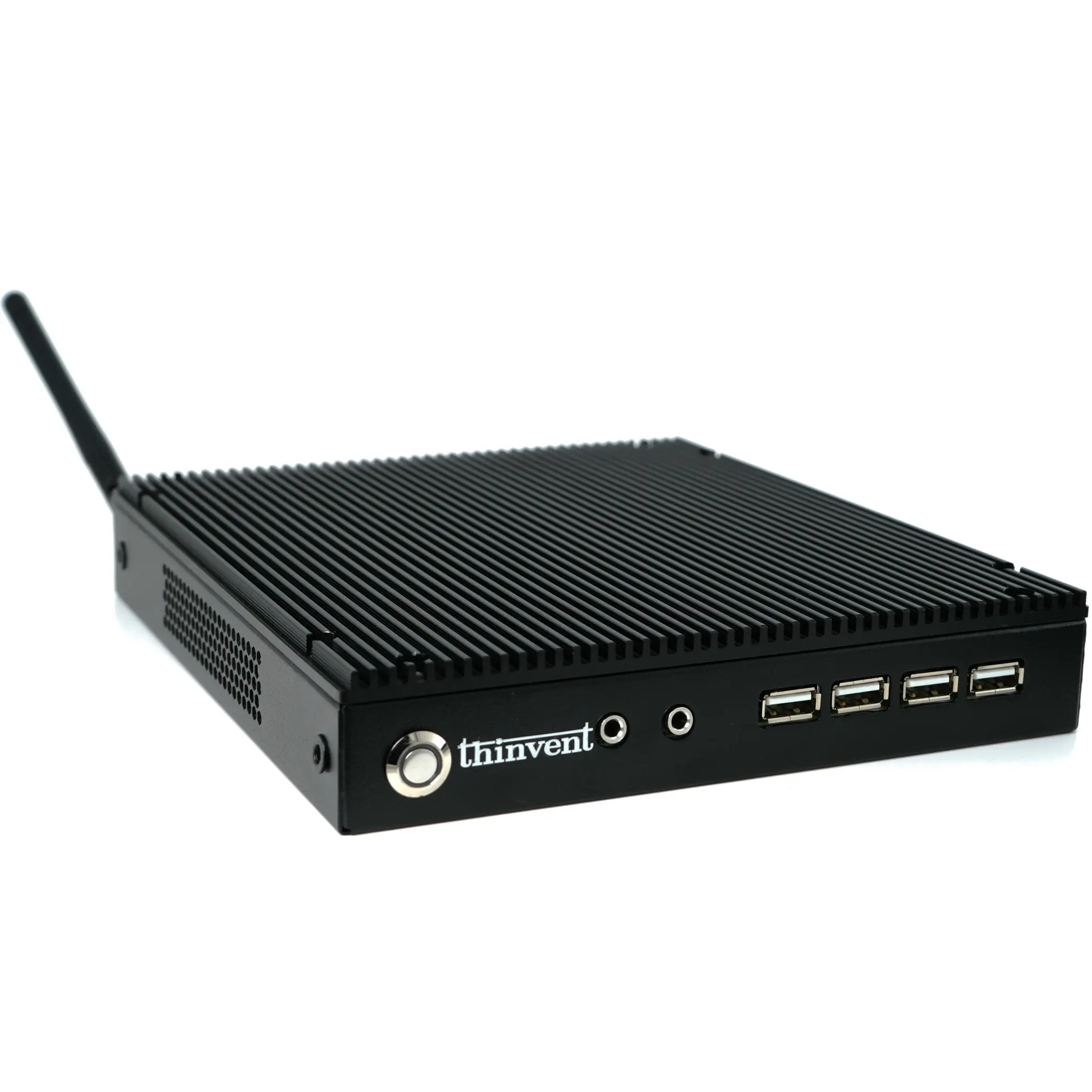
A Raspberry Pi device is a popular, low-cost, single-board computer (SBC) designed for educational projects, hobbyist prototyping, and lightweight computing tasks. It is known for its compact size, GPIO (General Purpose Input/Output) pins for hardware interfacing, and support for various Linux-based operating systems. While incredibly versatile for learning and development, its consumer-grade components and lack of industrial hardening can limit its use in commercial, industrial, or 24/7 operational environments where reliability, extended temperature ranges, and long-term supply are critical.
For professional and industrial applications requiring greater reliability and performance, industrial-grade mini PCs serve as a robust alternative. These systems offer key advantages over typical Raspberry Pi devices, including more powerful x86 processors (like Intel's N-series), soldered DDR4 memory for vibration resistance, wide-range DC power input (9-36V), and fanless, sealed metal chassis for operation in harsh conditions. They provide superior I/O, such as multiple Gigabit Ethernet ports, USB 3.2, and display outputs, while maintaining a similarly compact form factor.
Typical Use Cases and Applications:
-
Digital Signage & Kiosks: Reliable media playback in retail, hospitality, and public spaces.
-
IoT Gateways: Data aggregation and edge processing for sensor networks.
-
Industrial Automation: Machine control, HMI (Human-Machine Interface), and data logging on the factory floor.
-
Thin Clients & VDI: Secure, centralized desktop access for enterprise and healthcare.
-
Embedded Systems: Transportation, smart city infrastructure, and other fixed-function applications.
Comparison: Raspberry Pi vs. Industrial Mini PC | Feature | Raspberry Pi (Typical) | Industrial Mini PC (Example) | | :--- | :--- | :--- | | Core Architecture | ARM-based SoC | x86 (Intel/AMD) | | Build Quality | Consumer-grade PCB | Industrial-grade, metal chassis | | Cooling | Often passive or small fan | Fanless, heatsink design | | Power Input | 5V DC via USB-C | Wide-range DC (e.g., 9-36V) | | Operating Temp | Limited commercial range | Extended range (e.g., -20°C to 70°C) | | I/O Flexibility | GPIO pins, limited ports | Multiple Ethernet, USB, COM, optional expansion | | OS Support | Linux variants, limited Windows | Full Windows, Linux, and embedded OS | | Longevity | Short product lifecycle | Long-term availability & support |
Thinvent Products for Demanding Applications
Thinvent's range of industrial mini PCs, such as the Aero series, are engineered to meet the demands of applications where a standard Raspberry Pi may fall short. These systems combine the compact convenience of an SBC with the durability, performance, and professional support required for business-critical deployments. Featuring efficient Intel processors, fanless cooling for silent and dust-resistant operation, and a variety of operating system choices including Windows IoT, Ubuntu Linux, and custom embedded platforms, Thinvent devices offer a reliable, scalable solution for embedded computing worldwide.