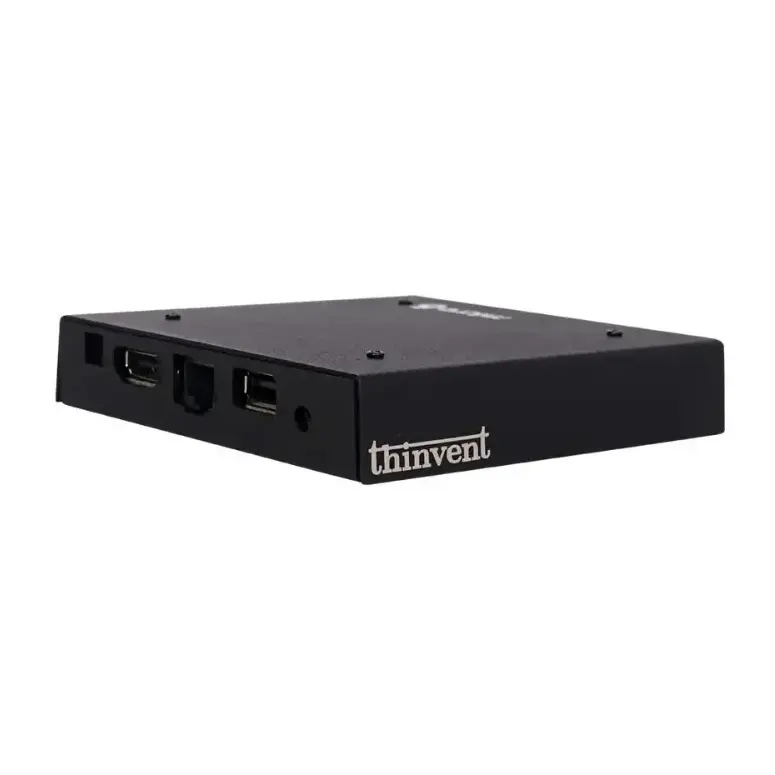
What Are Fanless Industrial Computers?
A fanless industrial computer is a rugged computing system designed to operate without internal cooling fans. Instead, it uses passive cooling techniques like heat sinks and heat pipes to dissipate heat through its chassis. This design eliminates moving parts, making these systems exceptionally reliable for demanding environments where dust, debris, vibration, or extreme temperatures are concerns. They are built for continuous, 24/7 operation in industrial automation, digital signage, and embedded applications.
Key Specifications and Technical Advantages
The core advantage of fanless computers is their robust construction. Key specifications typically include:
-
Rugged Design: Sealed enclosures (often IP-rated) protect against dust and moisture.
-
Wide Operating Temperature Range: Capable of functioning in temperatures from -20°C to 60°C or beyond.
-
Shock and Vibration Resistance: Built to withstand the rigors of factory floors and transportation.
-
Low Power Consumption: Efficient processors (like Intel's N-series or U-series) generate less heat, enabling fanless operation.
-
Rich I/O Connectivity: Multiple Ethernet ports (including PoE), USB, serial ports (COM), and display outputs are standard for industrial peripherals.
-
Long-Term Availability: Components are sourced for extended product lifecycles, crucial for industrial projects.
Applications and Use Cases
Fanless computers are ideal for any application where reliability, silence, and environmental durability are paramount.
-
Industrial Automation & Control: PLCs, HMIs, machine vision, and robotics controllers on the factory floor.
-
Digital Signage & Kiosks: Silent operation for retail, hospitality, and public information displays.
-
Transportation & Logistics: In-vehicle computing for fleet management, railway systems, and warehouse automation.
-
Edge Computing & IoT Gateways: Data acquisition and processing at the network edge in smart cities and agriculture.
-
Thin Clients & VDI: Secure, low-maintenance endpoints for virtual desktop infrastructure.
Comparison: Fanless vs. Traditional Computers
| Feature | Fanless Industrial Computer | Traditional Desktop PC |
|---|---|---|
| Cooling | Passive (no fans) | Active (fans) |
| Durability | High (resists dust, vibration) | Low (sensitive to environment) |
| Noise Level | Silent | Audible fan noise |
| Maintenance | Very Low (no fan failure) | Higher (dust cleaning, fan replacement) |
| Operating Temp | Wide range (e.g., -20°C to 60°C) | Narrow range (typically 5°C to 40°C) |
| Form Factor | Compact, rugged, wall-mountable | Larger, standard tower |
| I/O Options | Industrial-focused (COM, PoE, GPIO) | Consumer-focused (USB, Audio) |
Thinvent Fanless Industrial Computing Solutions
Thinvent offers a comprehensive range of reliable fanless computing systems engineered for industrial challenges. Our product lines include compact Mini PCs and Industrial PCs featuring the latest Intel processors, from efficient N-series chips for basic control to powerful Core i3/i5/i7 models for demanding applications. All systems are built with high-grade components, support wide voltage input, and are tested for long-term stability. Whether you need a silent digital signage player, a rugged edge gateway, or a powerful automation controller, Thinvent provides a fanless solution designed for performance and endurance in the most challenging settings.