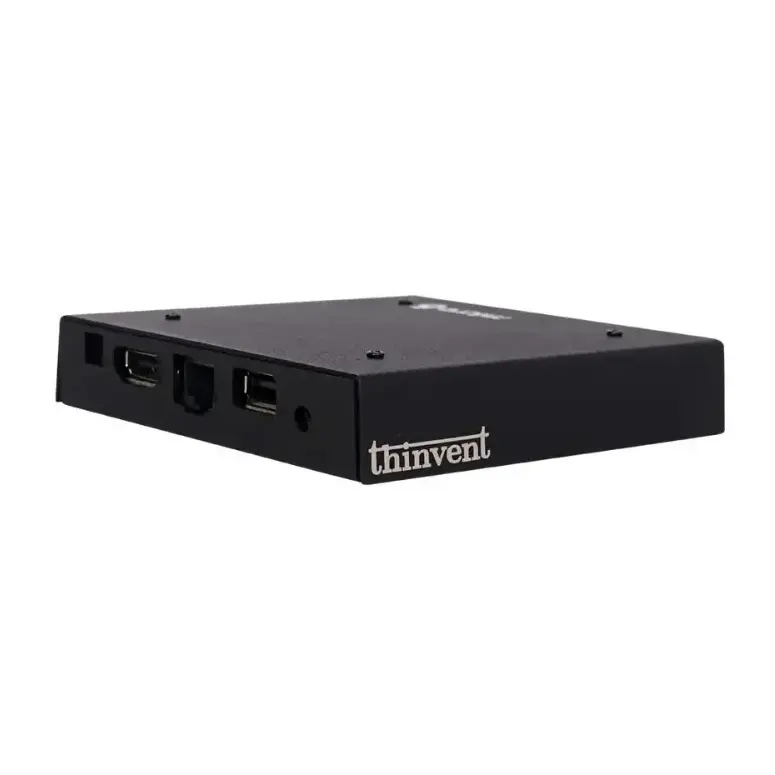
Rugged Industrial PCs for Schneider Electric Automation Systems
Industrial automation systems from Schneider Electric, such as those based on EcoStruxure™, Modicon PLCs, and PacDrive platforms, demand reliable, rugged computing hardware that can withstand harsh factory floor conditions. A purpose-built industrial PC (IPC) acts as the central interface for HMI (Human-Machine Interface), data acquisition, edge computing, and SCADA (Supervisory Control and Data Acquisition) applications. Unlike commercial-grade PCs, rugged IPCs are engineered with extended temperature tolerance, vibration resistance, and fanless cooling to ensure 24/7 uptime in environments where dust, heat, and electrical noise are common.
Key Specifications for Schneider Electric Integration
When selecting an industrial PC for Schneider Electric systems, several technical specifications are critical. First, the processor must deliver sufficient performance for real-time control and visualization. For basic HMI and data logging, Intel® N-series processors (e.g., N100) with 4 cores and up to 3.4 GHz are cost-effective. For more demanding SCADA or edge analytics, Intel® Core™ i3 (6-core) or i5 (10-12 core) processors provide the necessary compute headroom. Second, the PC must offer robust connectivity: at least two Gigabit Ethernet ports for daisy-chaining or ring topologies, multiple USB 3.2 ports for peripherals, and HDMI/DisplayPort outputs for dual-monitor HMIs. Third, solid-state storage (SSD) is essential, as moving parts like HDDs are prone to failure in high-vibration environments. Finally, the operating system must be compatible with Schneider Electric software—Windows 11 IoT or Linux (Ubuntu) are common choices.
Use Cases and Applications
Rugged industrial PCs serve critical roles in Schneider Electric automation ecosystems. In a manufacturing plant, an IPC running EcoStruxure Operator Terminal software can replace traditional dedicated HMIs, providing a flexible touchscreen interface for machine control. In building management systems, an IPC acts as a gateway between Modbus RTU devices and the building automation server. For edge computing, an IPC with an Intel Core i5 processor can run analytics algorithms locally, reducing latency and bandwidth usage compared to cloud-only solutions. The following table compares common IPC configurations for different Schneider Electric applications:
| Application | Recommended Processor | RAM | Storage | Key Connectivity |
|---|---|---|---|---|
| Basic HMI (Modicon M221) | Intel N100 (4-core) | 4-8 GB | 128 GB SSD | 2x GbE, 2x USB 3.2 |
| Advanced SCADA (EcoStruxure) | Intel Core i3-1215U (6-core) | 8-16 GB | 256 GB SSD | 2x GbE, HDMI, USB-C |
| Edge Analytics (PacDrive) | Intel Core i5-1240P (12-core) | 16-32 GB | 512 GB SSD | 2x GbE, 2x HDMI, USB 3.2 |
Thinvent’s Rugged Industrial PCs for Schneider Electric
Thinvent offers a comprehensive range of industrial PCs purpose-built for integration with Schneider Electric automation systems. Our IPC3 (Intel Core i3-1215U) and IPC5 (Intel Core i5-1240P) models feature fanless designs, wide input voltage ranges (12V DC), and industrial-grade components rated for 0-60°C operation. They support Windows 11 IoT or Ubuntu Linux, ensuring compatibility with EcoStruxure, SoMachine, and other Schneider Electric software suites. For applications requiring extreme ruggedness, our IPC1 (Intel N100) provides a compact, DIN-rail-mountable form factor with no moving parts. All Thinvent IPCs are pre-validated for reliable communication via Modbus TCP/IP, OPC UA, and MQTT protocols, making them ideal partners for your next Schneider Electric deployment.