What is a Samsung Computer CPU?
The term "Samsung Computer CPU" is often a point of confusion. Samsung does not manufacture traditional central processing units (CPUs) for desktop or industrial computers in the same way as Intel or AMD. Instead, Samsung is a major producer of other critical computer components, most notably memory (DRAM and NAND flash for SSDs) and ARM-based System-on-Chip (SoC) processors for its own Galaxy smartphones and tablets. For industrial and commercial computing systems, the CPU is almost exclusively supplied by Intel, AMD, or ARM-licensed manufacturers.
Key Specifications and Technical Details
Industrial computers require processors that balance performance, power efficiency, and reliability. Common specifications for these systems include:
-
Processor Brand: Primarily Intel for x86 architecture, ensuring broad software and driver compatibility.
-
Series & Generation: Ranging from efficient Intel N-series (e.g., N100) and Celeron processors for basic tasks to Core i3, i5, and i7 for demanding applications. Modern generations (12th, 13th, 14th) offer significant performance and efficiency gains.
-
Core Count: From 4 cores for lightweight operations to 12 or more cores for intensive multitasking and data processing.
-
Thermal Design: Many industrial PCs feature fanless, sealed designs for silent operation and protection against dust, moisture, and extreme temperatures.
-
Connectivity: Robust I/O including multiple Gigabit Ethernet ports, USB 3.2, and HDMI/DisplayPort outputs are standard for industrial integration.
Use Cases and Applications
Industrial computers with reliable Intel CPUs are deployed in environments where stability is non-negotiable.
-
Digital Signage & Kiosks: Powering 24/7 content display in retail, hospitality, and public spaces.
-
Factory Automation: Acting as controllers for PLCs, HMIs, and machine vision systems on the shop floor.
-
Thin Clients & VDI: Providing secure, centralized access to enterprise applications and virtual desktops.
-
Edge Computing: Processing data locally in IoT networks for transportation, energy, and smart city infrastructure.
-
Embedded Systems: Serving as the brain for medical devices, point-of-sale systems, and transportation infotainment.
Comparison of Common Industrial Processor Types
| Feature | Intel N-Series (e.g., N100) | Intel Core i-Series (e.g., i5) | ARM-based SoCs |
|---|---|---|---|
| Primary Use | Lightweight computing, digital signage, thin clients | High-performance workstations, automation, data processing | Mobile devices, specialized embedded systems |
| Power Efficiency | Excellent (Low TDP) | Good to High (Varies by model) | Excellent |
| Software Ecosystem | Full x86 Windows/Linux support | Full x86 Windows/Linux support | Primarily mobile/embedded OS (Android, Linux) |
| Typical Form Factors | Mini PC, Thin Client | Industrial PC, All-in-One, Mini PC | Tablet, Single-Board Computer |
Thinvent Industrial Computers with Intel Processors
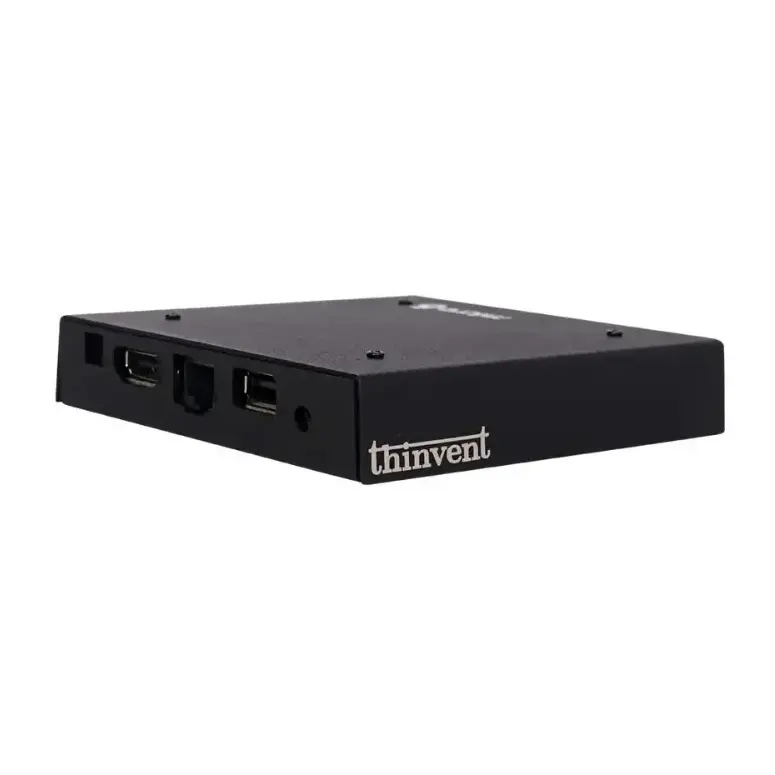
Thinvent specializes in robust, fanless industrial computing solutions powered by a range of Intel processors to meet diverse global demands. Our product lineup includes compact Aero Mini PCs utilizing efficient Intel N-series CPUs for space-constrained and always-on applications. For more demanding computational tasks, we offer systems equipped with Intel Core i3, i5, and i7 processors from the latest generations, delivering the performance needed for complex automation, edge analytics, and graphical workloads. All Thinvent computers are engineered for reliability in challenging environments, featuring wide-temperature operation, rich connectivity options, and flexible OS support including Windows, Linux, and Thinvent's own Thinux™ Embedded Linux.