What is an SBC for a Home Server?
A Single-Board Computer (SBC) for a home server is a compact, integrated computing platform designed to run server applications in a residential setting. These devices consolidate essential components like the processor, memory, storage, and connectivity onto a single board, offering a low-power, space-saving, and often fanless solution. For home use, they are ideal for tasks that require always-on, reliable, and quiet operation, making them perfect for tech enthusiasts, developers, and home automation users.
Key Specifications for a Home Server SBC
When selecting an SBC for a home server, several technical aspects are crucial. Processor performance should be efficient, with modern Intel processors like the N-series (e.g., N100) offering a great balance of power and low thermal design power (TDP). Memory (RAM) is vital for multitasking; 8GB is a good starting point, but 16GB or more is recommended for running multiple containers or virtual machines. Storage should be fast and reliable, with M.2 NVMe SSDs (256GB or larger) being preferable for operating systems and applications, while SATA ports allow for adding larger hard drives for data storage. Essential connectivity includes Gigabit Ethernet for fast network transfers, multiple USB ports for peripherals or external drives, and support for headless operation (running without a monitor).
Common Home Server Use Cases
-
Media Server: Run software like Plex, Jellyfin, or Emby to stream your personal movie, TV, and music library to any device in your home.
-
File and Backup Server: Create a centralized Network-Attached Storage (NAS) system for backing up family computers and sharing files securely.
-
Home Automation Hub: Host platforms like Home Assistant, OpenHAB, or Node-RED to control smart lights, thermostats, and security cameras from a single, local interface.
-
Development & Testing Environment: Use as a web server, database server, or to run Docker containers for software development and learning.
-
Ad-Blocking & Network Security: Install Pi-hole or similar DNS-level ad-blockers to remove ads and trackers for all devices on your home network.
Choosing the Right Form Factor
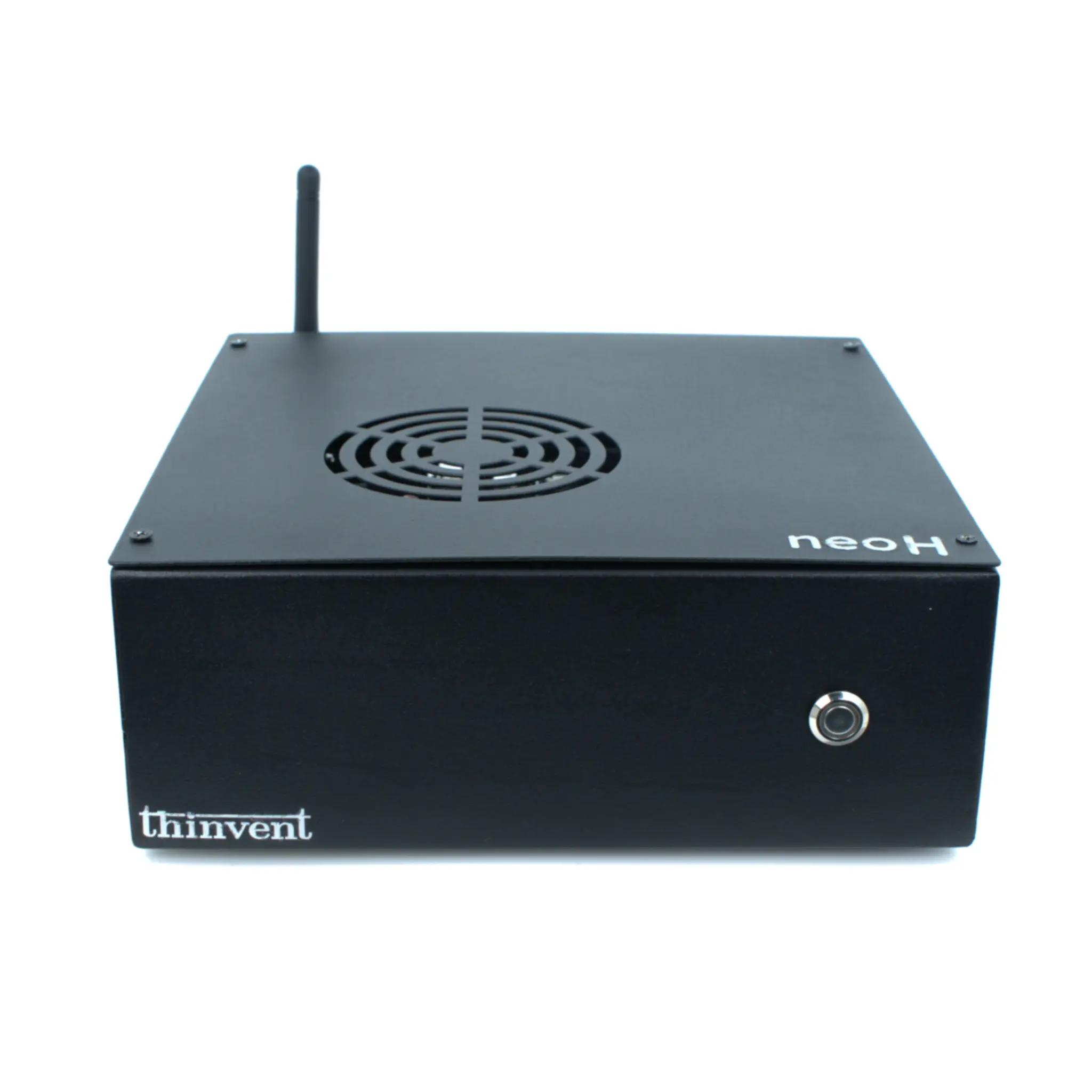
While traditional SBCs are bare boards, industrial-grade Fanless Mini PCs offer significant advantages for a home server. They come in a pre-assembled, rugged enclosure, provide better cooling and durability, and often include more robust I/O options. They are a superior "plug-and-play" alternative for users who prioritize stability and a clean setup over the DIY aspect of a bare SBC.
| Feature | Traditional SBC (e.g., Raspberry Pi) | Industrial Fanless Mini PC |
|---|---|---|
| Form Factor | Bare board | Enclosed, rugged chassis |
| Cooling | Often passive, can throttle under load | Engineered fanless heatsink for sustained performance |
| Durability | Requires careful handling | Designed for 24/7 operation in various environments |
| I/O & Expansion | Limited by board design | Typically more ports (USB, Ethernet) and internal storage options |
| Setup | DIY, requires separate power supply/case | Fully integrated, ready to run |
Thinvent Solutions for Your Home Server
Thinvent's range of industrial fanless mini PCs are engineered to excel as reliable, silent home servers. Our Aero Mini PC series, powered by efficient Intel processors like the N100, is specifically designed for always-on applications. These systems offer the perfect blend of modern performance, extensive connectivity, and robust, fanless construction in a compact form factor. They provide a professional-grade, out-of-the-box solution that surpasses the capabilities of typical consumer SBCs, ensuring your home server runs quietly and reliably for years.