A server rack for a home lab is a structured enclosure designed to organize, secure, and cool multiple computing devices in a compact, professional-grade setup. Unlike enterprise data centers, home lab racks prioritize space efficiency, quiet operation, and power management for personal projects like software development, media serving, network virtualization, and data storage. The ideal solution combines a physical rack frame with compact, energy-efficient computing nodes.
Key specifications for home lab server components focus on balance: sufficient processing power for virtualization, ample memory for running multiple services, reliable storage, and robust connectivity—all within a low-noise, low-power footprint. Modern home labs often utilize small form factor (SFF) or Mini PCs as individual servers or nodes in a cluster. Critical technical details include multi-core processors (e.g., Intel Core i5/i7 or efficient N-series), support for 16GB to 64GB of RAM, multiple Ethernet ports for networking, and SSD storage for fast OS and application loading.
Common Home Lab Use Cases & Applications
-
Virtualization & Containerization: Running hypervisors (like Proxmox VE, ESXi) to host multiple virtual machines (VMs) or container platforms (Docker, Kubernetes) for testing and development.
-
Network Services: Hosting firewalls (pfSense/OPNsense), routers, DNS servers (Pi-hole), and network-attached storage (NAS) for a self-hosted home network.
-
Media & Home Automation: Serving as a Plex/Emby media server, or hosting home automation software like Home Assistant.
-
Software Development: Creating isolated environments for coding, continuous integration/continuous deployment (CI/CD) pipelines, and database servers.
Choosing Hardware: Rack vs. Compact Nodes While a traditional server rack houses 1U-4U rackmount servers, these can be loud and power-hungry. A modern, efficient alternative is using multiple fanless or quiet Mini PCs mounted on shelves or specific rack brackets. This approach offers superior power efficiency and silent operation.
| Feature | Traditional Rackmount Server | Cluster of Mini PCs |
|---|---|---|
| Form Factor | 1U/2U/4U Rack Units | Mini PC / Small Form Factor |
| Noise Level | Often high (loud fans) | Very low (fanless or quiet fans) |
| Power Draw | Typically higher | Generally much lower |
| Density | High (many drives/expansion cards) | Moderate (compact, fewer expansions) |
| Heat Output | Significant, requires active cooling | Low, often passively cooled |
| Ideal For | High-storage, high-performance needs | Distributed computing, quiet home labs |
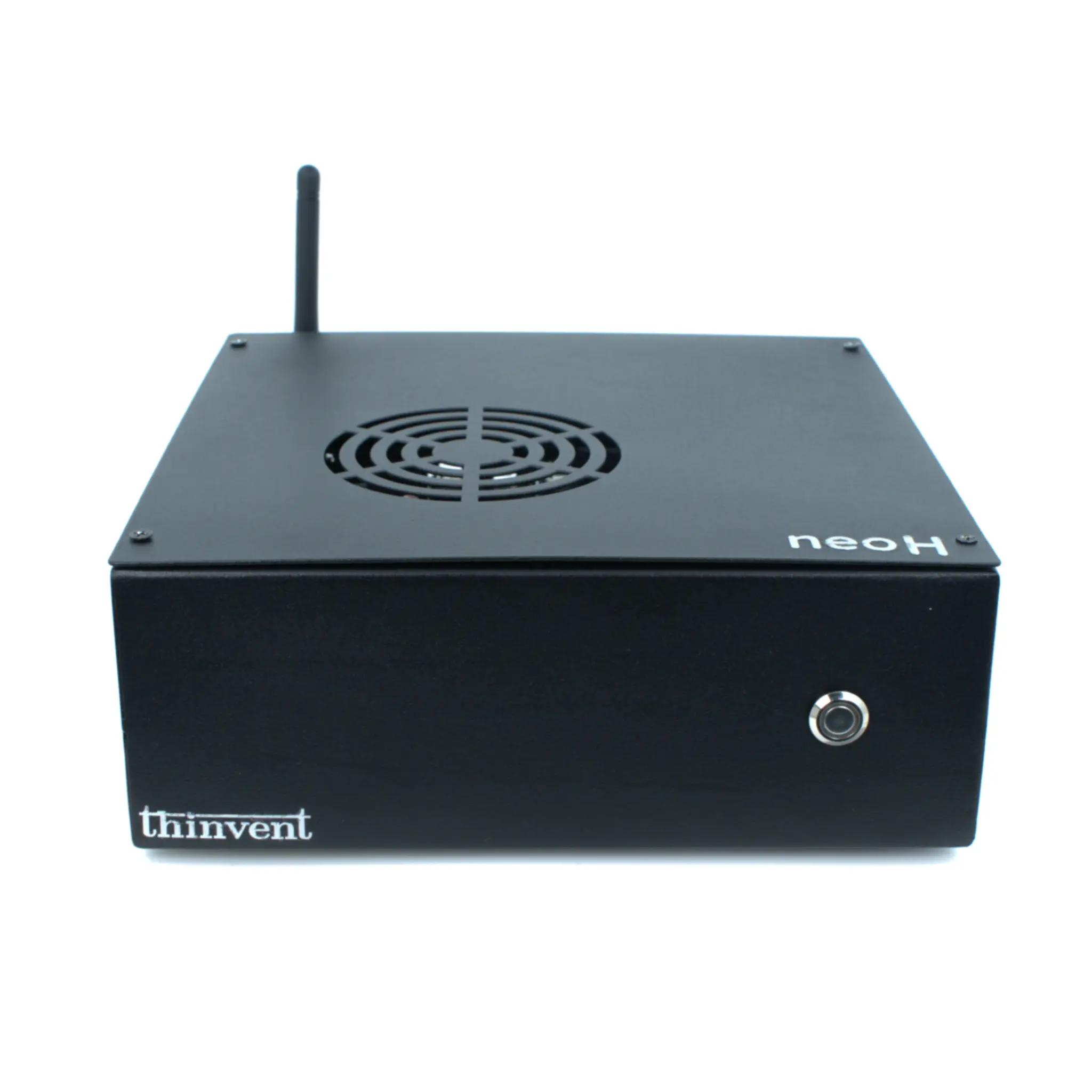
Thinvent Products for Your Home Lab Server Rack Thinvent's industrial-grade Mini PCs are perfectly suited for building a robust, silent, and reliable home lab server cluster. Our fanless designs ensure 24/7 operation without noise, while their compact size allows for dense mounting in a rack using standard shelves or brackets. Models featuring Intel processors from the N-series up to Core i5 provide the perfect balance of performance and efficiency for virtualization and networking tasks. With multiple Ethernet ports, support for ample RAM and SSD storage, and a choice of operating systems (including Linux distributions ideal for servers), Thinvent devices form the ideal compute nodes for a professional home lab environment.