What is an SSD NAS Storage System?
An SSD NAS (Network Attached Storage) system is a dedicated file storage device that uses Solid State Drives (SSDs) instead of traditional Hard Disk Drives (HDDs) to provide high-speed network-based data access. It connects directly to a network, allowing multiple users and client devices to retrieve and store data from a centralized location. The primary advantage of an SSD NAS is its significantly faster read/write speeds, lower latency, and silent, fanless operation compared to HDD-based systems, making it ideal for applications requiring quick data access and transfer.
Key Specifications for an SSD NAS
When selecting hardware for an SSD NAS, several technical specifications are crucial. The system requires a reliable, low-power processor with sufficient cores for handling network protocols and data encryption (like Intel's N-series or Celeron CPUs). Adequate RAM (typically 8GB or more) is essential for smooth operation, especially when running a NAS operating system like TrueNAS, OpenMediaVault, or UnRAID. Multiple high-speed Ethernet ports (1GbE or higher) are necessary for network throughput, while ample USB 3.2 or USB-C ports facilitate easy expansion and backup. Crucially, the system must support multiple SATA or NVMe interfaces to connect the SSDs that form the storage array.
Applications and Use Cases
SSD NAS systems are deployed in various professional and industrial environments. They are perfect for small to medium businesses needing fast shared storage for collaborative projects, video editing workstations, or virtual machine datastores. In digital signage and kiosk networks, they ensure quick content updates across multiple displays. For surveillance systems, they provide the high write speeds required for storing and retrieving high-resolution video footage without bottleneck. Their reliability and lack of moving parts also make them suitable for harsh industrial settings where vibration or dust is a concern.
Comparing NAS-Optimized Hardware
Choosing the right base computer is key. Below is a comparison of common processor types suitable for building an SSD NAS:
| Processor Series | Typical Cores | Power Efficiency | Ideal NAS Use Case |
|---|---|---|---|
| Intel N-Series (e.g., N100) | 4 | Very High | Low-power, always-on home or small office NAS. |
| Intel Celeron (e.g., J4125) | 4 | High | Cost-effective, fanless systems for basic file serving. |
| Intel Core i3/i5 (e.g., 1215U) | 6-10 | Moderate to High | Medium business NAS with virtualization or transcoding. |
Thinvent Products for Your SSD NAS Build
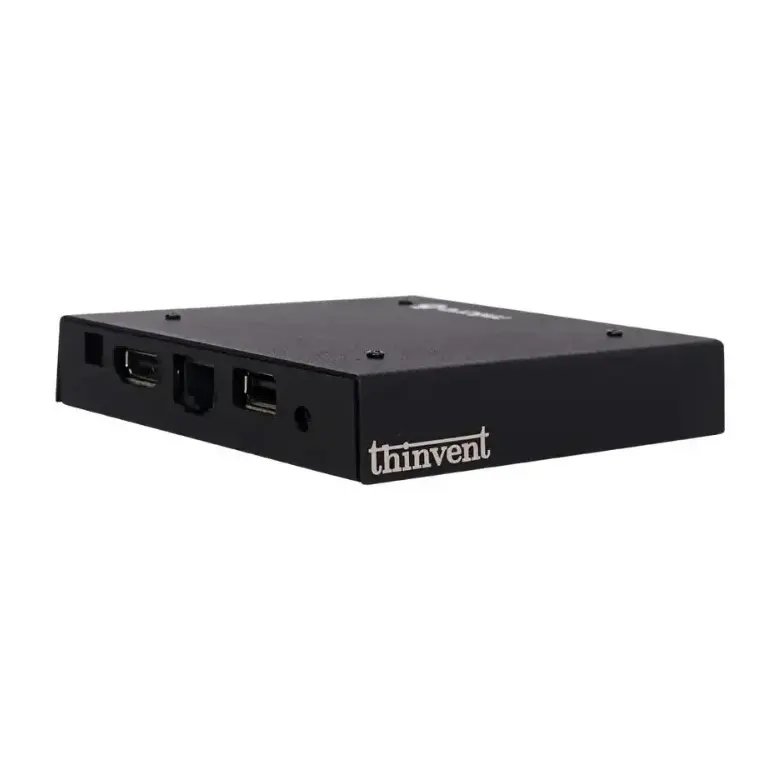
Thinvent's range of compact, fanless industrial computers provides an excellent hardware foundation for building a robust SSD NAS. Our systems, like the Aero Mini PC featured on this page, are built with reliability in mind. They feature energy-efficient Intel processors, support for ample DDR4 RAM, and multiple high-speed I/O ports. Their rugged, fanless design ensures 24/7 operation in diverse environments. You can install your preferred NAS operating system on our devices, which are available with or without a pre-installed OS, giving you complete flexibility to create a customized, high-performance storage solution.