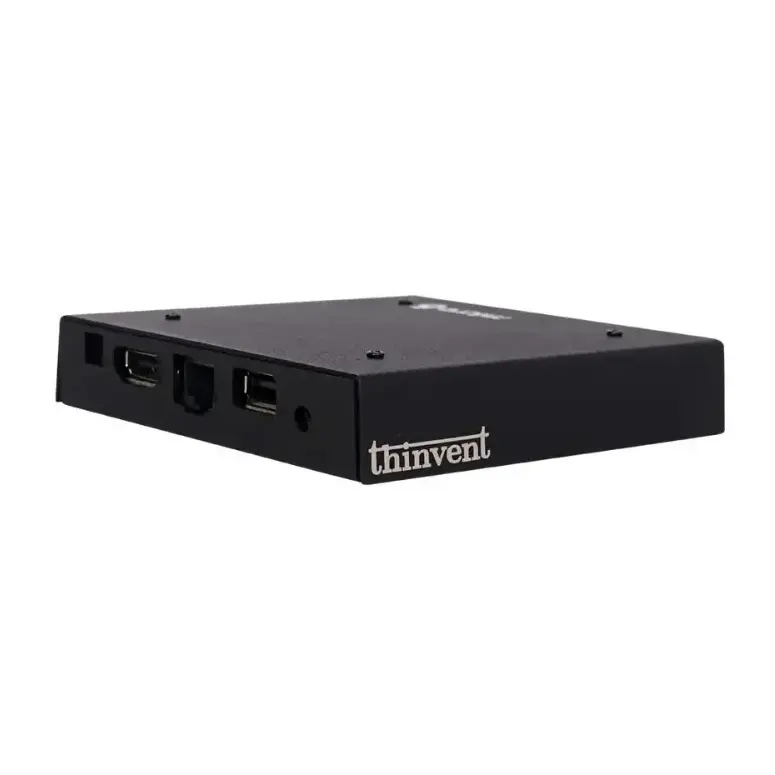
A stick computer, also known as a PC stick or compute stick, is an ultra-compact computing device that packages the core components of a desktop PC into a form factor roughly the size of a large USB flash drive. Designed for maximum space efficiency, these devices typically plug directly into an HDMI port on a monitor or TV, drawing power via USB or a small external adapter. They represent the pinnacle of miniaturization in desktop computing, offering a full Windows, Linux, or embedded operating system experience in a highly portable and discreet package.
Key Specifications and Features
Modern stick computers are powered by efficient, low-power processors from Intel's N-series (like the N100) or similar ARM-based chips. They typically include integrated graphics, soldered RAM (often 4GB to 16GB LPDDR4/5), and eMMC or NVMe SSD storage (128GB to 512GB). Connectivity is provided through a combination of USB ports (often USB-C for power and data), microSD card slots, and built-in Wi-Fi and Bluetooth. Their defining characteristic is the lack of moving parts, leading to silent, fanless operation ideal for media centers, digital signage, and kiosks.
Primary Use Cases and Applications
The small size and low power draw of stick computers make them perfect for turning any display into a smart workstation or dedicated appliance. Common applications include:
-
Digital Signage & Kiosks: Easily deployed behind monitors or TVs for interactive displays, menus, or information points.
-
Home & Office Productivity: A portable desktop solution for basic computing tasks, web browsing, and office applications.
-
Media Centers: Plug into a TV to stream content, acting as a HTPC (Home Theater PC) using platforms like Kodi or Plex.
-
Lightweight Computing Labs: Ideal for educational environments or thin client setups where space and cable management are priorities.
-
IoT Gateways: Their small size allows for integration into control panels or industrial environments for data aggregation.
Comparison: Stick PC vs. Traditional Mini PC
| Feature | Stick Computer | Traditional Mini PC |
|---|---|---|
| Form Factor | Extremely compact (USB stick size) | Small box (often 0.5-2 liters) |
| Installation | Plugs directly into HDMI port | Requires separate HDMI cable |
| Portability | Excellent, highly portable | Good, but larger |
| Expandability | Very limited, ports are fixed | Moderate, may support RAM/SSD upgrades |
| Cooling | Passive (fanless) only | Often includes active (fan) cooling for higher performance |
| Typical Use | Embedded displays, media, basic tasks | General desktop, office, entry-level gaming |
Thinvent Stick Computer Solutions
Thinvent offers robust and reliable stick computer solutions designed for commercial and industrial durability. Our Aero Mini PC series exemplifies this category, featuring the efficient Intel processor N100 for balanced performance and power efficiency. These fanless devices come with ample 16GB RAM and fast SSD storage, ensuring smooth operation for digital signage, kiosk systems, and office workloads. Available with a choice of operating systems including Windows 11 IoT/Pro, Ubuntu Linux, or our custom Thinux™ Embedded Linux, Thinvent stick PCs provide a versatile, silent, and space-saving computing foundation for global deployments.